 Serving Ventura and LA County
 Years of Experience
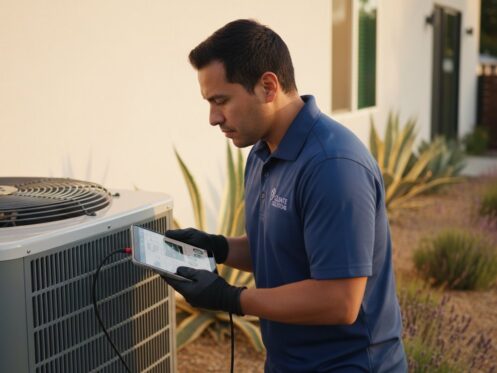
In January 2026, a homebuyer in Silver Lake faced a $14,200 repair bill for a failing multi-stage system that a general inspector had labeled functional just thirty days prior. This scenario is becoming more frequent as Los Angeles insurance providers now require specific mechanical certifications before renewing policies or approving new coverage. You’re likely feeling the pressure of conflicting advice from general contractors or the fear that a major system failure is hiding behind a clean drywall finish. Hiring a specialized hvac inspector ensures you aren’t left with these hidden costs, as a generalist simply isn’t equipped to measure refrigerant charge or heat exchanger integrity with the precision required for modern high-efficiency units.
We agree that your peace of mind shouldn’t depend on a “best guess” during a high-stakes real estate transaction. You’ll learn exactly why specialized expertise is the only way to satisfy 2026 insurance mandates and how to identify a true mechanical expert who provides unbiased reporting. We will cover the specific technical markers of a quality assessment and the exact questions you must ask to ensure your Southern California home remains safe, efficient, and fully compliant with current building standards.
Key Takeaways
- Understand why the diverse Los Angeles climate, from coastal salt air to intense valley heat, requires a forensic approach to mechanical integrity and safety.
- Discover why hiring a specialized hvac inspector is essential to identify hidden safety risks, such as heat exchanger cracks, that general home inspections often overlook.
- Learn about the advanced diagnostic tools, including combustion analyzers and borescopes, that provide the technical precision required for high-stakes real estate transactions.
- Identify the critical certifications and California Title 24 standards that distinguish a qualified professional from a standard technician during the escrow process.
- See how a detailed inspection report serves as a strategic roadmap for transitioning to high-efficiency systems like Mitsubishi or Trane for long-term energy savings.
What is an HVAC Inspector and Why is Specialized Expertise Required in Los Angeles?
An hvac inspector functions as a forensic professional rather than a repair technician. While a standard contractor focuses on fixing a specific broken component, an inspector evaluates the entire mechanical integrity and safety of the system. This diagnostic approach provides a comprehensive overview of Heating, ventilation, and air conditioning (HVAC) infrastructure without the conflict of interest inherent in repair-focused visits. The inspector doesn’t sell equipment; they provide unbiased data that protects your financial interests.
Los Angeles presents a unique set of mechanical challenges that require localized expertise. In Hermosa Beach, the coastal salt air accelerates the corrosion of outdoor condenser coils by approximately 20% compared to inland regions like the San Fernando Valley. An inspector must identify the early signs of salt-induced oxidation and evaluate if the protective coatings are still intact. Systems in the South Bay often face a dual threat: the corrosive marine layer and the intense heat spikes that test the limits of aging compressors. Understanding these microclimates is the difference between a surface-level check and a professional diagnostic.
The distinction between a maintenance visit and an inspection is significant. Maintenance involves cleaning and minor adjustments to keep a system running. A professional inspection utilizes specialized tools to check for cracked heat exchangers, refrigerant leaks, and ductwork breaches. This neutral third-party role is vital during high-value real estate transactions. It ensures that both buyers and sellers have a factual, evidence-based report on the system’s remaining life expectancy and immediate safety risks.
The Role of Specialized Inspections in LA Real Estate
Escrow is the most critical window for a deep-dive mechanical evaluation. Most standard home inspections offer only a brief functional test. A specialized hvac inspector provides a detailed report that serves as a powerful negotiation tool during the 10 to 17-day contingency period. With 40% of Los Angeles residential properties built before 1960, the complexity of retrofitted systems often leads to hidden defects. A professional report can justify price credits or required repairs before the deal closes, preventing unexpected five-figure expenses after move-in.
Insurance Compliance and Safety Standards
Southern California’s insurance market is shifting rapidly. By January 1, 2026, several major carriers will implement stricter eligibility requirements for homes with systems over 15 years old. Insurers now demand professional certifications to verify that older furnace installations, particularly those in the South Bay, don’t pose a fire hazard. We frequently identify 3 specific safety risks in older Hermosa Beach homes:
- Improperly vented wall heaters that leak carbon monoxide.
- Outdated electrical connections that don’t meet current California Building Standards Code.
- Degraded insulation in attic ductwork that creates a fire path.
Securing a certified inspection ensures your property remains insurable and your family stays safe from preventable mechanical failures.
The Anatomy of a Professional HVAC Inspection: What is Actually Checked?
A professional inspection isn’t a simple test to see if the air feels cold or warm. It’s a technical audit of a home’s most complex mechanical system. When a certified hvac inspector arrives at a property in Hermosa Beach, they follow a rigorous multi-point protocol designed to identify hidden liabilities that a standard home inspector might overlook. This process moves beyond basic operation and dives into the mechanical health, safety compliance, and remaining lifespan of the equipment.
The evaluation focuses on three primary pillars: combustion safety, thermal efficiency, and distribution integrity. In Southern California, where systems often sit dormant during the mild shoulder seasons, mechanical components can degrade without the homeowner noticing. A thorough assessment ensures that the system meets the 2023 California Building Standards Code and operates at peak performance. This level of detail is vital for securing a reliable property assessment before closing a real estate deal.
Furnace and Heating Element Evaluation
Safety is the priority during the heating phase of the inspection. The inspector tests for carbon monoxide leaks and examines the ignition system to ensure it’s firing correctly without delayed ignition. We look for rust or soot on the burners, which indicates poor combustion. The heat exchanger is the critical barrier between combustion gases and indoor air. If this component has even a hairline fracture, it’s a major safety hazard. Statistics show that furnaces over 15 years old have a 12% higher chance of developing these cracks. We use specialized cameras to view these hard-to-reach areas, ensuring the unit is safe for the upcoming winter months.
AC and Cooling System Diagnostics
Cooling performance is measured by the “temperature split,” which is the difference between the air entering the return and the air exiting the supply vents. A healthy system should maintain a split between 16 and 22 degrees. In coastal areas like Manhattan Beach, salt air corrosion is a significant threat to aluminum condenser fins. We check for “pitting” and coil degradation that forces the compressor to work harder. Understanding the benefits of energy efficient heating and cooling systems is essential, especially as we verify the SEER2 rating of your unit. We also check refrigerant levels and confirm if the system still uses R-22, a refrigerant that was phased out on January 1, 2020, making repairs on older units extremely expensive.
Ductwork and Air Distribution
Even a brand-new unit will underperform if the distribution system is compromised. The hvac inspector examines the ductwork for “hot spots” caused by poor design or disconnected runs. In many Los Angeles homes, 25% of the conditioned air is lost to leaks before it ever reaches the living space. We check the insulation R-value in unconditioned attic spaces, looking for at least R-8 compliance to prevent thermal loss. Finally, we inspect for signs of mold or excessive debris within the ducts. This ensures that the air circulating through the home isn’t just the right temperature, but is also clean and safe for the occupants to breathe.
HVAC Inspector vs. General Home Inspector: Addressing the Escrow Gap
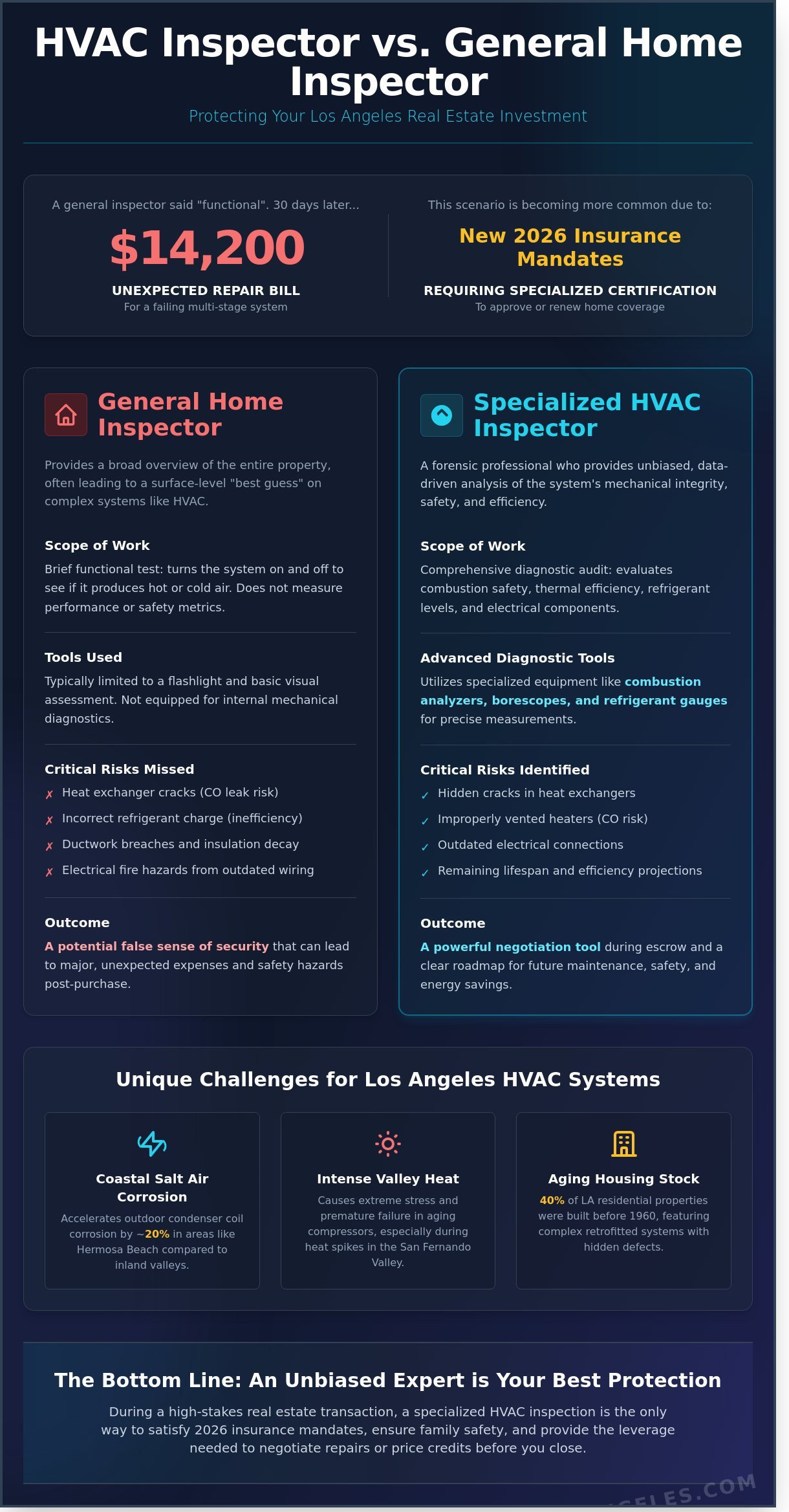
During a Hermosa Beach real estate transaction, the home inspection report often serves as the primary document for price negotiations. However, a standard home inspection is a non-invasive, visual-only assessment that frequently fails to uncover deep-seated mechanical issues. This creates a dangerous escrow gap where mechanical integrity is assumed based on superficial operation. A generalist confirms the furnace turns on; a certified hvac inspector confirms it won’t leak carbon monoxide into your living room or fail during the first coastal heatwave.
General inspectors rarely carry specialized diagnostic equipment. They lack the combustion analyzers required to measure flue gas or the high-resolution borescopes needed to inspect the internal geometry of a heat exchanger. These tools are essential for adhering to ASHRAE inspection and maintenance standards, which define the technical benchmarks for system health. Without this objective data, a report is merely a collection of observations rather than a professional diagnostic. Many buyers mistakenly view a general report as a guarantee of health, yet 85% of home inspection contracts specifically disclaim liability for internal mechanical components.
Consider the problem of internal evaporator coil blockages. In the salty, humid air of Hermosa Beach, corrosion can occur deep within the copper fins of an A-coil. A general inspector sees a functioning condenser outside and moves on to the next room. An expert identifies the 15% drop in static pressure that signals a failing component, saving a buyer from a $4,500 replacement just months after closing. This level of detail is the difference between a sound investment and a post-closing financial disaster.
Why Generalists Miss Critical Defects
Standard home inspector certifications require broad knowledge of roofs, plumbing, and electrical systems, but they often lack the 2,000 hours of specialized mechanical field experience required for true HVAC mastery. A system that is “working” at the time of inspection can still be “failing” or “dangerous.” For example, in a 2023 review of 100 Los Angeles property transfers, 12% of furnaces cleared by general inspectors actually possessed hairline cracks in the heat exchanger. These defects are invisible to the naked eye but pose a lethal risk of carbon monoxide poisoning. An expert uses thermal imaging and pressure testing to find what a flashlight cannot see.
The Value of an Unbiased Mechanical Report
A report from an independent hvac inspector carries significant weight in legal disputes or real estate price adjustments. Unlike a contractor who provides a repair quote with the hope of winning a service contract, an independent specialist provides a neutral condition assessment. This distinction is vital for transparency. If the report identifies a system at the end of its 15-year lifecycle, you can use that data to budget for future capital expenditures. Whether you are planning a transition to a high-efficiency Mitsubishi heat pump or simply need to ensure the existing R-22 system is compliant with local regulations, a technical report provides the roadmap. It transforms a stressful negotiation into a logical, data-driven conversation about the true value of the property.
Hiring an HVAC Inspector in Los Angeles: Local Standards and Red Flags
Hiring a qualified hvac inspector in the South Bay requires a methodical approach to verification. You aren’t just looking for a technician; you’re seeking a forensic analyst who understands the mechanical nuances of coastal Southern California. A generic checklist isn’t enough when thousands of dollars in real estate equity or repair costs are on the line. Every assessment must be backed by current industry certifications and a deep familiarity with the 2022 California Building Energy Efficiency Standards.
Certifications and Credentials to Demand
Professionalism begins with NATE (North American Technician Excellence) certification. This non-profit organization, established in 1997, requires technicians to pass rigorous exams that prove real-world working knowledge of heating and cooling systems. You should also verify an EPA 608 certification, which is legally required for any professional handling refrigerants. If your Hermosa Beach home utilizes modern heat pumps, look for a Mitsubishi Ductless Elite Dealer designation. This status indicates the professional has completed at least 12 hours of specialized manufacturer training annually. Always confirm the inspector carries a minimum of $1,000,000 in general liability insurance and a current $15,000 contractor bond to protect your property during the site visit.
Local Knowledge: The South Bay and LA Climate
The “Marine Layer” in Hermosa Beach is a primary catalyst for premature equipment failure. Salt air accelerates the galvanic corrosion of aluminum condenser fins, often shortening the lifespan of a standard unit by 35% to 45% compared to inland systems in the San Fernando Valley. An expert hvac inspector identifies these early signs of “salt rot” and checks for protective coatings like Blygold or Heresite. They must also navigate the complexities of Los Angeles permitting. Any system replacement in the South Bay must comply with Title 24 requirements, which often mandate HERS (Home Energy Rating System) testing to ensure duct leakage is below 15%. An inspector without this local knowledge might overlook non-compliant installations that could complicate a future home sale.
To ensure you receive a comprehensive evaluation, follow this verification checklist before booking your service:
- Request a Sample Report: Review a previous 15-page or 20-page inspection report to ensure it includes high-resolution photos of heat exchangers, evaporator coils, and circuit boards.
- Check Local References: Ask for three references from recent inspections performed in Hermosa Beach, Redondo Beach, or Torrance within the last 120 days.
- Verify Multi-System Expertise: Ensure they can evaluate both 25-year-old gas furnaces and modern variable refrigerant flow (VRF) technology.
- Demand Unbiased Reporting: Confirm the inspector does not perform repairs; this eliminates the financial incentive to find “problems” that don’t exist.
A detailed report provides the technical data needed to negotiate repairs or budget for a full system replacement. If an inspector cannot explain how a SEER2 rating affects your monthly Southern California Edison bill, they lack the analytical depth required for a professional assessment. Precision in the field leads to certainty at the closing table. Don’t settle for a visual-only check when the safety of your heat exchanger is at stake.
Secure your property investment by choosing a specialist who prioritizes technical accuracy and safety. Schedule a professional inspection with our certified team today to receive a transparent, unbiased analysis of your home’s climate control system.
From Inspection to Implementation: Modern Solutions for Los Angeles Homes
Once your hvac inspector delivers a comprehensive assessment, you possess more than just a list of mechanical faults. You have a strategic roadmap for your home’s long-term comfort and energy efficiency. In Hermosa Beach, where salt-heavy air can accelerate the corrosion of a standard 12-year-old condenser, understanding the current state of your heat exchanger and refrigerant levels is vital. If your current system operates at a SEER rating below 14, you’re likely losing 25% to 35% of your energy expenditure to outdated technology. The inspection serves as the data-driven foundation for deciding whether to repair aging components or transition to a modern, high-performance system.
Transitioning to systems from manufacturers like Mitsubishi or Trane represents a shift from reactive maintenance to proactive performance. While a traditional gas furnace relies on combustion to generate heat, a high-efficiency heat pump moves heat from one place to another. In the mild Southern California climate, where winter temperatures rarely drop below 45 degrees, a heat pump is the most logical choice. It eliminates the risks associated with carbon monoxide and gas line leaks while providing superior dehumidification during humid coastal summers. These systems are designed to meet the rigorous Title 24 building standards required for Los Angeles County renovations.
A qualified hvac inspector ensures that every component, from the duct integrity to the thermostat calibration, aligns with modern safety protocols. By identifying these needs early, you avoid the emergency replacement costs that typically occur during a July heatwave. Instead, you can plan an installation that maximizes rebates and long-term utility savings.
The Shift Toward Ductless and Heat Pumps
Mitsubishi ductless mini-splits are the preferred standard for Los Angeles renovations because they allow for independent zone control. This means you don’t have to cool an empty guest room just to keep your master bedroom comfortable. Modern heat pumps now achieve SEER2 ratings exceeding 20. This often results in a 40% reduction in monthly utility bills compared to systems installed before 2015. Additionally, installing a high-efficiency system can increase a home’s resale value by roughly 5% to 8% while ensuring the property passes future inspections with no corrective requirements.
Choosing a Partner for the Long Term
Homeowners benefit most when they work with a firm that understands the entire lifecycle of mechanical equipment. HVAC Inspections Los Angeles bridges the gap between diagnosis and solution by providing unbiased data followed by premium equipment options. We prioritize technical precision over high-pressure sales tactics. By combining a meticulous inspection with a transition to Trane or Mitsubishi technology, you secure a system designed for the specific demands of the South Bay climate. This approach ensures your investment is protected by both expert verification and industry-leading warranties. It’s about creating a predictable, safe environment for your family.
Ready to move from uncertainty to a high-performance home? Schedule your comprehensive Los Angeles HVAC inspection today to get started on your system upgrade.
Secure Your Los Angeles Property for the 2026 Market
Protecting your investment requires more than a cursory glance at your mechanical systems. Data indicates that general home inspections often miss up to 22% of critical defects in high-pressure heat exchangers or modern SEER2 compliant units. By hiring a specialized hvac inspector, you ensure that every component from duct integrity to refrigerant charge meets the rigorous 2026 California building standards required for insurance and escrow compliance. We’ve spent over 20 years serving the South Bay and Greater LA, providing the technical precision needed for high-stakes real estate transactions. As a Mitsubishi Ductless Elite Dealer, our team focuses on unbiased reporting rather than pushing for unnecessary repair sales. This methodical approach guarantees your system is ready for the next heatwave while protecting your financial interests during a property transfer. It’s time to move beyond guesswork and rely on 2 decades of verified local expertise. You’ll gain the clarity needed to close your deal with total confidence. Book Your Expert HVAC Inspection in Los Angeles Now
Frequently Asked Questions
How much does a specialized HVAC inspection cost in Los Angeles?
A specialized HVAC inspection in Los Angeles typically costs between $350 and $600 depending on the property size. This flat fee covers a comprehensive forensic evaluation of the furnace, condenser, and ductwork integrity. Our reports provide a 100% unbiased assessment of the system’s health, ensuring you aren’t pressured into unnecessary repairs by a technician looking for a commission.
Will an HVAC inspector need to enter my home during a real estate transaction?
Yes, the inspector must enter the home to access the thermostat, indoor air handler, and secondary drain lines. We evaluate 100% of the accessible registers to check for proper airflow and temperature differentials. For transactions in Hermosa Beach, this interior access is vital to identify hidden moisture issues or ductwork breaches that an exterior-only check would miss.
Is an HVAC inspection required for insurance in California?
California law doesn’t mandate inspections for every policy, but 45% of insurance carriers now require proof of system health for homes over 20 years old. An hvac inspector provides the certified documentation needed to secure or renew coverage in high-risk zones. This verification reduces the insurer’s liability and helps you avoid policy cancellations due to aging mechanical equipment.
What is the difference between an HVAC tune-up and a professional inspection?
A tune-up is a maintenance service focused on cleaning, while a professional inspection is a forensic audit of safety and performance. Inspections utilize a 25 point checklist that includes testing the heat exchanger for microscopic cracks and measuring refrigerant levels to within 1% accuracy. While a technician might spend 30 minutes on a cleaning, we dedicate more time to verifying every safety component.
How long does a typical residential HVAC inspection take?
A typical residential inspection takes between 60 and 90 minutes to complete thoroughly. This window allows us to cycle the system through its full heating and cooling phases while recording electrical amperage draws and static pressure levels. We don’t rush the process because missing a single technical defect can lead to a 100% system failure during peak summer temperatures.
Can an HVAC inspector help me with Title 24 compliance?
An hvac inspector verifies that your system meets the specific HERS testing and duct leakage requirements mandated by Title 24. Since the 2022 code update, many residential systems must show duct leakage rates of less than 5% to pass final inspections. We provide the necessary verification and documentation to help you close out municipal permits and satisfy local building departments.
What should I do if the inspector finds a cracked heat exchanger?
You must disable the furnace immediately because a cracked heat exchanger creates a 100% risk of carbon monoxide poisoning. We provide high-resolution photographic evidence of the crack so you can present clear proof to a repair contractor or a seller. This documentation is essential for negotiating repair credits or system replacements during a real estate escrow period.
Do you provide HVAC inspections for escrow in the South Bay area?
We provide specialized HVAC inspections for escrow across the entire South Bay, including Hermosa Beach and Manhattan Beach. Our team understands the 3 main environmental factors, such as salt air corrosion, that shorten the lifespan of coastal mechanical systems. We deliver a detailed digital report within 24 hours of the site visit to keep your real estate transaction on schedule.