 Serving Ventura and LA County
 Years of Experience
A single Southern California fire season can deposit over two pounds of fine particulate matter into a residential HVAC system, forcing your unit to work 20% harder just to maintain basic airflow. If you’ve noticed a recent spike in your utility bills or feel uneasy about the integrity of an aging heat exchanger, you aren’t alone. Most Los Angeles homeowners recognize that our unique climate demands more than a standard filter change to ensure long-term safety and performance. Consistent furnace maintenance is the only reliable way to prevent mechanical failure during the critical cold snaps in the San Fernando Valley or the coastal basins.
We’ve developed this professional-grade checklist to help you master your home heating system with technical precision. By following these expert steps, you’ll secure documented safety for your property’s real estate value and potentially lower your monthly energy costs by 15%. This guide walks you through the essential verification steps, from clearing fire-season debris to ensuring your system remains compliant with California safety standards. You’ll gain the peace of mind that comes from a meticulously inspected home, ensuring your family stays warm and safe throughout the winter months.
Key Takeaways
- Learn why the Los Angeles climate-specifically fire season ash and seasonal dormancy-creates unique failure points for your heating system.
- Access a professional-grade 2026 furnace maintenance checklist to verify the integrity of your heat exchanger and the accuracy of your thermostat.
- Distinguish between safe DIY tasks and critical technical inspections that are often overlooked during standard real estate escrow processes.
- Master the timing of your service window to ensure full compliance with California Title 24 efficiency and airflow regulations.
- Gain peace of mind by understanding how an unbiased, third-party system evaluation protects your home’s safety and long-term value.
Why Furnace Maintenance is Critical in the Los Angeles Climate
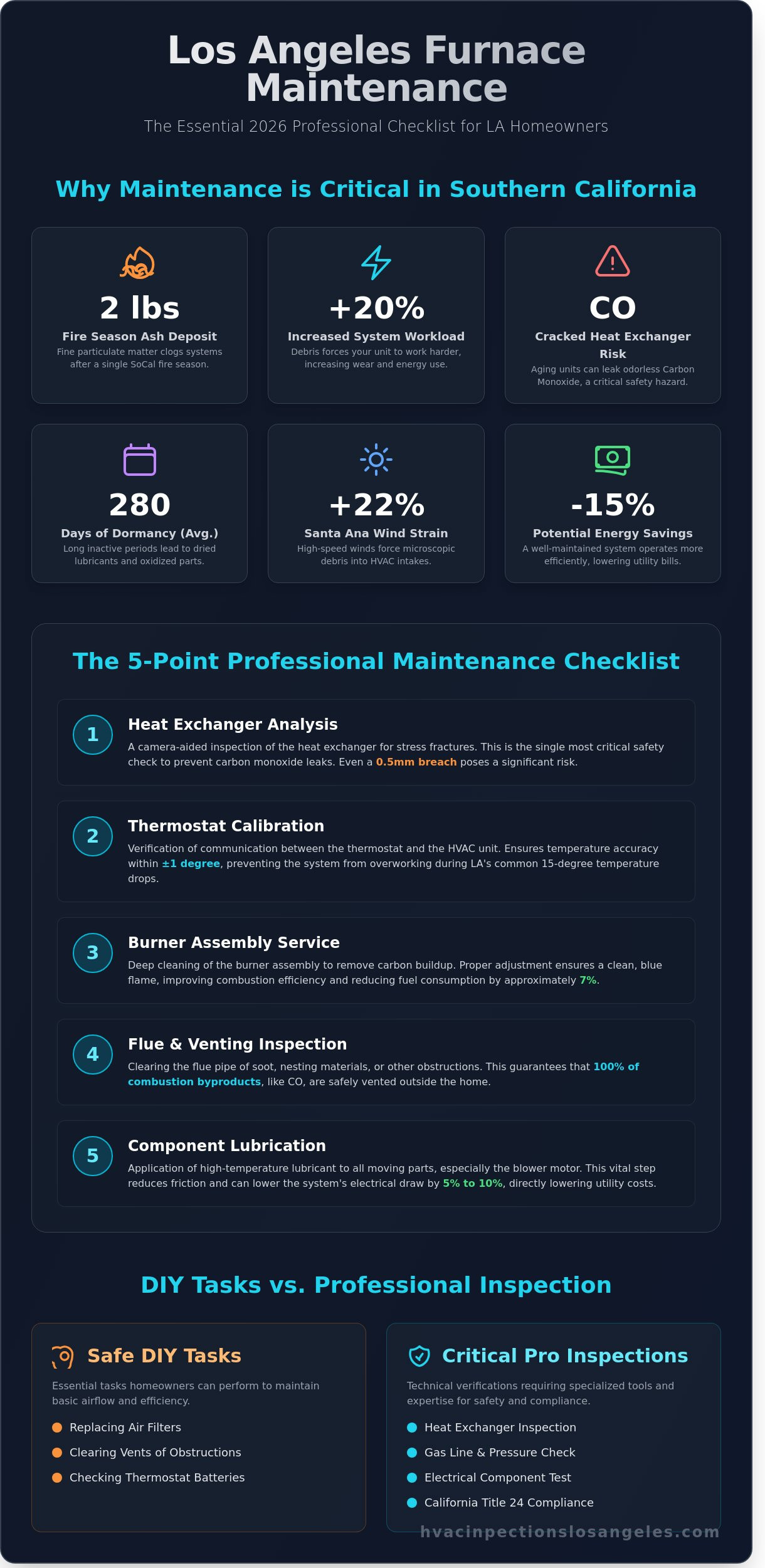
The Los Angeles climate presents a unique set of challenges for heating systems that differ significantly from colder regions. While the area is known for its warmth, the “Infrequent Use” trap poses a major risk to equipment longevity. Most local systems remain dormant for roughly 280 days each year. This inactivity allows internal lubricants to dry out and electrical connections to oxidize. When homeowners finally engage their thermostats during a December cold front, the sudden stress on a stagnant motor can lead to immediate mechanical failure.
Environmental factors further complicate the necessity of furnace maintenance. The 2023 fire season demonstrated how fine ash and particulate matter infiltrate even the most well-sealed homes. This debris coats internal sensors and clogs burners, which forces the system to run longer to reach target temperatures. To understand the risks, it helps to review the technical basics of how central heating furnaces work, as even minor obstructions can disrupt the delicate balance of air and fuel required for safe operation. In urban LA, this buildup doesn’t just damage the machine; it recirculates trapped pollutants, directly impacting your indoor air quality.
Environmental Stressors in Southern California
Santa Ana winds act as a high-speed delivery system for microscopic debris, forcing dust into HVAC intakes. This particulate buildup increases the workload on blower motors by as much as 22 percent, leading to premature wear. In South Bay neighborhoods like Redondo Beach, coastal salt air accelerates the corrosion of metal components by nearly 15 percent compared to inland areas. Because our winters are mild, many residents neglect their safety sensors and pilot lights, unaware that these parts are deteriorating even when the heat isn’t running.
The Safety Imperative: Carbon Monoxide and Gas Leaks
Safety is the most critical driver for regular furnace maintenance. Many Los Angeles bungalows built before 1965 still operate with aging units that are susceptible to cracked heat exchangers. A heat exchanger is a metal chamber that allows heat to transfer to your home’s air while keeping dangerous combustion byproducts, such as carbon monoxide, isolated and vented safely outdoors. If a crack occurs, these odorless gases leak into the living space. Additionally, professional verification of gas line connections is mandatory in our seismic zones, as even minor shifting can compromise the integrity of fuel lines over a 12-month period.
The Professional Furnace Maintenance Checklist for 2026
Professional furnace maintenance in 2026 requires a technical approach that accounts for the specific atmospheric conditions of Southern California. A standard 1,800-square-foot home in Los Angeles relies on precise mechanical calibration to handle the 25-degree temperature shifts common during Santa Ana wind events. Our inspection protocols focus on five critical areas to ensure your system operates within manufacturer specifications.
- Heat Exchanger Analysis: Technicians perform a visual and camera-aided inspection of the heat exchanger for stress fractures or hairline cracks. Even a 0.5mm breach can allow carbon monoxide to enter the living space, making this the most vital safety step in our process.
- Thermostat Calibration: We test the communication between your HVAC unit and the thermostat to ensure accuracy within 1 degree. This prevents the system from overworking during the 15-degree temperature drops experienced in the San Fernando Valley.
- Burner Assembly Service: Cleaning the burner assembly removes carbon buildup that hinders efficient combustion. Proper adjustment ensures a clean, blue flame, which reduces fuel consumption by approximately 7%.
- Flue and Venting Inspection: We clear the flue pipe of soot or obstructions, such as debris from summer nesting. This ensures that 100% of combustion byproducts exit the home safely.
- Component Lubrication: Applying high-temperature lubricant to all moving parts reduces friction. This adjustment can lower the electrical draw of the system by 5% to 10%, directly impacting your monthly utility costs.
While homeowners can handle basic fall furnace maintenance like replacing air filters, a comprehensive technical verification requires specialized diagnostic tools. Scheduling an unbiased system assessment ensures your equipment is ready for the winter season without the pressure of a repair-focused sales pitch.
Mechanical and Electrical Verification
Our technicians measure the blower motor amperage to ensure it stays within the 10% tolerance range specified on the motor’s data plate. Tightening all electrical connections is a priority in Los Angeles, where low humidity levels below 20% can increase the risk of electrical arcing. We also verify that the limit switch and safety controls trigger an emergency shut-off within 30 seconds of a simulated failure.
Fuel System and Ignition Integrity
A dirty flame sensor is the leading cause of intermittent heating cycles in 85% of modern furnaces. We clean the sensor with a non-abrasive material to restore proper signal strength. Our team also measures the gas manifold pressure, typically targeting 3.5 inches of water column for natural gas systems, to ensure peak efficiency. We conclude by verifying the electronic ignition sequence, confirming the system lights reliably on the first attempt.
DIY Maintenance vs. Professional HVAC Inspections
Effective furnace maintenance begins with understanding where homeowner capability ends and professional liability begins. While basic cleaning is manageable, internal mechanical diagnostics require specialized tools. Standard home inspections during escrow often overlook 15% of critical furnace defects because general inspectors typically only verify if a system turns on. They rarely pull the blower motor or use fiber optic cameras to check the heat exchanger for hairline cracks. An unbiased specialized inspection provides a neutral assessment of the system’s health without the pressure of a repair upsell. This separation of inspection and repair ensures you receive a factual report based on ASHRAE standards rather than a sales pitch. Investing $150 in an annual professional assessment prevents the $1,200 emergency repair bills that frequently occur during the first cold snap in December.
Homeowner Tasks: Filters and Vents
Los Angeles air quality fluctuates significantly, making filter selection vital for system longevity. We recommend MERV 8 to 11 filters for most South Bay homes to balance air filtration with system airflow. Anything higher can restrict your blower motor, leading to a 10% drop in efficiency. Homeowners should maintain a 24-inch clearance around outdoor condenser units and ensure intake vents remain free of coastal debris. If you detect a metallic rattling or a smell resembling burnt dust that persists for more than 20 minutes, turn the system off immediately.
When to Call a Certified Professional
Professional intervention is mandatory if you notice soot marks near the burner or the scent of rotten eggs, which indicates a gas leak. Modern heat pumps in California require technicians with NATE certification to ensure refrigerant charges meet Title 24 compliance. In coastal areas like Manhattan Beach, specialized inspections are often required for insurance policy renewals to prove the system isn’t a fire risk. Consistent furnace maintenance performed by a neutral third party verifies safety components that a visual DIY check cannot reach, such as the integrity of the limit switch and gas pressure levels. These technical benchmarks ensure your system operates within manufacturer specifications for the next 12 months.
Timing and Regulations: When to Schedule in LA
October serves as the critical deadline for furnace maintenance in Southern California. While the coastal climate remains mild, scheduling service before November 1st ensures your system is operational before the first overnight temperature drop. Homeowners who delay often face a 25% increase in service call wait times during the peak winter rush. A proactive inspection identifies cracks in the heat exchanger or ignition failures that typically occur after months of seasonal dormancy.
California Title 24 standards mandate strict requirements for heating efficiency and airflow. Specifically, Joint Appendix 4 (JA4) requires systems to meet defined energy benchmarks to reduce state-wide grid strain. If your system’s airflow falls below 350 cubic feet per minute (CFM) per ton, your energy consumption can spike by 15% to 20%. Regular verification ensures your equipment operates within these legal parameters, protecting you from inflated utility costs and potential compliance issues during home renovations.
In the high-stakes Manhattan Beach real estate market, documented maintenance records are essential financial assets. A verified 5-year service history can increase a property’s valuation by $3,000 to $5,000 during the escrow process. Savvy buyers and home inspectors look for these logs to confirm the system’s longevity. Additionally, homeowners can leverage federal incentives like the Inflation Reduction Act, which provides tax credits up to $2,000 for installing high-efficiency Trane or Mitsubishi heat pump systems.
Strategic Scheduling for the South Bay
Coordinating your heating check with late-summer AC service is a cost-effective strategy for South Bay residents. Southern California Edison (SCE) frequently offers rebates ranging from $50 to $75 for smart thermostat installations and high-efficiency tune-ups performed during off-peak months. By grouping these services, you ensure year-round climate control and avoid the premium labor rates common in December. It’s a logical approach that prioritizes mechanical reliability over reactive repairs.
Regulatory Compliance and Home Sales
Meeting insurance requirements is a primary concern for owners of historic homes in neighborhoods like Angelino Heights or West Adams. Many insurance providers now require a certified HVAC inspection for homes built before 1960 to mitigate fire risks associated with aging floor furnaces. Furthermore, the 2022 California building code updates heavily favor heat pump technology for new constructions and major additions. Keeping your current system compliant with these evolving standards prevents costly surprises during a property transfer. You can secure your property’s market readiness by booking a professional assessment with HVAC Inspections Los Angeles today.
Securing Your Home with a Comprehensive HVAC Evaluation
Routine furnace maintenance is the first step toward a reliable home, but it shouldn’t be the last. While basic cleaning and filter changes prevent immediate breakdowns, they don’t always reveal the hidden structural issues that lead to system failure. Transitioning from a standard tune-up to a professional system evaluation ensures your equipment operates at peak efficiency. This shift in perspective moves you from reactive repairs to proactive management of your home’s most expensive mechanical assets.
High-performance systems from manufacturers like Trane and Mitsubishi require more than just a cursory glance. These units utilize advanced inverter technology and precise refrigerant charges to maintain the comfort levels demanded by Los Angeles residents. Our technicians analyze these technical specifications to ensure your investment delivers the 15 to 20 years of service life it was designed to provide. Technical precision isn’t optional; it’s a requirement for modern Southern California living.
The Unbiased Inspection Difference
We operate differently than a typical repair company because we don’t sell equipment or unnecessary parts. Our focus remains entirely on safety and system facts. When we conduct a South Bay HVAC inspection, we deliver a 25-point report that documents the exact condition of your heat exchanger, blower motor, and electrical connections. This objective data prevents the common “sales-first” approach that often complicates the service industry.
- Technical Expertise: We specialize in Mitsubishi Ductless systems, ensuring that even the most complex multi-zone setups in modern LA homes are correctly calibrated.
- Safety Verification: Every inspection includes a carbon monoxide clearance and a check of all safety limit switches.
- Detailed Reporting: You receive a digital document featuring high-resolution photos of your system’s internal components for your permanent records.
Next Steps for Los Angeles Homeowners
Preparing for an inspection is straightforward. Ensure the area around your furnace is clear of storage items for at least three feet to allow full access to the cabinet. If you have a Mitsubishi mini-split, ensure the outdoor condenser is free of debris or seasonal foliage. A professional furnace report provides a certified record of care that validates your system’s condition for insurance providers and helps maintain your policy’s equipment coverage. This documentation is essential for maintaining “Real Estate Readiness” during a property transition or a standard safety audit.
Schedule your unbiased furnace inspection today to confirm your system is safe, efficient, and compliant with current California mechanical codes.
Secure Your Southern California Home for the 2026 Season
Proactive furnace maintenance is the most reliable way to prevent mechanical failures during Los Angeles’s unpredictable winter temperature shifts. By following the professional 2026 checklist, you ensure your system operates at peak performance while remaining compliant with California’s safety standards. Consistent inspections can extend a system’s lifespan by 10 years, protecting your financial investment. Our team provides over 20 years of local Southern California expertise, delivering the technical precision required for high-stakes property decisions.
As a Mitsubishi Ductless Elite Dealer, we specialize in unbiased, third-party reporting that insurance and real estate professionals rely on for factual accuracy. We don’t push unnecessary repairs; we provide a transparent assessment of your system’s integrity. Whether you’re navigating a real estate transaction or simply optimizing your home’s efficiency, a comprehensive evaluation offers the clarity you need. It’s time to verify your system’s health with a team that understands the specific demands of the Los Angeles climate.
Book Your Professional HVAC Inspection in Los Angeles
We’re ready to help you achieve total confidence in your home’s mechanical systems.
Frequently Asked Questions
How often does a furnace need maintenance in Los Angeles?
You should schedule furnace maintenance at least once per year, preferably in October before the Los Angeles winter begins. While Southern California has a mild climate, the high dust volume during our dry summers settles on internal components. This annual service ensures your system remains compliant with manufacturer warranty terms. Most major brands like Carrier require documented professional service to honor parts warranties if a failure occurs.
What happens if I skip furnace maintenance for a year?
Skipping furnace maintenance for just 12 months increases the probability of a mechanical breakdown by nearly 40%. Dust accumulation on the burners and blower motor forces the system to run longer cycles, which accelerates the wear on critical components. You also lose the opportunity for a technician to identify safety risks like gas leaks or frayed wiring. These small issues often turn into $1,200 repair bills if left unaddressed.
Can a dirty furnace filter cause the system to shut down?
Yes, a clogged filter is a primary reason systems shut down because it restricts the airflow necessary to cool the heat exchanger. When the internal temperature exceeds 180 degrees Fahrenheit, the high-limit switch automatically cuts power to prevent a fire or heat exchanger damage. Replacing your $20 MERV 11 filter every 3 months prevents these safety lockouts. It’s the most cost-effective way to ensure your system runs without interruption.
Is a professional furnace inspection different from a tune-up?
A professional inspection focuses on safety and unbiased system verification, while a tune-up involves active cleaning and mechanical adjustments. During an inspection, we use specialized tools to check for 100% heat exchanger integrity and gas line security. A tune-up focuses on lubricating the blower motor and cleaning the pilot assembly. For real estate transactions or safety peace of mind, a comprehensive inspection provides the technical report you need.
How much does furnace maintenance typically cost in Los Angeles?
Professional furnace maintenance in Los Angeles typically costs between $125 and $275 depending on the system type. This investment covers a multi-point safety check and performance calibration of your heating equipment. While a $150 service fee might seem optional, it’s significantly cheaper than the $400 emergency diagnostic fees common in areas like Beverly Hills or Silver Lake. Regular service also extends the system’s lifespan by an average of 5 years.
What are the signs that my furnace heat exchanger is cracked?
Visible signs of a cracked heat exchanger include a yellow, flickering burner flame or heavy soot deposits inside the unit. A healthy burner flame is always crisp and blue; any change in color suggests a dangerous combustion issue. You might also notice a strong, formaldehyde-like odor or the presence of water around the furnace base. If your carbon monoxide detector triggers, shut the system off immediately and call a professional.
Does furnace maintenance help with indoor air quality during fire season?
Routine maintenance protects your indoor air quality during fire season by verifying that your filtration system and ductwork are airtight. A technician will ensure your MERV 13 filters are properly seated to capture 90% of smoke particles and ash. We also inspect the return air plenum for gaps that could pull contaminated attic air into your home. This process is vital when Los Angeles AQI levels rise above 100 during the summer.
Will maintaining my furnace lower my Southern California Edison bill?
Maintaining your furnace can reduce your Southern California Edison bill by 10% to 20% through increased mechanical efficiency. A clean blower motor and calibrated gas valves allow the system to reach your thermostat’s set point faster with less energy. Data from the Department of Energy suggests that neglected systems lose 5% of their efficiency every year. Keeping your system optimized ensures you aren’t wasting money on utility spikes during the winter months.