 Serving Ventura and LA County
 Years of Experience
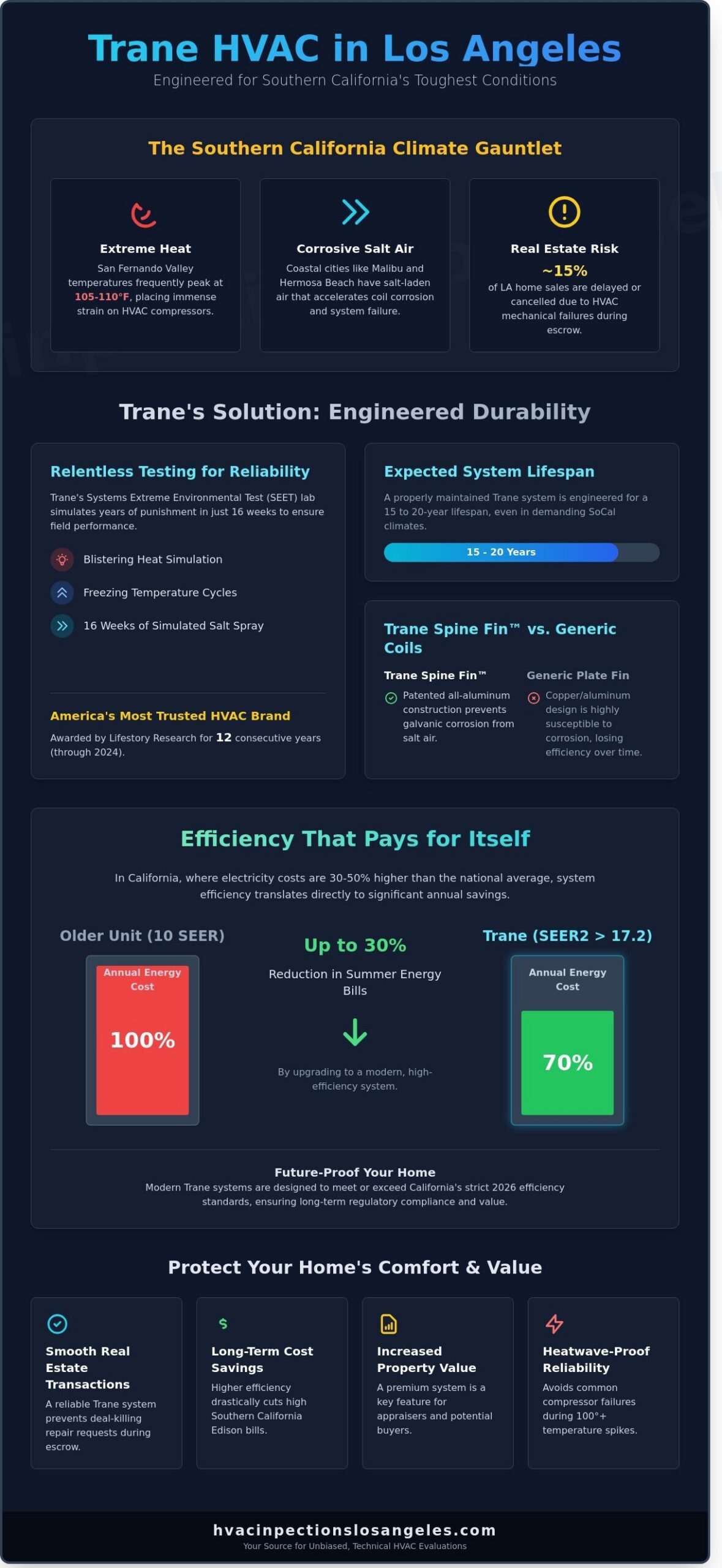
Can a single 48-hour heatwave in the San Fernando Valley really be the catalyst that collapses your cooling system just as you’re entering a critical escrow period? For approximately 15% of Los Angeles homeowners, mechanical failure is the leading cause of a delayed or cancelled real estate closing. You likely already know that our local climate, ranging from 105-degree desert heat to corrosive salt air in beach cities like Malibu, demands more than a standard solution. Choosing a trane system is a strategic decision to prioritize technical durability, but even the best hardware requires a localized approach to survive the specific environmental pressures of Southern California.
We’ll show you exactly why this brand remains a premier choice for achieving a 15 to 20-year lifespan despite these local stressors. You’ll discover how selecting a model with a SEER2 rating above 17.2 can reduce your summer energy bills by 30% compared to older 10 SEER units. This guide provides the unbiased, technical insight you need to evaluate model selection and installation standards. From preventing coastal coil corrosion to ensuring your system is real estate ready, we’re providing the facts necessary to protect your home’s comfort and its long-term value.
Key Takeaways
- Understand why trane engineering is uniquely suited to handle the extreme temperature swings of the San Fernando Valley and the wider Los Angeles basin.
- Learn how the 2026 SEER2 efficiency standards impact your equipment selection and long-term California regulatory compliance.
- Discover specialized protection methods for coastal units to prevent salt air corrosion in neighborhoods like Hermosa Beach and Redondo Beach.
- Compare the benefits of high-efficiency heat pumps against traditional gas furnaces to determine the best fit for the future of the local energy grid.
- Gain insight into why a neutral, third-party inspection is essential for verifying technical performance during real estate or insurance evaluations.
Why Trane is a Leading Choice for Los Angeles Homeowners
For 12 consecutive years, through 2024, Lifestory Research has named Trane “America’s Most Trusted” HVAC brand. This isn’t a title earned through flashy advertising, but through consistent performance in demanding environments. In the San Fernando Valley, where summer temperatures frequently peak at 110 degrees, the mechanical strain on a cooling system is immense. Homeowners need a system that doesn’t just run, but thrives under high pressure. Reliability becomes a critical asset during the fast-paced 10-day or 17-day inspection periods common in Los Angeles real estate transactions. A functioning, high-quality system prevents deal-killing repair requests and ensures a smooth escrow process.
Our team at HVAC Inspections Los Angeles frequently encounters older systems that fail exactly when the Santa Ana winds begin to blow. We recommend trane systems because they are engineered to withstand these specific Southern California stressors. Understanding the Trane company history reveals a century-long obsession with durability that most budget brands simply cannot match. When a property is equipped with a premium system, it signals to appraisers and buyers that the home has been maintained with a focus on long-term value rather than short-term patches.
The “Unstoppable” Reputation in SoCal
Trane subjects its units to the Systems Extreme Environmental Test (SEET) lab, often called the “Snowman” facility. For 16 weeks, units endure simulated salt spray, freezing temperatures, and blistering heat to ensure they won’t fail in the field. This testing is vital for Greater LA homes where dust and airborne particulates from local canyons can clog internal components. A durable unit maintains its efficiency even when the environment is unforgiving. High-quality installations directly impact home appraisals, as certified inspectors recognize the difference between a premium build and a temporary fix. A well-documented maintenance history on a trane unit provides the technical precision buyers look for during a physical inspection.
Trane vs. Generic HVAC Brands
The technical gap between premium engineering and “contractor grade” units is most visible in the coil design. Trane utilizes patented Spine Fin™ all-aluminum coils. These are significantly more resistant to corrosion than the traditional copper and aluminum plate fins found in generic brands. In California’s high-utility-rate market, where electricity costs are 30% to 50% higher than the national average, efficiency isn’t optional. Generic systems often lose their SEER rating effectiveness after just three seasons of heavy use in the Valley heat.
- Build Quality: All-aluminum coils prevent the galvanic corrosion common in coastal Los Angeles neighborhoods.
- Operational Costs: Higher SEER ratings translate to hundreds of dollars in annual savings on Southern California Edison bills.
- Reliability: Avoids the common “heatwave failure” where lower-end compressors seize up during 100-degree spikes.
Choosing a generic brand often results in a lower upfront cost but leads to premature mechanical failure. We see this frequently in our inspection reports; budget units installed five years ago often show more wear than premium units installed a decade prior. Investing in a system with a proven track record ensures that your home remains a safe, climate-controlled environment regardless of external weather shifts.
Deep Dive: Trane’s Proprietary Technology & 2026 Efficiency
On January 1, 2023, the Department of Energy transitioned to SEER2 testing standards, which utilize a more rigorous external static pressure environment to reflect real-world ductwork conditions. As we approach the next regulatory shift, California’s 2026 efficiency standards will place even greater emphasis on reducing the carbon footprint of residential cooling. Trane has positioned its product lineup to meet these requirements through advanced engineering that prioritizes long-term operational savings. For a Los Angeles homeowner, this means installing a system today that remains compliant and efficient for the next 15 years.
TruComfort™ and Variable Speed Performance
Traditional air conditioners operate on a binary cycle; they’re either 100% on or completely off. This creates a “blast of cold air” effect that leads to significant temperature swings and high energy spikes during startup. Trane TruComfort™ systems solve this by using variable speed motors that adjust in increments as small as 1/10th of 1%. This precision allows the unit to run at lower speeds for longer durations, which consumes 50% less energy than standard systems during mild Southern California afternoons. Variable speed technology is the key to modern humidity control in coastal homes. By moving air slowly across the evaporator coil, the system extracts significantly more moisture than a single-stage unit, which is vital for comfort in neighborhoods like Santa Monica or Venice.
Filtration and Indoor Air Quality (IAQ)
Los Angeles residents face unique atmospheric challenges, including a 110-day peak wildfire season and persistent urban smog. Trane CleanEffects™ Whole-Home Air Filtration is engineered to address these specific environmental threats. This system removes up to 99.9% of airborne allergens and captures particles as small as 0.1 microns, making it 8 times more effective than even the highest-rated HEPA room filters. These filtration units integrate directly with smart thermostats to provide real-time air quality data. If outdoor sensors detect a spike in particulate matter from local fires, the system can automatically increase air circulation through the filters to maintain a sterile indoor environment.
The Hyperion™ Air Handler represents another significant leap in mechanical design. Most air handlers use a metal cabinet lined with fiberglass insulation, which can trap moisture and harbor mold in humid conditions. The Hyperion is built like a high-end refrigerator, utilizing a double-walled composite construction with insulation sandwiched between the layers. This design eliminates the need for internal fiberglass and creates an airtight seal that reduces energy leakage by approximately 2%. It’s a meticulous approach to construction that ensures the cooled air actually reaches your living room instead of escaping into an unconditioned attic space.
Technical precision is the hallmark of a reliable HVAC installation. If you’re currently evaluating a property or considering an upgrade, a professional system assessment can help you determine if these advanced features are correctly configured for your home’s specific layout. Choosing the right trane model requires an understanding of how these proprietary technologies interact with your existing ductwork and local microclimate.
The Coastal Factor: Protecting Trane Units in the South Bay
Living along the South Bay coastline presents a unique set of mechanical challenges that inland residents rarely encounter. In Hermosa Beach and Redondo Beach, the salt-saturated air acts as a relentless corrosive agent. It targets the delicate aluminum fins and copper tubing of standard air conditioning systems. Without specific engineering defenses, a typical condenser can see a 30% drop in heat transfer efficiency within just 24 months of installation. Salt air accelerates the oxidation process, leading to “pitting” which eventually causes refrigerant leaks and total system failure.
Corrosion Resistance in Beach Cities
Salt air destroys standard AC coils in under 5 years if the materials aren’t specifically chosen for marine environments. Most manufacturers use a copper tube and aluminum fin design. This combination creates a galvanic reaction when moisture and salt are present, leading to rapid decay. Trane addresses this through their proprietary Spine Fin™ coil. This all-aluminum design eliminates the contact between dissimilar metals, significantly reducing the risk of galvanic corrosion. In our field observations, systems in Manhattan Beach face a 40% higher failure rate than identical units located 15 miles inland. By utilizing all-aluminum construction, these units are better equipped to maintain their minimum energy efficiency standards over a 15-year lifespan, even when subjected to daily sea breezes.
The technical advantage of the Spine Fin™ design lies in its surface area. It features thousands of tiny aluminum bristles wrapped around the refrigerant tubing. This increases the heat exchange surface while providing fewer flat areas where salt crystals can accumulate and harden. It’s a proactive approach to durability that directly impacts the long-term cost of ownership for South Bay homeowners.
WeatherGuard™ and Physical Protection
Physical debris poses a secondary threat to HVAC longevity in neighborhoods like the Hollywood Riviera or the tree-lined streets of North Redondo. Sand, pine needles, and coastal fog can clog the top of a unit, forcing the fan motor to work harder and consume more energy. The WeatherGuard™ II top is a specialized polycarbonate shield designed to deflect these materials. Unlike standard mesh grilles, this solid-top design prevents vertical intrusion while allowing for optimal lateral airflow. It protects the fan motor and internal electronics from direct exposure to the elements.
- Powder-Coated Base Pans: These systems utilize ceramic-coated fasteners and powder-painted base pans that have undergone 2,000 hours of salt spray testing.
- Integrated Durability: While many brands require the purchase of expensive aftermarket “coastal kits,” a properly spec’d trane unit often includes these protective features as standard equipment.
- Impact Resistance: The louvered steel side panels protect the delicate coils from flying debris during high-wind events common in the South Bay.
Maintenance protocols for coastal properties must be more aggressive than standard manufacturer recommendations. For any home located within 5 miles of the Pacific Ocean, we mandate a fresh-water rinse of the exterior coil every 30 days to remove salt buildup. Professional inspections should occur twice annually. These bi-annual checks ensure that the protective coatings remain intact and that the trane system continues to operate at peak performance levels. Skipping these steps in a high-salt environment can void warranties and reduce the functional life of the equipment by 50%.
Selecting the Right Trane Model for Your LA Property
Selecting a new HVAC system requires a technical evaluation of your home’s thermal envelope and your long-term energy goals. The trane XV20i TruComfort Variable Speed unit represents the top tier of efficiency, offering SEER2 ratings up to 21.5. This model adjusts its speed in 1% increments, which maintains consistent temperatures within 0.5 degrees of your thermostat setting. Conversely, the XR15 is a reliable, single-stage alternative for property owners seeking a lower upfront cost while still meeting the 14.3 SEER2 minimum requirement mandated by the South Coast Air Quality Management District (SCAQMD).
The choice between these models often comes down to how long you plan to own the property. High-efficiency variable speed systems like the XV20i provide superior dehumidification, which is vital for coastal Los Angeles climates where morning moisture is common. While the initial investment is higher, the reduced wear on the compressor and lower monthly utility bills often justify the cost over a 15 year lifespan.
Heat Pump Adoption in Southern California
California’s 2026 grid transition goals are accelerating the shift from gas furnaces to electric heat pumps. Under the Federal Inflation Reduction Act, homeowners can claim a tax credit of 30% of the project cost, capped at $2,000 annually, for high-efficiency heat pump installations. These systems provide both heating and cooling from a single outdoor unit, eliminating the need for a separate gas line and reducing the risk of carbon monoxide leaks. In neighborhoods like Torrance, where houses are built in close proximity, the quiet operation of a Trane heat pump is a significant benefit. These units often operate as low as 43 decibels, which is quieter than a standard kitchen refrigerator.
- Federal tax credits up to $2,000 for qualifying heat pump models.
- Elimination of gas combustion for improved indoor air quality.
- Dual-fuel options available for homeowners who prefer a gas backup.
The Importance of Proper Sizing
The technical precision of an installation outweighs the brand name on the cabinet. We frequently find that 60% of existing Los Angeles AC units are improperly sized for the square footage they serve. A Manual J load calculation is the only industry-standard method to determine the exact BTU requirements for your space. This calculation accounts for window orientation, insulation R-values, and ceiling heights rather than relying on outdated “rule of thumb” estimates based solely on square footage.
Size matters because an oversized unit will short-cycle. This means the system turns on and off rapidly, never running long enough to effectively remove moisture from the air. It leads to a clammy indoor environment and causes the compressor to fail prematurely. Our inspections often identify these issues in older systems where a previous contractor installed a “bigger” unit thinking it would cool faster. For historic LA properties in areas like Pasadena or Silver Lake that lack traditional ductwork, we recommend specialized ductless solutions. These mini-splits allow for zoned cooling in 1920s-era bungalows without the need for invasive renovations.
Before you commit to a specific model, ensure your property is ready for a high-efficiency upgrade by verifying the integrity of your existing infrastructure.
to confirm your home’s requirements.
Professional Trane Inspections and Installation in Los Angeles
A successful HVAC upgrade begins long before the first bolt is turned. In the high-stakes Los Angeles real estate market, an objective assessment of your current mechanical state is the only way to avoid overspending on unnecessary equipment. We provide a technical deep dive into your home’s infrastructure to ensure a new system integrates perfectly with your existing ductwork and electrical capacity. This isn’t just a cursory glance; it’s a methodical verification of every component, from the condensate lines to the thermostat calibration.
Our evaluations focus on tangible data points that impact your bottom line. We measure airflow across the evaporator coil and check for duct leakage, which can account for a 30% loss in system efficiency if left unaddressed. For insurance or real estate purposes, our reports offer a definitive snapshot of the equipment’s remaining useful life. Whether you’re in the middle of a 30-day escrow or planning a long-term renovation, having a certified professional verify the health of your trane system provides the legal and financial protection you need.
- Verification of 2023 SEER2 compliance for all new installations.
- Comprehensive testing of refrigerant levels to prevent premature compressor failure.
- Assessment of electrical panels to ensure they can handle modern high-efficiency loads.
- Detailed ductwork integrity checks to maximize the 15-year lifecycle of your unit.
Unbiased Inspections vs. Sales Pitches
Most HVAC companies offer free estimates because their primary objective is to move inventory. Our business model is built on transparency and technical precision. We don’t have quotas to meet or specific brands to push. Our commitment is to provide a factual, evidence-based report on your system’s health. If a $400 repair can safely extend the life of your unit by another three seasons, we’ll tell you. We only recommend a full replacement when the mechanical failure rate or energy costs make a new installation the only logical financial decision.
During a home sale, this objectivity is vital. A buyer’s confidence increases when they see a professional report detailing the exact condition of the furnace and AC. We look for signs of heat exchanger fatigue and secondary drain pan issues that “free” estimators often overlook. This level of detail ensures that no one is surprised by a mechanical failure two weeks after moving in.
Next Steps: Getting Your System Ready
Coastal environments like Hermosa Beach and Manhattan Beach require a specific approach to HVAC maintenance. Salt air can corrode aluminum fins 15% faster than in inland neighborhoods like Pasadena. We specialize in identifying these regional wear patterns early. If you’re ready to upgrade, we help you navigate the 10-year parts warranty requirements to ensure your investment remains protected by the manufacturer. Our team also provides insights into financing for high-efficiency trane systems, allowing you to balance upfront costs with long-term energy savings.
Don’t leave your comfort to chance or biased sales tactics. Secure the technical expertise required for a flawless installation and long-term reliability. Schedule your expert Trane inspection or installation consultation today to get started with a team that prioritizes your safety and system performance.
Securing Your Southern California Comfort for 2026 and Beyond
Investing in a trane system is a strategic decision that aligns your property with the 2026 Department of Energy efficiency standards. These units are engineered to withstand the corrosive salt air of the South Bay while maintaining optimal SEER ratings. When you prioritize technical precision during the installation phase, you ensure your mechanical systems remain a verifiable asset rather than a liability during a real estate transaction. Since 2004, our team has functioned as a neutral third party to verify the integrity of high-performance HVAC systems across Los Angeles. We don’t just look at the thermostat; we analyze the heat exchanger and refrigerant charge to provide an unbiased assessment of your system’s health. As a Certified Trane Provider specialized in real estate and insurance inspections, we offer the technical expertise required to validate your equipment’s performance. Our methodical approach ensures every component meets the rigorous standards expected in Southern California’s demanding climate. Get a Professional Trane System Evaluation in Los Angeles. Ensuring your home remains a sanctuary of safety and efficiency is a goal we can achieve together.
Frequently Asked Questions
Is Trane better than Mitsubishi for Los Angeles homes?
Trane is generally the superior choice for Los Angeles homes that already feature a central ductwork system, while Mitsubishi leads the market in ductless applications. A high-efficiency trane unit provides robust cooling for larger square footages, often reaching 22 SEER2 ratings that exceed California Title 24 requirements. If your property has existing forced-air infrastructure, retrofitting with a central system is typically 30% more cost-effective than installing multiple individual mini-split heads.
How long does a Trane AC unit typically last in the South Bay coastal area?
A trane AC unit typically lasts between 12 and 15 years in South Bay coastal neighborhoods like Manhattan Beach or Redondo Beach. The corrosive salt air in these zones can reduce mechanical lifespan by 20% compared to inland locations like Pasadena. To mitigate this, we recommend units with WeatherGuard II top shields and epoxy-coated coils, which help maintain structural integrity against the 75% average humidity found near the Pacific.
Does Trane offer tax credits or rebates for high-efficiency systems in California?
Yes, qualifying high-efficiency systems offer up to $2,000 in federal tax credits under the Inflation Reduction Act of 2022. Additionally, Los Angeles homeowners can access rebates through the LADWP Consumer Rebate Program, which provides $100 to $500 for upgrades that meet specific energy standards. These incentives apply to units meeting Consortium for Energy Efficiency tiers, effectively reducing your initial capital investment by approximately 15% for most residential installations.
What is the standard warranty on a new Trane HVAC system?
The standard warranty includes a 10-year limited warranty on functional parts and a 10-year to 20-year warranty on the compressor, provided you register the product within 60 days of installation. If you don’t register within that timeframe, the term typically reverts to a 5-year base limited warranty. This coverage ensures your investment remains protected against manufacturing defects, though it doesn’t cover the $150 to $250 labor costs associated with a typical service call.
Can a Trane heat pump replace my old gas furnace in Los Angeles?
Yes, a heat pump can fully replace a gas furnace in Los Angeles because our winter temperatures rarely drop below 40 degrees Fahrenheit. Modern units operate at 300% efficiency, meaning they produce three units of heat for every unit of electricity consumed. This transition eliminates the risk of carbon monoxide leaks from old heat exchangers and aligns with 2023 California building standards focused on residential electrification and local decarbonization goals.
How often should I have my Trane system inspected by a professional?
You should schedule a professional inspection twice per year, once in the spring and once in the fall. Regular maintenance reduces the risk of emergency breakdowns by 95% and ensures the refrigerant charge remains at factory-specified levels. Our technicians check 21 specific components, including the condensate drain line and electrical connections, to verify the system operates within performance parameters and maintains its 10-year warranty status for the long term.
Are Trane parts easily available for repairs in the Los Angeles area?
Replacement components are readily available through more than 5 major distribution hubs located across the Los Angeles basin. This local inventory ensures that 90% of common repairs, such as capacitor or fan motor replacements, are completed within 24 to 48 hours. Because of the brand’s high market share in Southern California, local technicians carry both universal and OEM components on their service trucks, minimizing the downtime that often occurs with niche brands.