 Serving Ventura and LA County
 Years of Experience
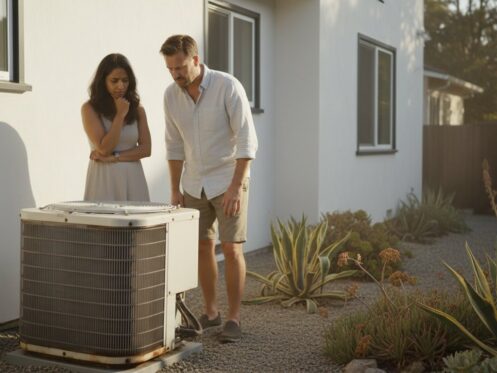
Did you know that 19% of homeowners are planning to install a new HVAC system in 2026 to avoid the compounding costs of maintaining aging equipment? With the average air conditioning repair in Los Angeles now reaching as high as $2,272 for major components, many residents are questioning if their current unit can survive another record-breaking summer. Identifying the early signs your air conditioner needs replacing is essential for maintaining home safety and protecting your property value during a high-stakes real estate transaction. It’s often the difference between a planned, cost-effective upgrade and a frantic, expensive emergency when temperatures spike.
We understand the frustration of watching your LADWP bill climb while your home struggles to stay below the 82-degree threshold mandated for county rentals. You want a reliable system that doesn’t fail when you need it most. This guide provides a technical, unbiased look at when a repair is no longer a viable investment for your Southern California home. You’ll learn how the January 2026 mandate for low-GWP refrigerants and new Title 24 standards impact your options. We also preview how to leverage rebates of up to $10,000 for high-efficiency heat pumps, ensuring your home remains compliant, efficient, and comfortable for the long term.
Key Takeaways
- Understand why the 10-year mechanical threshold and R-22 refrigerant phase-out make older units a significant risk for system failure.
- Learn to identify the specific auditory and olfactory signs your air conditioner needs replacing, including persistent mechanical noises and musty odors.
- Apply the 5,000 Rule to determine if a repair estimate is a logical investment or if your money is better spent on a modern, high-efficiency system.
- Discover how coastal air corrosion and updated California insurance standards are shortening the acceptable lifespan of HVAC units in Southern California.
- Evaluate the benefits of transitioning to heat pump technology to meet 2026 Title 24 energy standards and improve your home’s market readiness.
The 10-Year Threshold: Why Age is More Than a Number
While the history of air conditioning spans over a century, the individual lifespan of your home’s unit is far shorter. In the demanding climate of Southern California, most systems reach their mechanical limit between 10 and 15 years. If your unit was installed before 2016, its age is likely one of the primary signs your air conditioner needs replacing. Operating an aging system isn’t just a comfort issue; it’s a financial liability. As components degrade, the SEER ratings that measured efficiency at the time of manufacture become irrelevant because the system works harder to achieve less cooling. In 2026, the economic lifespan of an HVAC unit is the point where the projected cost of specialized repairs and utility overages over a two-year period exceeds half the investment of a new, compliant installation.
The Refrigerant Trap: R-22 vs. R-410A and Beyond
Units produced before 2010 often rely on R-22, a refrigerant that is now effectively obsolete. If a technician discovers a leak in an R-22 system, the cost to recharge it is often prohibitive, sometimes rivaling the initial down payment on a modern system. Even R-410A systems are facing new pressures. On January 1, 2026, a federal mandate took effect requiring low-GWP refrigerants like R-454B in new equipment. This transition has already contributed to a 10% increase in equipment manufacturing costs. It’s increasingly difficult to justify pouring money into legacy systems that use expensive, environmentally harmful chemicals when those funds could be applied toward a modern, compliant alternative.
Technological Obsolescence and Part Availability
Mechanical systems are only as good as the parts available to fix them. After a unit crosses the 12-year mark, manufacturers frequently stop producing proprietary control boards and specialized fan motors. This scarcity creates a dangerous scenario during a July heatwave in the San Fernando Valley, where homeowners may wait weeks for a refurbished part that might not even work. Specifically, compressor ac compressor failures are frequently the terminal event for older units. When the heart of the system fails after a decade of service, the technical precision required for a repair rarely justifies the cost. This is especially true when you consider that LADWP rebates of up to $10,000 are currently available for high-efficiency heat pump upgrades in 2026, making a full replacement the more logical financial path.
Physical Distress Signals: When Your AC Screams for Help
A properly functioning HVAC system should operate as a background utility, nearly silent and entirely odorless. When your unit begins to communicate through physical distress signals, it often indicates that the internal components have reached a point of mechanical exhaustion. Weak airflow is one of the most common signs your air conditioner needs replacing, as it typically points to a failing blower motor or significant duct integrity issues. If certain rooms remain above the 82-degree threshold mandated by Los Angeles County while others are cold, your system is no longer distributing air effectively. This inefficiency often leads to short-cycling, where the unit turns on and off rapidly. This cycle prevents the system from ever reaching peak SEER efficiency and places immense strain on the compressor, leading to a premature and often total system failure.
Auditory Red Flags: Decoding System Noises
Banging, clanking, or screeching sounds are never minor issues. A screeching sound usually indicates a bearing failure in the fan motor, while a loud clanking often suggests a loose internal component or a failing connecting rod within the compressor. Hissing is particularly concerning, as it frequently signals a high-pressure refrigerant leak. If you hear a heavy thump when the system shuts down, it may indicate that the mounting brackets or the compressor itself have become unseated. These sounds represent serious mechanical risks that go beyond simple maintenance. For homeowners concerned about these sensory red flags, a professional HVAC assessment can provide the technical clarity needed to decide between a repair and a full replacement.
Olfactory Warnings: What Your Nose Knows
Your nose often detects system failure before your thermostat does. Musty odors, frequently called Dirty Sock Syndrome, occur when moisture accumulates on the evaporator coils, leading to mold and bacterial growth. This is especially prevalent in coastal Los Angeles homes where humidity levels fluctuate and salt air can accelerate coil degradation. A sharp, ozone-like or metallic smell near the air handler often signals an electrical component is overheating or a wire is melting. If you detect a burning scent, shut the system down immediately to prevent a fire hazard. These smells are not just unpleasant; they are indicators of compromised indoor air quality and potential safety hazards that require immediate expert intervention.
The Financial Math: Repair vs. Replace Decisions
Decisions regarding high-value mechanical systems should rely on objective data rather than guesswork. When evaluating the signs your air conditioner needs replacing, the most reliable metric is the cumulative cost of ownership versus the projected efficiency of a modern installation. While the average HVAC repair in Los Angeles is $398, costs can quickly escalate to over $2,200 for major components like a compressor or evaporator coil. If you find yourself paying for three $500 repairs over a 24-month period, you’ve spent $1,500 on a system that continues to lose efficiency and reliability. At this stage, the “frequent repair trap” consumes capital that could otherwise serve as a down payment for a high-performance system.
The 5,000 Rule in the 2026 Market
The 5,000 Rule is a standard industry calculation used to determine if a system has reached its economic end of life. To apply this, multiply the age of your unit by the specific repair estimate provided by your technician. If the total exceeds 5,000, a replacement is statistically the more sound financial move. For example, a $600 repair on a 10-year-old unit equals 6,000, suggesting the investment is no longer logical. While premium brands like Trane or Mitsubishi often command higher repair costs due to specialized components, their longevity may slightly shift this threshold; however, the high labor rates in the Los Angeles market typically favor replacement once a unit enters its second decade of service.
Hidden Costs of Keeping an Old System
Beyond the immediate repair bill, an aging AC unit carries substantial hidden costs through “efficiency decay.” Systems older than 10 years rarely maintain their original SEER rating, often forcing homeowners to overpay for electricity during intense Southern California heatwaves. In the context of a real estate transaction, an outdated HVAC system is a frequent hurdle during escrow, often leading to significant buyer credits or insurance non-renewals. Transitioning to modern technology is incentivized in 2026, as the LADWP offers rebates of up to $10,000 for a 4-ton heat pump installation. You can determine the true return on investment for a new ac installation by dividing the total system cost by the projected monthly energy savings and available local rebates.
- Energy Waste: Air conditioning accounts for nearly 7% of all U.S. electricity production, and older units can cost 20% to 50% more to operate than 2026-compliant models.
- Property Value: A certified, high-efficiency HVAC system is a verified asset that increases home value and ensures “real estate readiness” for a smooth sale.
- Compliance: New units meet the 2026 SEER2 minimum of 14.3, protecting you from future regulatory changes and ensuring insurance eligibility.
The Los Angeles Factor: Climate, Salt, and Insurance
Los Angeles homeowners face environmental challenges that national HVAC guides simply don’t address. While a unit in a temperate, inland state might last 20 years, the combination of coastal salt air and seasonal wildfire debris significantly shortens equipment life in Southern California. These regional stressors are often the underlying cause of the physical signs your air conditioner needs replacing, such as corroded fins or a struggling compressor. Additionally, the local insurance market has become increasingly stringent. In 2026, many carriers are flagging systems over 15 years old for mandatory replacement as a condition of policy renewal. This makes proactive assessment a matter of financial protection rather than just home comfort.
Coastal vs. Inland Degradation
A system located in Torrance or Manhattan Beach faces a much harsher reality than one in Pasadena. Salt spray from the Pacific Ocean is highly corrosive to the metal components of an outdoor condenser. Without specialized protective coatings, aluminum fins and copper coils can deteriorate in as little as 7 to 10 years. This degradation leads to refrigerant leaks and a total loss of heat transfer capability. For those living near the water, maintaining high air quality hermosa beach standards requires a system that can withstand these elements without failing prematurely. Inland, the primary threat is the fire season impact. Fine ash and soot from wildfires clog condenser coils, forcing the system to operate at dangerously high pressures and temperatures, which accelerates internal mechanical wear.
Real Estate and Insurance Inspections
The stakes for HVAC health are highest during property transactions. Standard home inspections are generalist by nature and often miss deep-seated technical defects like hairline cracks in a heat exchanger or improper refrigerant charges. Identifying the signs your air conditioner needs replacing before listing a property can save a deal from falling apart during the inspection period. If you’re preparing for a 4-point insurance inspection, an aging or poorly maintained unit can lead to a flat denial of coverage. A professional hvac inspection provides the unbiased, technical data required by both insurers and savvy buyers. It ensures that you aren’t blindsided by a $10,000 credit request during the final days of escrow. To protect your investment and ensure your system meets 2026 compliance standards, you should schedule a certified inspection before the summer heat arrives.
The Professional Verdict: Choosing Your Next System
Confirming the physical and financial signs your air conditioner needs replacing is only the first step in restoring your home’s climate control. The transition from a failing legacy unit to a 2026-compliant system requires a technical strategy that prioritizes long-term ROI over a quick fix. In the Los Angeles market, the most common mistake homeowners make is calling a replacement contractor before securing a neutral assessment. While an installation company is motivated by equipment sales, a certified inspector focuses strictly on mechanical verification. This unbiased approach ensures you don’t overspend on capacity or overlook existing ductwork issues that could compromise a new high-efficiency unit.
The Unbiased Inspection Advantage
There is a critical distinction between a sales technician and a certified HVAC inspector. An inspection from a neutral third party involves a comprehensive evaluation of the evaporator coils, heat exchanger integrity, and electrical delivery systems. We provide a detailed report that serves as a factual roadmap for your upgrade. For those in the middle of a property transaction, this document is essential leverage during real estate negotiations. It moves the conversation from subjective opinions to verified data, ensuring that any credits or price adjustments are based on the actual mechanical state of the system rather than a contractor’s estimate.
Modern Solutions: Mitsubishi and Trane
Once an inspection confirms that your system has reached its terminal point, selecting the right technology is the next priority. In 2026, the industry has shifted heavily toward electrification, making heat pumps the default choice for California residential installations. These systems are uniquely suited for the Southern California climate, providing both heating and cooling with a single, high-efficiency footprint. Depending on your home’s architecture, you may choose between two industry-leading paths:
- Mitsubishi Ductless Mini-Splits: As a Mitsubishi Ductless Elite Dealer, we often recommend these for homes where duct integrity is compromised or for homeowners seeking precision zoning. They allow for independent temperature control in different rooms, significantly reducing energy waste.
- Trane Central Air: For traditional ducted homes, Trane remains the benchmark for durability. These systems are engineered to last 15 to 20 years when properly maintained, offering robust performance that stands up to the intense heat of the San Fernando Valley.
Modern installations now integrate AI-driven smart home technology as a standard feature. These systems provide real-time diagnostics and automated efficiency adjustments, ensuring your new unit maintains its SEER2 rating for years to come. By combining an unbiased professional verdict with premium equipment, you secure a cooling solution that enhances both your daily comfort and your home’s long-term market value.
Securing Your Home’s Climate Future
Navigating the transition from an aging cooling system to a high-efficiency replacement requires technical precision and a clear understanding of your unit’s mechanical health. Whether you’re dealing with coastal corrosion in Manhattan Beach or the skyrocketing repair costs of an obsolete R-22 system, identifying the signs your air conditioner needs replacing is the first step toward long-term peace of mind. By applying the 5,000 Rule and considering the 2026 LADWP rebates of up to $10,000, you can move away from unpredictable repair bills and toward a reliable, compliant home that meets current California Title 24 standards.
Don’t let a sales-driven estimate dictate your financial investment. With over 20 years of unbiased LA inspections, our team provides the factual clarity you need to choose between a Trane central system or a Mitsubishi ductless solution. As a Mitsubishi Ductless Elite Dealer and Trane Authorized Provider, we prioritize your home’s safety and real estate readiness above all else. Get an Unbiased HVAC Inspection Before You Replace to ensure your next cooling decision is backed by expert data. Your comfort and property value deserve a system that’s built for the specific demands of the Southern California climate.
Frequently Asked Questions
Is it worth repairing a 12-year-old air conditioner in Los Angeles?
Generally, it is not cost-effective to repair a unit that has crossed the 10-year threshold. With the average HVAC repair in Los Angeles reaching $398 and major component failures costing up to $2,272, the investment rarely yields a long-term return. Furthermore, the 2026 shift to low-GWP refrigerants means that parts for older R-410A systems will become increasingly expensive and difficult to source.
What is the average cost of an AC replacement in Southern California?
As of May 2026, the average cost to replace a central air conditioner in Los Angeles is $7,428. Most residential projects fall within a range of $4,790 to $10,100. If your home requires a full system overhaul, including new ductwork and high-efficiency components, costs can range between $15,000 and $17,000. These figures reflect the 10% increase in manufacturing costs following recent environmental mandates.
Can an old AC unit affect my home insurance in California?
Yes, aging HVAC systems are increasingly cited as reasons for policy non-renewal in California. Insurers frequently flag units older than 15 years during 4-point inspections because they present higher risks for electrical fires and water damage. Maintaining a modern, compliant system is often a prerequisite for securing standard coverage, especially in neighborhoods prone to extreme weather or fire risks.
How do I know if my AC compressor is actually dead or just needs a part?
A technical diagnostic is required to distinguish between a failed start capacitor and a terminal compressor failure. If the unit hums but fails to engage, it might only require a minor electrical part. However, a seized compressor is one of the most definitive signs your air conditioner needs replacing. This is especially true for systems using phased-out refrigerants where a compressor swap is no longer a logical financial investment.
Are there rebates for switching to a heat pump in LA in 2026?
LADWP currently offers significant financial incentives for homeowners transitioning to energy-efficient technology. As of April 2026, you can qualify for up to $10,000 for a 4-ton heat pump installation, which breaks down to $2,500 per ton. Smart thermostats also qualify for a $140 rebate. These programs are designed to help residents meet the new Title 24 standards that position heat pumps as the default for California homes.
What happens if I ignore the signs of a failing air conditioner?
Ignoring mechanical warnings typically leads to a total system collapse during a peak heatwave when emergency service rates are at their highest. Beyond the loss of comfort, a failing unit can compromise indoor air quality and lead to mold growth through poor humidity control. For landlords, ignoring these signs can result in legal penalties, as Los Angeles County now mandates a maximum indoor temperature of 82 degrees Fahrenheit for habitable rooms.
Does a new AC unit really increase home value for an LA real estate sale?
A certified, high-efficiency HVAC system is a major asset that ensures real estate readiness. In the current market, savvy buyers often request significant credits for aging systems during the escrow process to cover the $7,428 average replacement cost. A new system provides documented proof of efficiency and safety, which streamlines the inspection process and protects your asking price from last-minute negotiations.
Can I replace just the outdoor unit or do I need the whole system?
You must replace both the indoor and outdoor components to ensure system compatibility and maintain your manufacturer’s warranty. Mismatched systems fail to reach their rated SEER2 efficiency and place undue stress on the compressor. Since the 2026 refrigerant mandate requires the use of R-454B, new outdoor condensers are technically incompatible with the evaporator coils found in older R-410A or R-22 air handlers.