 Serving Ventura and LA County
 Years of Experience
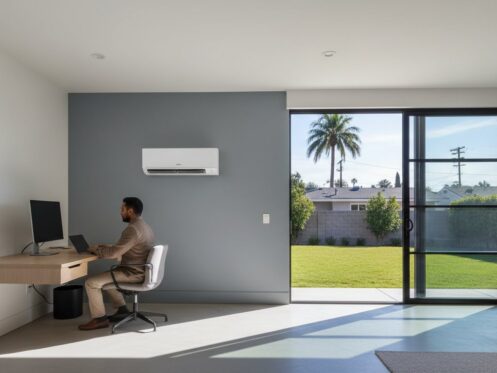
Did you know that traditional central HVAC systems can lose up to 30% of their cooling energy through leaky ductwork before it ever reaches the living space? For a garage renovation, this level of waste is a risk you cannot afford. Installing a ductless mini split for garage conversion los angeles projects is no longer just a luxury. It is a technical necessity for meeting the 2026 California building standards.
You likely already know that Los Angeles garages are notorious for poor insulation and sweltering summer temperatures. Converting that concrete shell into a legal Accessory Dwelling Unit (ADU) requires more than just drywall. It requires a precision climate solution that won’t overload your main home’s electrical panel or fail a Title 24 inspection. This guide explains why high-efficiency heat pumps are the gold standard for professional conversions. You will discover how to ensure your new living space remains quiet and comfortable while staying fully compliant with the latest state energy codes. We will break down the essential requirements for R-32 refrigerant systems, the impact of California’s high electricity rates on your configuration, and the steps to securing a system that passes every local building inspection.
Key Takeaways
- Understand why converting an uninsulated garage requires a dedicated HVAC solution to avoid taxing your main home’s existing system.
- Learn why a ductless mini split for garage conversion los angeles is the preferred choice for meeting strict energy efficiency requirements while maximizing usable square footage.
- Discover the technical necessity of performing a Manual J load calculation to ensure your system remains compliant with California Title 24 standards.
- Evaluate the performance benefits of Mitsubishi and Trane systems, specifically how Hyper-Heating technology manages regional temperature fluctuations.
- Identify the critical steps for a successful installation, from initial thermal assessment to final local building code verification.
Why Garage Conversions in Los Angeles Require Dedicated HVAC
A standard Los Angeles garage is a thermal challenge. Most are uninsulated concrete shells designed for vehicle storage, not human habitation. The concrete slab floor acts as a massive thermal battery, absorbing heat during the day and radiating it long after the sun sets. When you factor in the high thermal gain from a large metal garage door and the lack of wall insulation, the internal temperature can easily exceed 90 degrees during a typical San Fernando Valley summer. Relying on the main home’s existing system is rarely a viable solution for these unique environments.
For a legal conversion, the Los Angeles Department of Building and Safety (LADBS) requires that the space maintains a consistent habitable temperature. Choosing a ductless mini split for garage conversion los angeles projects ensures you meet these technical hurdles without the massive expense of ductwork installation. These Ductless Mini-Split Systems provide both heating and cooling in a single, compact footprint. This allows the new unit to operate independently of the primary residence, ensuring the garage stays comfortable regardless of what is happening in the main house.
The Problem with Extending Your Home’s Central Air
Homeowners often assume they can simply “tap into” the existing ductwork from the main house. This approach is technically flawed and often leads to failed Title 24 inspections. Existing HVAC units are sized based on the specific cubic footage of the original home. Adding an extra 400 to 500 square feet of garage space creates a significant pressure imbalance. The blower motor will struggle to push air through the extended duct runs, leading to hot spots in the ADU and cold spots in the main residence. This extra strain causes the main compressor to cycle more frequently, which inevitably leads to premature mechanical failure and higher repair costs.
Zoned Comfort: Why it Matters for ADUs and Offices
An Accessory Dwelling Unit (ADU) is a self-contained living space on a residential lot that, as of 2026, must adhere to strict all-electric mandates and independent ventilation requirements to ensure occupant safety. Because these spaces often serve as rental units or home offices, they require their own thermostat. If you use the space as a studio during the day, you don’t want to pay to cool it at night. Independent systems allow you to shut down the unit when the space is vacant, providing significant energy savings. This level of precision is essential for managing California’s high electricity rates while maintaining a professional or residential environment that remains quiet and steady.
The Mitsubishi Ductless Advantage for Garage ADUs
Selecting a ductless mini split for garage conversion los angeles projects requires a focus on long-term reliability and technical precision. Mitsubishi Electric systems are widely recognized as the industry standard for these high-stakes conversions. According to the Department of Energy on Ductless Systems, these units avoid the significant energy losses associated with central ductwork, which is a critical advantage given California’s high residential electricity rates. By 2026, all new installations must utilize R-32 refrigerant to comply with updated environmental standards. Mitsubishi has proactively integrated this lower Global Warming Potential (GWP) refrigerant into their product line, ensuring your system remains compliant and serviceable for years to come.
Garages often harbor residual dust, pollen, or particulates from their previous use as storage or vehicle bays. Mitsubishi units address this through multi-stage filtration systems that actively scrub the air, which is essential for maintaining healthy indoor air quality in a small footprint. Furthermore, their Hyper-Heating (H2i) technology provides a consistent heat source even during rare Southern California cold snaps. This ensures that a garage converted into a bedroom or guest suite remains habitable and comfortable regardless of external temperature swings. These systems are designed to be unobtrusive, with wall-mounted or floor-mounted options that preserve precious square footage in a compact ADU.
Why Mitsubishi Electric Diamond Contractor Status Matters
Partnering with a Mitsubishi Electric Diamond Contractor provides homeowners with specific technical advantages that standard contractors cannot offer. This status grants access to extended 12-year parts and compressor warranties, providing a layer of financial security for your investment. Diamond Contractors undergo specialized training to perform precise Manual J load calculations, ensuring the system is neither undersized nor oversized for the specific thermal demands of a concrete garage. If you are currently evaluating a property for a potential conversion, a professional HVAC inspection can determine if your existing electrical panel can support these high-performance systems.
Whisper-Quiet Operation for Productive Spaces
Noise level is a frequent concern for homeowners who plan to use their garage conversion as a home office or a quiet rental unit. Traditional through-the-wall units or older compressors can produce significant vibration and sound that disrupts concentration. Mitsubishi systems utilize advanced inverter technology to solve this problem. Instead of a standard “on-off” cycle that creates loud surges, the inverter modulates the compressor speed to maintain a steady temperature. This results in operation as quiet as 19 decibels, which is softer than a human whisper. This silent performance is a primary reason why a ductless mini split for garage conversion los angeles is the preferred choice for professional designers and architects who prioritize the occupant’s daily experience.
Navigating Title 24 and LA Building Codes
Compliance with California Title 24, Part 6 is a non-negotiable requirement for any legal garage-to-ADU conversion in Los Angeles. These energy efficiency standards dictate how a new conditioned space must perform to minimize its environmental footprint. A central component of this compliance is the submission of a CF-1R report during the permitting process. Choosing a ductless mini split for garage conversion los angeles projects aligns perfectly with the state’s 2026 mandate for high-efficiency, all-electric heat pump technology. These systems are designed to meet the rigorous SEER2 and HSPF2 ratings required by current state law.
To pass a final inspection, your contractor must perform a Manual J load calculation. This technical assessment ensures the system is sized correctly for the specific cubic footage and insulation levels of the garage. Installing an oversized unit is a common mistake that leads to short-cycling, which prevents proper dehumidification and increases energy waste. Beyond internal performance, the Los Angeles Department of Building and Safety (LADBS) enforces strict outdoor unit placement rules. Condensers must comply with local noise ordinances and specific setback requirements from property lines to avoid disturbing neighbors. Proper drainage for condensate lines is another critical inspection point; water must be diverted to an approved disposal location to prevent foundation damage or moisture accumulation.
The Role of a Professional HVAC Inspection
Verifying that an installation meets the specific requirements for LA real estate escrow is essential for protecting your property value. A professional HVAC inspection serves as a neutral verification of the system’s health and safety. Insurance companies frequently require proof of professional installation and code compliance before they will cover a converted living space. An expert evaluation can catch subtle defects, such as improper refrigerant levels or electrical wiring that doesn’t meet the 2026 R-32 safety standards, before these issues lead to system failure or permit denials.
South Bay Coastal Considerations: Hermosa and Manhattan Beach
Garage conversions in coastal neighborhoods like Hermosa Beach and Manhattan Beach face unique environmental stressors. Salt-air corrosion is a primary threat that can destroy a standard condenser’s fins and coils within a few years. Homeowners in these areas should prioritize units with specialized anti-corrosive coatings to ensure longevity. Coastal garages also contend with higher ambient humidity, making the precision dehumidification modes of a high-quality mini-split indispensable. Local zoning in high-density beach communities often includes specific nuances for equipment screening and placement that differ from inland Los Angeles requirements.
Comparing Garage Cooling Options: Why Ductless Wins
While some online forums suggest window units or portable air conditioners as budget-friendly shortcuts, these temporary solutions often lead to legal and technical complications. For a permanent Accessory Dwelling Unit (ADU), a ductless mini split for garage conversion los angeles is the only system that consistently meets California’s strict habitation codes. Portable units and window-mounted systems are generally prohibited for legal conversions because they are not permanent fixtures and fail to provide the required heating capacity. Furthermore, they are notoriously inefficient and struggle to overcome the high thermal gain characteristic of uninsulated garage walls.
Comparing ductless technology to central air reveals significant advantages in both installation speed and long-term ROI. Extending a central HVAC system requires the design and installation of complex ductwork, which often necessitates dropping ceiling heights or sacrificing valuable floor space for bulkheads. A ductless system avoids these structural changes entirely. Because these units are independent, they don’t force your main home’s compressor to work harder, protecting your primary HVAC investment from premature wear. In the high-cost Los Angeles energy market, where electricity rates are nearly double the national average, the precision of a zoned heat pump ensures you only pay for the cooling you actually use.
Efficiency Ratings: SEER2 and HSPF2 Explained
Understanding efficiency ratings is critical for managing your monthly Southern California Edison bill. SEER2 (Seasonal Energy Efficiency Ratio 2) and HSPF2 (Heating Seasonal Performance Factor 2) are the updated metrics used to measure how much cooling or heating a system provides per watt of electricity. In 2026, Southern California regulations require a minimum of 14.3 SEER2 for all new residential heat pump installations. High-performance models often exceed these minimums, which is vital in a garage environment where the lack of a traditional attic space makes heat rejection more difficult. A higher rating ensures the unit can maintain a steady temperature without constant, high-energy cycling.
Aesthetic and Functional Integration
Modern ductless units are designed to be unobtrusive, allowing you to maximize every square inch of your garage conversion. Eliminating bulky ductwork preserves the original ceiling height, making a small ADU feel significantly more spacious. You can choose from wall-mounted units, floor-mounted consoles, or recessed ceiling cassettes depending on your furniture layout and window placement. Ensuring your AC installation complements your ADU’s interior design is a key step in creating a high-end living space. If you are unsure which configuration fits your specific layout, you should schedule a professional system evaluation to determine the most efficient placement for your indoor air handler.
Planning Your Garage Conversion HVAC Project
A successful ADU conversion requires a transition from a storage area to a high-performance living space. This process begins with a technical assessment rather than a hardware purchase. Conducting a thermal load calculation is the first priority. This calculation accounts for the specific dimensions of your garage, the R-value of your insulation, and the heat gain from south-facing walls. Without this data, you risk installing a system that cannot handle the peak summer temperatures in Los Angeles.
Once the load is determined, you must select the right hardware. Mitsubishi and Trane offer robust solutions, though the choice often depends on your specific budget and technological preferences. After selecting your unit, securing permits from the Los Angeles Department of Building and Safety (LADBS) is mandatory. This ensures your ductless mini split for garage conversion los angeles is legally recognized as part of a habitable space. Professional installation by a Mitsubishi Electric Diamond Contractor follows, ensuring the system is charged correctly and meets the 2026 safety standards for R-32 refrigerant. The final step is a rigorous inspection to verify that the system performs as designed before the project is signed off.
Preparing Your Garage for HVAC Installation
Before the installation team arrives, you must address the building envelope. Upgrading the insulation in your walls and installing an insulated garage door will significantly reduce the workload on your new unit. These upgrades prevent the “thermal battery” effect mentioned earlier in this guide. You will also need to hire a licensed electrician to install a dedicated 220V circuit. Most ductless systems require their own breaker to avoid overloading the main house’s electrical panel. Finally, ensure the exterior mounting area is clear of debris and that there is a direct path for the refrigerant line sets to reach the indoor air handler.
Why Choose HVAC Inspections Los Angeles?
We provide a unique advantage by bridging the gap between technical evaluation and long-term system health. Our goal is to ensure your ADU is “escrow-ready” from the moment the installation is complete. This means your documentation is organized, your permits are closed, and your system meets every local building code. If you are converting an older garage, it’s wise to request an assessment for your compressor ac compressor. This verification ensures that the heart of your cooling system is operating at peak efficiency and won’t fail during a high-stakes property transaction or a record-breaking heatwave.
Securing Your Investment with Professional HVAC Planning
Converting a garage into a legal ADU is a significant structural and financial undertaking. Success requires more than just high-quality hardware; it demands strict adherence to California’s 2026 energy standards and precise mechanical execution. By choosing a ductless mini split for garage conversion los angeles, you ensure your new living space remains independent, efficient, and fully compliant with Title 24 regulations. This approach protects your primary home’s HVAC system from unnecessary strain while providing the quiet, zoned comfort that modern tenants and homeowners expect.
Professional verification is the final step in securing your property’s value. Our team brings local LA inspection expertise to every project under CA Contractors License #1075723. As a Mitsubishi Electric Diamond Contractor, we utilize NATE-certified technicians to verify that every installation meets the highest technical and safety benchmarks. We prioritize accuracy so your conversion is ready for immediate use or a future real estate transaction. Schedule your garage conversion HVAC consultation today to ensure your project is built on a foundation of technical excellence. Your path to a comfortable and code-compliant ADU starts with a professional evaluation.
Frequently Asked Questions
Do I need a permit for a mini-split in a garage conversion in Los Angeles?
Yes, the Los Angeles Department of Building and Safety (LADBS) requires a mechanical permit for any new HVAC installation in a habitable space. This process ensures the system meets local safety, noise, and setback ordinances. Converting a garage into an ADU without the proper permits can lead to significant legal complications during a property sale or a denied insurance claim if a mechanical failure occurs.
How much does it cost to install a ductless mini-split in an LA garage?
Total installation costs vary depending on the unit’s capacity, the complexity of the electrical work, and the distance between the indoor air handler and the outdoor condenser. You must also account for the cost of local permits and potential electrical panel upgrades required to support a new 220V circuit. A professional technical evaluation is the most reliable way to determine the specific requirements for your project.
Can a mini-split heat and cool a two-car garage effectively?
A high-performance ductless mini split for garage conversion los angeles is specifically designed to manage the thermal demands of a standard 400 to 500 square foot space. These systems utilize advanced inverter technology to provide consistent climate control regardless of the garage’s original concrete construction. Proper insulation of the garage door and walls will further enhance the system’s effectiveness and long-term energy efficiency.
Is a ductless mini-split Title 24 compliant for an ADU?
Yes, modern heat pump mini-splits are the primary method for meeting California Title 24 energy efficiency standards in 2026. These systems satisfy the all-electric mandates and SEER2 ratings required for new Accessory Dwelling Units. To ensure full compliance, the installation must be documented with the appropriate energy reports and verified by a licensed professional during the final building inspection.
How long does it take to install a mini-split for a garage conversion?
A standard single-zone installation typically takes one full working day to complete. This timeframe includes mounting the indoor unit, placing the outdoor condenser, and running the necessary refrigerant and electrical lines through a small three-inch opening in the wall. More complex projects involving multiple zones or extensive electrical panel modifications may require additional time for testing and final system calibration.
What size mini-split do I need for a 400-square-foot garage?
A 400-square-foot garage generally requires a unit with a capacity of 9,000 to 12,000 BTUs. However, a technician must perform a Manual J load calculation to account for specific factors like ceiling height, window placement, and insulation quality. Sizing a system based solely on square footage can lead to poor performance and increased energy consumption if the garage’s thermal load is higher than average.
Will a mini-split increase my property value in Los Angeles?
Yes, adding a permanent climate control system to a garage conversion significantly increases property value by officially transforming the space into habitable square footage. Appraisers recognize these independent systems as a key requirement for legal ADU status. An efficient, code-compliant installation provides a high return on investment by making the property more attractive to future buyers or renters in the competitive LA market.
Do mini-splits require a lot of maintenance in the LA climate?
Maintenance requirements are straightforward but essential for the longevity of your ductless mini split for garage conversion los angeles. Homeowners should clean the reusable air filters every one to three months to maintain proper airflow and indoor air quality. Professional inspections are recommended annually to check refrigerant levels, clear condensate drain lines, and verify that the outdoor condenser is free from coastal salt-air corrosion or debris.