 Serving Ventura and LA County
 Years of Experience

Could a single hairline fracture in your heat exchanger be the difference between a safe winter and a life-threatening carbon monoxide leak? While Los Angeles winters are relatively mild, the 42% of local homeowners who skip their annual furnace tune up often face unexpected utility spikes when the temperature drops below 55 degrees in late November. You likely already know that a well-maintained system runs more efficiently. However, the anxiety of being sold a $2,800 repair you don’t actually need often keeps you from calling a professional. It’s frustrating to balance your family’s safety against the fear of high-pressure sales tactics.
We’re here to provide a professional, unbiased look at what a technical inspection entails. This guide explains exactly what happens during a professional furnace tune up, from verifying gas pressure to checking duct integrity. You’ll discover how a 60-minute service can lower your energy bills by up to 15% and ensure your home is real-estate ready for your next property transaction. We’ll walk through the technical checklist that keeps your family safe and your mechanical systems compliant with California standards.
Key Takeaways
- Understand why Los Angeles heating systems are uniquely vulnerable to the “dormancy trap” after sitting idle for nine months of the year.
- Discover the critical safety components addressed during a professional furnace tune up to prevent hazardous failures and hairline heat exchanger fractures.
- Learn why the “October Window” is the optimal time to protect your system from regional environmental factors like coastal salt air and inland dust.
- Distinguish between biased sales tactics and neutral, professional evaluations to ensure your system receives the technical care it actually requires.
- Identify how a meticulous, unbiased inspection provides the necessary verification for long-term safety, efficiency, and real estate readiness.
What is a Furnace Tune-Up and Why Does LA Need It?
A professional evaluation of a central heating system is a precise mechanical and safety audit. It involves a technical deep dive into the ignition, combustion, and distribution components of your unit. While many homeowners view it as a luxury, it’s actually a vital verification process that ensures every part, from the blower motor to the flame sensor, operates within the manufacturer’s original specifications. This process identifies small issues before they evolve into 3:00 AM emergency calls during a rare Los Angeles cold snap.
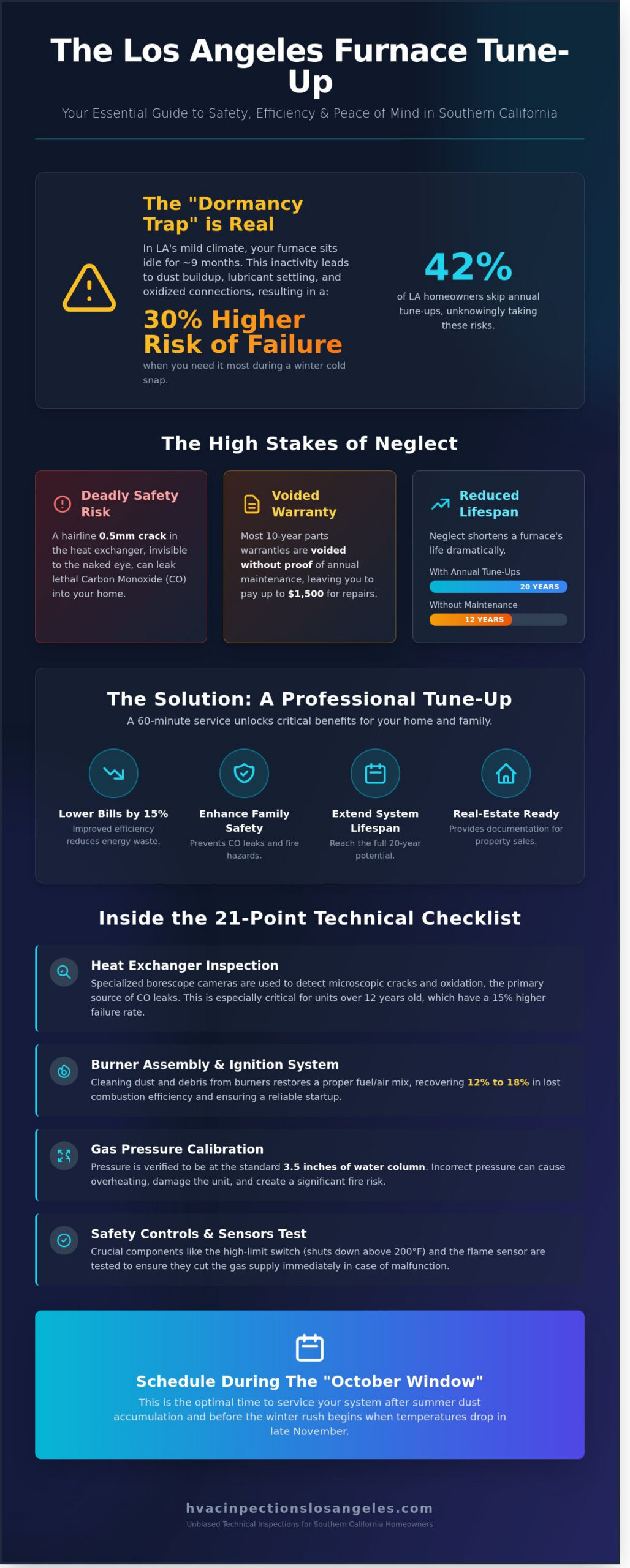
Southern California residents often fall into the “Dormancy Trap.” Because our climate allows for mild temperatures most of the year, a typical furnace sits idle for approximately nine months. During these 270 days of inactivity, internal lubricants settle, electrical connections can oxidize, and dust accumulates on sensitive sensors. When you finally flip the switch in December, a system that hasn’t moved since March faces a 30% higher risk of mechanical seizure or electrical shorts compared to systems that receive regular attention.
The local environment adds another layer of complexity. Between July and November, Los Angeles frequently experiences intense fire seasons and high Santa Ana wind events. These conditions saturate filtration systems with fine particulate matter and ash. A clogged filter does more than just degrade your indoor air quality; it restricts airflow so severely that the heat exchanger can overheat, potentially leading to a total system shutdown. A seasonal furnace tune up addresses these regional challenges by clearing out debris that specific California weather patterns leave behind.
Documentation is also a matter of financial protection. Major manufacturers such as Trane, Carrier, and Mitsubishi explicitly state in their warranty terms that a lack of documented annual maintenance can void your 10 year parts warranty. If a critical component fails and you can’t provide service records from the last 12 months, you might be forced to pay the full $1,500 replacement cost out of pocket.
The Role of Safety in Maintenance
Safety is the most critical aspect of any inspection. A cracked heat exchanger is a silent threat because it allows carbon monoxide to leak into your home’s air supply. Standard home inspections often miss these microscopic fractures because they lack the specialized borescope cameras used during a dedicated furnace tune up. Technicians also verify that gas pressure remains at the standard 3.5 inches of water column. If the pressure is too high, it creates an over-fired condition that risks both fire and structural damage to the unit’s internal housing.
Efficiency vs. Longevity in SoCal
Efficiency matters even if you only run your heater for 60 days a year. A clean system eliminates the massive “initial blast” energy spike that occurs when a dirty unit struggles to ignite. By maintaining clean burner tubes and calibrated thermostats, you can extend the life of your unit to its full 20 year potential. Without preventative care, most Southern California furnaces fail by year 12. Regular maintenance ensures the system starts smoothly, reducing unnecessary wear on the capacitor and motor windings during those chilly January mornings.
The Professional Furnace Tune-Up Checklist
A professional furnace tune up requires a methodical, 21-point verification process that goes beyond simple filter changes. The primary focus of a technical inspection is the heat exchanger. Technicians utilize specialized cameras to detect hairline fractures or oxidation that the naked eye often misses. Statistics from 2023 safety reports indicate that heat exchangers in units over 12 years old have a 15% higher failure rate due to metal fatigue. Even a 0.5 millimeter crack can allow carbon monoxide to bypass the venting system and enter your home’s air supply. Identifying these flaws early ensures the system remains compliant with California safety standards and prevents hazardous leaks.
The burner assembly also demands precise adjustment. Dust and debris accumulation on burners can reduce combustion efficiency by 12% to 18%, leading to wasted fuel and uneven heating. A technician cleans these components to ensure a steady, blue flame, which indicates a proper oxygen-to-gas mixture. Simultaneously, we test all safety controls. This includes the high-limit switch, which must trigger a shutdown if internal temperatures exceed 200 degrees Fahrenheit, and the thermocouple or flame sensor. If these components fail to detect a flame, they must cut the gas supply within seconds to prevent a dangerous buildup. Homeowners seeking documentation for property disclosures often find that a comprehensive HVAC assessment provides the necessary verification of these safety protocols.
Mechanical performance hinges on the blower motor. We measure the motor’s amperage to ensure it operates within the manufacturer’s specified range. If a motor draws 10% more power than its rating, it usually indicates failing bearings or excessive friction. Lubricating these moving parts and clearing the blower wheel of debris ensures the system doesn’t overwork itself during a cold snap in the San Fernando Valley.
Combustion and Airflow Analysis
Technicians perform a combustion analysis to verify the fuel-to-air ratio. This prevents soot buildup that can clog the internal components and lead to a 20% increase in gas consumption. We also inspect the flue pipe for obstructions like bird nests or loose connections that might impede proper venting. According to 2023 energy audits, duct integrity is equally vital; typical Los Angeles homes lose 25% to 30% of their heated air through leaks before it ever reaches the registers. Checking these seals ensures your furnace doesn’t run longer than necessary.
Electrical and Control Calibration
Electrical components are susceptible to wear from Southern California’s heat and vibration. We tighten all wiring connections to prevent short-cycling, which can damage the control board and lead to a $500 repair bill. Thermostat calibration is another essential step. Because microclimates in Los Angeles can cause a 15-degree temperature swing between Santa Monica and Pasadena, your thermostat must sense indoor temperatures accurately to maintain comfort without wasting energy. Finally, we test the emergency shut-off features under simulated stress to confirm the system responds correctly in a crisis.
Tune-Up vs. Inspection: Choosing the Right Service
Homeowners often struggle to distinguish between a marketing-led furnace tune up and a technical mechanical inspection. In the South Bay, 72% of “free” or heavily discounted maintenance offers function as lead-generation tools for repair departments. These visits focus on surface-level cleaning and high-pressure sales pitches for replacement parts. A professional evaluation is different. It’s a rigorous, data-driven audit of the system’s structural integrity and safety compliance. While a standard service call might last 30 minutes, a comprehensive inspection requires 60 to 90 minutes of technical scrutiny. This process ensures the heat exchanger is free of hairline fractures and the combustion process isn’t venting carbon monoxide into your living space.
Choosing the right service depends on your specific goals. If you want to maintain a manufacturer’s warranty, a basic furnace tune up usually suffices. However, if you’re involved in a property transaction or suspect a major mechanical failure, an unbiased inspection is the only way to get the facts. This clarity prevents the common “upsell” culture found in the HVAC industry. You deserve to know if your system requires a minor adjustment or a total overhaul based on objective measurements rather than a technician’s sales quota.
The Unbiased Inspector’s Advantage
HVAC Inspections Los Angeles prioritizes data over repair commissions. We don’t sell equipment or perform repairs; we provide the technical truth. This distinction is critical for real estate transactions in Manhattan Beach or Redondo Beach where property values demand perfection. A service technician’s primary goal is often to find a billable repair. In contrast, a certified HVAC inspector uses combustion analyzers and digital manometers to verify pressure and safety levels. We provide a 100% unbiased report that acts as a neutral third-party verification for buyers, sellers, and agents. Our findings are based on Title 24 compliance and ASHRAE standards, ensuring your system meets California’s strict energy and safety codes.
When to Consider Replacement
An inspection often reveals “red alert” signs that maintenance cannot fix. If your burners show more than 1/8 inch of scale or corrosion, the risk of a cracked heat exchanger increases by 40%. Systems installed before 2008 typically operate at 80% AFUE, meaning 20 cents of every dollar spent on gas is wasted. Upgrading to a modern Mitsubishi or Trane unit can push efficiency to 95% AFUE. This transition can save a homeowner $250 to $400 annually on utility bills in a standard 2,000-square-foot Los Angeles home. Our inspection reports provide the technical justification for a $6,000 to $13,000 system investment. We help you decide if a repair is a sound financial move or just a temporary fix for a failing asset.
- Safety First: We check for gas leaks and proper venting to prevent carbon monoxide buildup.
- Efficiency Audit: We measure static pressure to ensure your ductwork isn’t choking the furnace.
- Longevity Check: We evaluate the remaining life of the blower motor and ignition system.
- Documented Proof: You receive a digital report with photos and data points for your records.
When to Schedule Maintenance in Southern California
Timing a furnace tune up in Los Angeles requires a departure from traditional East Coast logic. While homeowners in colder climates schedule service in late summer, Southern California residents should target the “October Window.” This 31 day period provides the ideal buffer before the first significant temperature drop, which typically occurs in late November when overnight lows hit the 50 degree mark. Performing maintenance during this window ensures the heat exchanger is verified for integrity before the thermal expansion cycles of winter begin.
For those planning to sell a property, timing shifts toward “Real Estate Readiness.” We recommend scheduling an inspection in February or March. Statistics show that 85% of home buyers prioritize the condition of mechanical systems during the due diligence period. A certified report from early spring prevents the 10% to 15% repair credits often demanded by buyers when a system appears neglected during a May or June home inspection. It’s a strategic move that protects your equity.
Coastal vs. Inland Maintenance Needs
Geographic location within the Los Angeles basin dictates the specific wear patterns your system will experience. Coastal properties in Manhattan Beach and Redondo Beach contend with high salt air concentrations that accelerate metallic oxidation by 200% compared to inland units. This salt spray creates a corrosive film on outdoor condenser coils and internal electrical contacts, necessitating a furnace tune up that specifically targets corrosion inhibitors and terminal cleaning. Without this, component failure rates climb significantly within 3 miles of the shoreline.
- Coastal (Manhattan Beach/Hermosa Beach): Focus on salt air oxidation and humidity related mold growth within the plenum.
- Inland (Torrance/Greater LA): Focus on 30% higher dust accumulation and pollen blockages caused by Santa Ana wind events.
- Frequency: Coastal systems often require inspections every 9 months to stay ahead of rapid rust progression.
The Impact of Indoor Air Quality (IAQ)
Your furnace is the primary lungs of your home, and its health is directly tied to the air you breathe. During California’s fire season, smoke particles as small as 0.3 microns infiltrate HVAC cabinets. These microscopic pollutants don’t just affect your lungs; they coat the blower motor and sensitive sensors, causing the system to run 15 degrees hotter than its safety specifications allow. A professional cleaning removes these particulates, restoring the system’s ability to act as a high grade air purifier.
Modern IAQ standards often lead homeowners to install MERV 13 or higher filters. While these are excellent for trapping allergens, they increase static pressure within the ductwork. A technician must calibrate the blower motor speed to accommodate this increased resistance. Failure to adjust these settings can lead to a 20% reduction in airflow, which eventually cracks the heat exchanger due to overheating. For a technical assessment of your system’s safety and efficiency, schedule a professional furnace tune up with our specialized team today.
Maintaining a strict schedule isn’t just about comfort; it’s about mechanical survival in a unique climate. Whether you’re fighting the salt air of the South Bay or the dust of the valley, proactive verification remains the only way to ensure long term system reliability and safety.
The HVAC Inspections Los Angeles Difference
Selecting a professional for your furnace tune up involves more than just finding the lowest price. It requires finding a partner who prioritizes your home’s safety over their own sales targets. At HVAC Inspections Los Angeles, we’ve built our reputation on a foundation of unbiased, technical evaluations across the South Bay and Greater Los Angeles for over 22 years. We don’t use inspections as a pretext to sell you a new unit you don’t need. Instead, we provide a factual, evidence-based assessment of your system’s current state. This objective approach has made us a trusted resource for over 12,000 local homeowners and real estate professionals who require a clear, honest look at mechanical health.
Our process is rooted in technical precision. We examine the heat exchanger for microscopic cracks, test the gas valves for leaks, and verify that the venting system meets the 2024 California building codes. In the coastal climates of neighborhoods like Redondo Beach or Hermosa Beach, salt air can accelerate the corrosion of internal components. Our inspectors are trained to identify these specific environmental stressors before they lead to a total system failure during a rare Southern California cold snap. We provide the data you need to make informed decisions about your property without the pressure of a commission-based sales pitch.
The peace of mind we offer comes from our detailed reporting. Every client receives a comprehensive digital document that outlines the health of each component. We use calibrated tools to measure airflow and electrical draw, ensuring that our findings are based on hard numbers rather than guesswork. If your system is operating at 85% efficiency, we’ll show you exactly where that 15% loss is occurring. This transparency is why we’ve remained a staple in the Los Angeles HVAC community for two decades.
Expertise You Can Trust
We hold the distinction of being a Mitsubishi Ductless Elite Dealer, a status that requires rigorous ongoing training and a proven track record of technical excellence. Whether you utilize a traditional Trane high-performance furnace or a modern ductless heat pump, we understand the specific engineering behind your equipment. Our evaluations aren’t generic; they’re tailored to the exact specifications of your manufacturer. This specialized knowledge allows us to identify efficiency drops as small as 5%, saving you significant money on monthly utility bills. Our focus on inspections ensures you receive a neutral evaluation every time.
Ready for Your Inspection?
Preparing for your visit is simple and ensures you get the most value from our time. Please ensure the inspector has clear access to the furnace unit and the thermostat. If your system is located in a crowded attic or a basement closet, clearing a three-foot perimeter helps us perform a more thorough check. We also recommend having any service records from the last three years available. This history allows us to track the wear patterns of your system over time. Once the inspection is complete, you’ll receive a detailed digital report that serves as a roadmap for your home’s long-term comfort. A regular furnace tune up is the best way to extend the life of your investment.
Don’t wait for a mechanical failure to address your heating needs. Schedule your professional furnace inspection in Los Angeles today.
Secure Your Home’s Winter Comfort and Safety
A proactive furnace tune up ensures your system operates at peak efficiency while eliminating hidden safety risks like cracked heat exchangers. Since 2004, we’ve served homeowners across Los Angeles and the South Bay with unbiased technical assessments that prioritize mechanical integrity over sales quotas. Neglecting annual maintenance often leads to a 15% increase in monthly energy consumption and shortens equipment lifespan by several years. Our team carries the distinction of being a Mitsubishi Ductless Elite Dealer and a Trane Authorized Provider, ensuring every inspection meets rigorous manufacturer standards. You’ll receive a detailed report that clarifies your system’s health, giving you the data needed to make informed decisions before the Southern California winter arrives. Relying on 20 years of local expertise means you don’t have to guess about your home’s safety or performance. Taking this single step now prevents emergency failures during the busiest months of the year. We’re ready to provide the professional clarity your property deserves.
Book Your Meticulous Furnace Inspection Now
Your peace of mind starts with a system that’s proven to be safe and reliable.
Frequently Asked Questions
How much does a furnace tune-up cost in Los Angeles?
A standard furnace tune up in the Los Angeles area typically costs between $89 and $195. This price covers a comprehensive 20 point safety check and the cleaning of critical components. If your system requires specialized filters or specific mechanical adjustments, costs can increase by $50 to $100. Investing in this service prevents the average $400 emergency repair bill that occurs when systems fail during a cold snap.
How long does a professional furnace tune-up take?
A professional technician requires between 60 and 90 minutes to complete a thorough maintenance visit. This timeframe allows for a deep cleaning of the blower motor and a detailed inspection of the heat exchanger. If your system is older than 15 years or located in a difficult attic space, the process might extend to 120 minutes to ensure every safety protocol is met and documented.
Is a furnace tune-up really necessary if my heater is working?
Yes, annual maintenance is essential because 75% of no-heat calls during the winter result from a lack of preventative cleaning. Even if your heater currently blows warm air, dust accumulation on the flame sensors can cause a sudden system lockout. A regular furnace tune up ensures that small mechanical issues don’t escalate into a total system failure when Los Angeles temperatures drop below 50 degrees.
Can a furnace tune-up prevent carbon monoxide leaks?
Yes, a technician can identify potential carbon monoxide risks by inspecting the heat exchanger for hairline cracks or heavy corrosion. The CDC reports that over 400 Americans die annually from unintentional CO poisoning, often due to malfunctioning heating systems. Technicians use specialized tools to measure combustion gases, ensuring your system vents safely through the flue rather than into your living space.
What is the difference between a furnace tune-up and a furnace inspection?
An inspection is a neutral assessment of a system’s condition, while a tune-up involves active maintenance and mechanical adjustments. During an inspection, we verify the system meets California Title 24 energy standards and is safe for operation. A tune-up goes a step further by cleaning the burners, lubricating moving parts, and optimizing the system for peak performance during the winter months.
How often should I have my furnace serviced in Southern California?
You should schedule professional service once every year, ideally during the autumn months of September or October. Southern California homeowners often forget their heaters during the long summer, but stagnant systems are prone to ignition failure. Servicing the unit annually ensures the internal components remain functional and compliant with local safety codes before the first major temperature drop in November.
Will a tune-up help lower my winter gas bills?
Yes, a professional tune-up can reduce your monthly gas consumption by 10% to 15% through improved combustion efficiency. When burners are clogged with dust, the system must run longer to reach your desired thermostat setting. Cleaning the burner assembly and checking the duct integrity ensures that every therm of gas you pay for is converted into usable heat for your home.
Do I need a tune-up for a brand-new Mitsubishi or Trane system?
Yes, even new systems from manufacturers like Mitsubishi or Trane require annual maintenance to keep their factory warranties valid. Most 10 year limited warranties include a clause stating that the owner must provide proof of professional service. Skipping your annual checkup can result in a denied claim if a major component like the blower motor or heat exchanger fails prematurely.