
 Serving Ventura and LA County
 Years of Experience
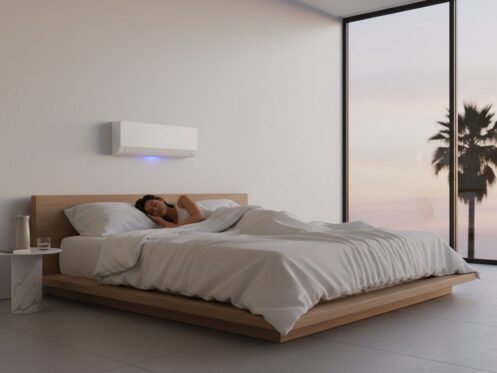
Imagine waking up at 3:00 AM not because of a bad dream, but because your air conditioner just shuddered to life with a metallic clank that rattled your bedroom wall. For a light sleeper, that single mechanical jolt or the high-pitched whistle from a vent can end a night of restorative rest. You deserve a bedroom environment that remains at a consistent, silent temperature without these intrusive sound triggers. If you are tired of your HVAC system acting as an unwanted alarm clock, it’s time to look at how modern engineering has prioritized acoustic comfort.
This guide identifies the quietest hvac systems for light sleepers available in 2026. You’ll discover how inverter-driven technology and variable-speed compressors eliminate the disruptive start-stop cycles that plague standard units. We provide a technical breakdown of the most silent models on the market, including an expert comparison between Mitsubishi ductless mini-splits and Trane advanced central air systems. By understanding decibel ratings and proper installation standards, you can transform your home into a sanctuary of silent comfort.
Key Takeaways
- Understand why traditional single-stage systems trigger micro-arousals and how consistent operation prevents sleep disruption.
- Learn how inverter technology and variable-speed motors create the quietest hvac systems for light sleepers by maintaining steady, low-decibel performance.
- Compare the acoustic benefits of Mitsubishi ductless mini-splits against Trane TruComfort™ systems to find the optimal solution for your specific floor plan.
- Identify strategic installation techniques, such as vibration isolation and unit placement, that prevent mechanical noise from traveling through your walls.
- Discover the specific inspection and maintenance protocols required to stop high-pitched whistling and mechanical rattles before they compromise your sleep.
Why Traditional HVAC Systems Fail Light Sleepers
Sleep science indicates that the human brain remains highly sensitive to environmental changes even during deep rest. While a steady white noise might be soothing, a sudden acoustic delta, or a rapid spike in volume, triggers what neurologists call micro-arousals. These events pull you out of restorative sleep cycles without you necessarily realizing it. Traditional HVAC systems are often the primary source of these disruptions because they lack the modulation required to maintain a steady sound profile. When searching for the quietest hvac systems for light sleepers, the goal is to eliminate these sharp transitions entirely.
In the HVAC industry, noise is measured in decibels (dB). It is a logarithmic scale. This means a system operating at 60 dB is actually ten times louder than one at 50 dB. For a bedroom environment, any sound above 40 dB can be intrusive during the quiet of night. Standard units often exceed 70 dB during the startup phase. This is not just about the volume of the air moving through the vents; it is about the mechanical resonance and vibration of the machinery itself.
The ‘Start-Stop’ Problem in Standard Units
Most older furnaces and air conditioners use single-stage compressors. These components operate at either 100% capacity or 0%. There is no middle ground. When the thermostat calls for cooling, the system sends a massive surge of current to the outdoor unit. This creates a physical thud as the compressor engages. Because many Los Angeles homes use wood-frame construction, this vibration travels through the foundation and into bedroom walls. Light sleepers often find themselves in a state of subconscious tension, waiting for that inevitable mechanical jolt to occur.
Ductwork Noise: The Hidden Sleep Thief
Even if the unit itself is relatively quiet, the delivery system can fail you. High-velocity air forced through undersized or poorly routed ducts creates a high-pitched whistling. Additionally, as metal ductwork warms or cools, the material expands and contracts. This physical movement results in oil-canning, which are the rhythmic popping or banging sounds that echo through the vents at night. Identifying the quietest hvac systems for light sleepers requires looking beyond the manufacturer’s stickers and examining how the system interacts with your home’s unique ductwork.
To mitigate these issues, engineers sometimes use Sound attenuators to dampen acoustic energy within the airflow. However, if your registers are vibrating or your vents are screaming, a professional HVAC inspection is the necessary first step. This evaluation determines if the noise stems from mechanical failure or a fundamental design flaw. Addressing these structural issues is essential before investing in new equipment.
The Technology of Silence: Inverters and Variable Speeds
Achieving a truly silent indoor environment requires a shift from mechanical switching to electronic modulation. While older systems rely on a binary on or off approach, the quietest hvac systems for light sleepers utilize inverter-driven compressors. These components don’t simply shut down when the target temperature is reached. Instead, they slow down to a precise frequency that maintains the climate without the disruptive restart sounds discussed earlier. This constant, low-level operation eliminates the acoustic spikes that wake sensitive sleepers.
The hardware involved in modern silent comfort extends beyond the compressor. Manufacturers now integrate heavy-duty sound blankets made of high-density materials to wrap the compressor, absorbing high-frequency noise at the source. Vibration isolators, often made of specialized rubber or composite materials, decouple the unit from the mounting surface. This prevents structural resonance from turning your home’s framing into a speaker. By 2026, the benchmark for premium indoor units has dropped below 20 decibels. For context, this is quieter than a human whisper or rustling leaves.
Inverter Technology Explained for Homeowners
Think of a standard HVAC system as a light switch that only has off and full brightness. An inverter system works like a dimmer switch. It provides exactly the amount of cooling or heating needed by adjusting its power draw in real-time. This constant operation at lower speeds is significantly quieter than intermittent high-speed blasts of air. This design also aligns with EPA guidance on HVAC systems, which emphasizes that proper equipment selection is vital for managing both air quality and acoustic levels in sensitive environments. If you aren’t sure if your current equipment uses this technology, a professional assessment can clarify your system’s capabilities.
Advanced Fan Blade Design
Noise isn’t just mechanical; it’s also aerodynamic. Modern fan blades often feature serrated edges or bird-wing profiles inspired by the silent flight of owls. These designs break up air turbulence and reduce the whooshing sound associated with high-velocity airflow. When paired with high-efficiency DC motors, these systems eliminate the electronic hum or buzz common in older AC motors. Variable speed is the ability to adjust output in 1% increments for precise sound control. This granularity ensures the system never moves more air than necessary, keeping the bedroom environment perfectly still and silent.
Comparing the Quietest HVAC Models: Mitsubishi vs. Trane
Selecting the quietest hvac systems for light sleepers often involves a choice between two distinct engineering philosophies. Mitsubishi Electric and Trane both lead the market in 2026, but they address acoustic comfort through different mechanical architectures. Mitsubishi dominates the ductless category with ultra-low decibel indoor units designed for point-of-use silence. Trane focuses on sophisticated sound-dampening for whole-home central air configurations. Understanding how these systems perform in a head-to-head comparison is essential for anyone whose rest depends on a near-silent environment.
Decibel ratings provide the most objective baseline for comparison. Flagship Mitsubishi indoor units can operate at levels as low as 19 to 24 dB, which is barely audible to the human ear. In contrast, high-end central air conditioners like the Trane XV20i typically operate between 55 and 57 dB. While the Trane unit is exceptionally quiet for a central system, the logarithmic nature of sound means the Mitsubishi ductless unit is significantly quieter in an indoor setting. This disparity is why research on household appliance noise emphasizes the importance of unit proximity and delivery method when designing a sleep-safe environment.
Mitsubishi Ductless Mini-Splits: The Sleep Specialist
Mitsubishi Electric is the gold standard for bedroom applications because removing ductwork eliminates 50% of potential noise issues. There are no metal ducts to pop or whistle as air moves through them. Their ‘Quiet Mode’ feature specifically optimizes fan speed and refrigerant flow to bring indoor sound down to that 19 dB threshold. Because these systems are precision-engineered, working with a Mitsubishi Ductless Elite Dealer is the only way to ensure the system is calibrated for maximum silence. These specialists understand how to mount the units to avoid wall resonance that could otherwise disturb a light sleeper.
Trane Central Systems: Silence for the Whole House
If your home requires a whole-house solution using existing infrastructure, the Trane XV20i Variable Speed unit is the premier choice. It features a unique sound-dampening cage and an integrated fan system designed to reduce air turbulence. Trane’s ‘soft start’ capability is a critical advantage for light sleepers. It allows the system to ramp up power gradually rather than kicking on with a loud mechanical jolt. This gradual transition prevents the sudden sound spikes that trigger micro-arousals during the night. Trane systems are built for longevity, ensuring that the internal components don’t develop the loose rattles or hums that often plague lower-tier central air brands after a few years of operation.
Strategic Installation: Designing a Noise-Free Environment
Even the most advanced hardware will fail to provide silent comfort if the installation process ignores the physics of sound transmission. Selecting the quietest hvac systems for light sleepers is only half of the equation. The other half involves a meticulous layout that accounts for structural resonance and acoustic shadows. In many Los Angeles homes, the proximity of the outdoor condenser to the bedroom wall is the primary cause of sleep disruption. This is not due to the air noise itself, but rather the mechanical vibrations that travel through the building’s studs and drywall.
A professional installation must prioritize the decoupling of mechanical components from the living space. High-quality refrigerant line insulation serves a dual purpose. It maintains thermal efficiency while simultaneously dampening the “hissing” sound of refrigerant moving through the copper pipes. Using heavy-duty acoustic liners within the plenums and applying vibration dampeners to mounting brackets ensures that the system operates as a whisper rather than a low-frequency hum that can be felt through the floorboards.
Bedroom Placement Strategy
Strategic placement of the indoor unit is vital for maintaining a restful atmosphere. You should never place a wall-mounted unit directly above the headboard. This positioning creates a risk of structural vibration being felt through the bed frame and makes any minor mechanical click or expansion sound much more audible. Instead, units should be placed on a perpendicular wall where the air throw can be managed effectively. Proper airflow management prevents the sudden “draft” sensation that can startle a light sleeper awake. In coastal areas like Hermosa Beach, installers can leverage natural coastal air flow to support cooling, allowing the system to run at even lower, quieter fan speeds during the night.
Condenser Isolation Techniques
Tight Los Angeles lots often require the outdoor unit to be mounted close to the home. In these scenarios, installers must use wall brackets with specialized isolation grommets or heavy-duty snow stands to prevent structure-borne noise. Properly installed vibration isolators can reduce structure-borne noise by up to 15 decibels in residential settings. This is critical for meeting the Los Angeles noise ordinance, which limits exterior noise to 40 dB(A) during nighttime hours at the property line. Adhering to these distance and isolation requirements protects your relationship with your neighbors while ensuring your own bedroom remains a sanctuary. If you are concerned about how your current unit is mounted, you can schedule a residential HVAC inspection to identify and correct noise-leaking installation flaws.
The Meticulous Expert Approach: Selection and Inspection in LA
A high-end mechanical system is only as quiet as the environment in which it’s installed. Generic installations often overlook the specific architectural nuances of Los Angeles homes, leading to unexpected noise leaks that compromise even the best equipment. When you invest in the quietest hvac systems for light sleepers, you’re buying precision technology that requires a matching level of precision during setup. A meticulous approach identifies potential sound bridges before the first bolt is tightened.
The Value of a Pre-Installation Inspection
Existing infrastructure often harbors hidden acoustic flaws. A professional evaluation includes checking ductwork for “oil-canning” or loose connections that cause rhythmic banging as the metal reacts to temperature changes. Inverters require stable electrical power to operate efficiently. If your electrical capacity is insufficient, the inverter may produce a high-pitched electronic hum. Additionally, identifying thermal leaks in your home’s envelope is crucial. If a room cannot hold its temperature, the system is forced to run at higher fan speeds for longer durations, which increases the ambient noise level in the bedroom.
System strain is also directly linked to air hygiene. High-resistance filters or clogged coils increase static pressure, forcing the blower motor to work harder and louder. Reviewing IAQ and air filtration standards helps ensure that your pursuit of clean air doesn’t result in a noisier bedroom. A system that breathes easily is a system that operates quietly.
Long-Term Silence Through Maintenance
Mechanical silence is not a permanent state; it must be maintained. Over time, dirty ac compressors are forced to operate at higher internal pressures. This increased workload results in greater mechanical vibration and a louder operational profile. Rhythmic squeaks or chirps often stem from unlubricated bearings or fan belts that have lost their tension. Scheduling regular furnace maintenance is equally important. This process eliminates the “bangs” and “pops” caused by delayed ignition or metal expansion in the heat exchanger during winter nights.
Before committing to a new installation, use this final checklist to protect your sleep:
- Verify the manufacturer’s decibel ratings for both indoor and outdoor components.
- Confirm that the installation plan includes vibration isolation mounts and grommets.
- Ensure the ductwork is sized correctly for the system’s CFM (Cubic Feet per Minute) output.
- Check that the thermostat is compatible with 1% increment variable-speed modulation.
- Audit the bedroom for structural sound bridges, such as shared walls with the outdoor condenser.
By following these steps, you ensure that your quietest hvac systems for light sleepers perform exactly as engineered, providing a silent, climate-controlled sanctuary for years to come.
Secure Your Sleep with Silent HVAC Engineering
Your bedroom should be a sanctuary where mechanical noise never interrupts your rest. Achieving this requires a combination of inverter-driven technology, precision installation, and ongoing technical maintenance. Whether you opt for the ultra-low decibel performance of a Mitsubishi mini-split or the robust, variable-speed power of a Trane central system, the objective remains the same. You must eliminate the start-stop sound triggers that cause micro-arousals. Investing in the quietest hvac systems for light sleepers is a commitment to your long-term health and well-being.
With over 20 years of experience conducting specialized HVAC inspections across Los Angeles, we understand the local architectural challenges that contribute to structural resonance. As a Mitsubishi Ductless Elite Dealer, we possess the technical expertise to calibrate these advanced systems for maximum silence. We also provide in-depth evaluations for Trane technologies to ensure your whole-home comfort doesn’t come at the cost of your sleep quality. Don’t let a rattling compressor or whistling vent dictate your sleep schedule. Schedule a Quiet-Comfort HVAC Consultation with our LA Experts today to verify your system’s health and explore silent cooling solutions. You deserve a home that works quietly in the background while you recover for the day ahead.
Frequently Asked Questions
What is the quietest HVAC brand for 2026?
Mitsubishi Electric remains the industry leader for indoor silence, with their premium ductless units reaching levels as low as 19 decibels. For homeowners who prefer central air, the Trane XV20i is among the top-tier options for 2026. Both brands utilize advanced inverter technology to maintain a consistent temperature without the loud mechanical cycles found in budget-grade equipment.
Are ductless mini-splits actually quieter than central air?
Ductless systems are inherently quieter because they eliminate the need for expansive sheet metal ductwork. Metal ducts often create noise through air turbulence or the “oil-canning” effect of expansion and contraction. By delivering conditioned air directly from the indoor unit, mini-splits remove the primary source of whistling and popping sounds that disrupt sleep.
How many decibels is considered ‘quiet’ for a bedroom AC?
An indoor noise level between 19 and 25 decibels is the target for the quietest hvac systems for light sleepers. For comparison, 20 decibels is roughly equivalent to the sound of rustling leaves or a whisper. Most light sleepers begin to experience micro-arousals once environmental noise exceeds 40 decibels during the night.
Can I make my existing HVAC system quieter without replacing it?
You can often reduce noise by installing compressor sound blankets and vibration isolation pads on the outdoor unit. Inside the home, sealing duct leaks and ensuring that registers are not obstructed can lower air velocity noise. If the sound is mechanical, a professional technician can lubricate bearings or tighten loose fan belts to eliminate high-pitched squeaks.
Do quiet HVAC systems cost more to install in Los Angeles?
Premium silent systems involve a higher equipment cost due to the complexity of inverter-driven compressors and variable-speed motors. In Los Angeles, the installation process may also include specialized mounting to ensure compliance with local nighttime noise ordinances. While the initial investment is higher, the benefit of uninterrupted sleep and lower energy consumption provides long-term value.
Why does my HVAC system make a loud clicking sound when it turns on?
A loud clicking sound is often the result of an electrical relay engaging or a failing start capacitor in the outdoor unit. It can also be caused by the rapid expansion of metal ductwork as cold or hot air begins to flow. If you hear persistent clicking followed by a failure to start, it’s a sign of an impending mechanical issue that requires inspection.
Will a variable-speed system help with my allergies as well as noise?
Variable-speed systems improve indoor air quality by providing constant, low-velocity air circulation. Because the system runs more consistently at lower speeds, the air passes through your filtration system more frequently. This process traps more dust, pollen, and pet dander than a traditional system that only moves air in short, high-velocity bursts.
Does the location of the outdoor unit affect how much I hear it inside?
The proximity of the outdoor condenser to your bedroom wall significantly impacts your indoor acoustic comfort. Units mounted on wall brackets or located directly under a bedroom window transmit vibrations through the home’s framing. Placing the unit at a distance or using specialized isolation stands is essential for maintaining a silent bedroom environment.