
 Serving Ventura and LA County
 Years of Experience
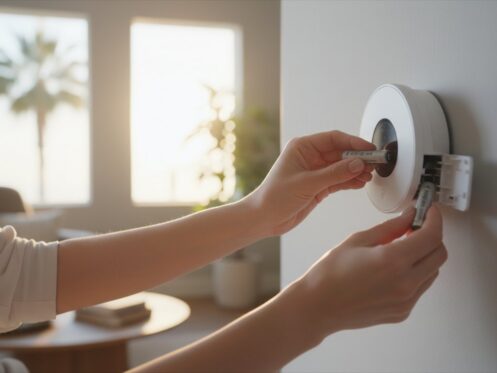
On a Tuesday afternoon in August, a homeowner in the San Fernando Valley discovers their living room reaching 85 degrees while the HVAC display remains completely dark. It is a stressful moment that leads many to fear a total mechanical failure or an expensive electrical overhaul. In reality, industry data suggests that a significant portion of blank screen service calls are resolved by simply replacing a depleted thermostat battery. Understanding this small component is the first step in maintaining a reliable system during a Southern California heatwave.
You likely expect your climate control system to function without a second thought, especially when outdoor temperatures fluctuate between the coastal breeze and inland heat. This guide provides the technical expertise needed to master thermostat battery maintenance, ensuring your Los Angeles home stays cool and your HVAC system operates at peak efficiency year-round. We will provide a methodical breakdown of specific battery requirements, troubleshooting steps to help you identify if the issue is a simple power source or a complex mechanical failure, and the necessary checks to ensure your system is real estate ready for any upcoming property inspection.
Key Takeaways
- Understand how the thermostat serves as the control center of your HVAC system and why power health is vital for consistent cooling in Southern California.
- Identify the early warning signs of a failing thermostat battery to avoid unexpected system failures and maintain display clarity.
- Learn the correct safety procedures for accessing your thermostat’s internal components and replacing power cells without risking electrical damage.
- Explore the technical causes behind rapid battery depletion and the importance of a C-wire for long-term system stability and efficiency.
- See how regular professional inspections and thermostat calibration protect your property investment and ensure compliance with local standards.
Why Thermostat Batteries are Critical for Los Angeles Home Comfort
The thermostat battery acts as the primary or backup power source for your HVAC system’s “brain.” Without this steady current, the critical signal between your indoor control unit and the outdoor compressor breaks. While many homeowners understand what a thermostat is in a general sense, few realize that a simple battery can be the single point of failure for a $10,000 cooling system. In the South Bay, where summer temperatures frequently exceed 90 degrees Fahrenheit, maintaining 100% thermostat reliability isn’t just about comfort; it’s a mechanical necessity. The thermostat battery serves as the essential power source that maintains the continuous communication link between the user interface and the HVAC control board.
The Role of Batteries in Modern LA Homes
Modern Los Angeles residences utilize three main power configurations: battery-only, hardwired systems with a “C-wire,” and hardwired systems with a battery backup. Even in hardwired setups, a functioning battery prevents the system from losing its memory during common Southern California grid fluctuations. In coastal neighborhoods like Hermosa Beach, high humidity levels and salt-laden air can accelerate terminal corrosion within the battery compartment. This chemical buildup can interrupt power even if the batteries are new. From a real estate perspective, a blank thermostat screen is a red flag that can stall an escrow inspection. During a 2023 local market analysis, it was noted that non-functional HVAC controls are among the top ten reasons for delayed property disclosures.
What Happens When Your Thermostat Loses Power?
A total power failure at the thermostat causes several immediate system disruptions. When the thermostat battery dies, the loss of programmed schedules often forces the HVAC unit to default to factory settings, which leads to significant energy spikes during peak utility billing hours. There’s also a technical risk to the hardware itself. If the thermostat fails while the compressor is engaged, it may fail to send the “shut off” signal. This scenario can lead to frozen evaporator coils, potentially causing significant water damage or mechanical wear. The most serious consequences include:
- Loss of Climate Control: Total system shutdown during extreme Southern California heatwaves.
- Energy Inefficiency: Reverting to default temperatures like 72°F when the home is empty.
- Mechanical Stress: Rapid cycling or failure to cycle that wears down the contactor and capacitor.
A proactive replacement strategy ensures your home remains a sanctuary regardless of the weather outside. Taking five minutes to check your thermostat battery once a year provides the peace of mind that your HVAC system will respond when you need it most.
Identifying Low Thermostat Battery Symptoms Before Your System Fails
Most digital thermostats rely on a thermostat battery to maintain programmed settings and communicate with your HVAC equipment. When the voltage in these batteries drops below 1.2 volts, the internal logic board begins to struggle. While many homeowners assume a total system failure is a mechanical issue, it’s often a simple power deficit at the control level. Recognizing these early warning signs prevents unnecessary service calls and ensures your home remains comfortable during a Southern California heatwave.
The “Low Battery” icon is your first line of defense. Once this indicator appears, you typically have 30 days of standard operation remaining. However, during peak summer months in Los Angeles, high-frequency cooling cycles can drain that remaining reserve in as little as 10 days. If the display is fading or hard to read in the bright afternoon sun, the liquid crystal display is likely receiving insufficient voltage. Beyond visibility, low power causes the internal thermistor to lose calibration. This results in inaccurate temperature readings that force your AC to run 15% longer than necessary to reach the desired setpoint. Maintaining a functional interface allows homeowners to save as much as 10% a year on energy expenditures through precise scheduling.
Visual and Audible Warning Signs
Smart thermostats often use flashing LED codes to signal power distress. A steady amber or red light usually indicates that the unit is no longer charging from the C-wire and is relying solely on its backup thermostat battery. If you encounter a “blank screen” syndrome, don’t immediately assume the compressor has failed. First, check your electrical panel for a tripped 15-amp breaker. If the breaker is engaged, the issue is almost certainly a dead battery. Additionally, certain Honeywell and Emerson models emit a rhythmic chirp when power is critical. This sound is frequently confused with a smoke detector; if the beeping originates from eye level rather than the ceiling, your thermostat requires immediate attention.
Performance Issues Linked to Low Power
- Delayed Response Times: You might notice a 5-second to 10-second lag between pressing a button and hearing the system engage.
- System Short-Cycling: The thermostat may reset mid-cycle due to a momentary voltage drop, causing the AC to shut off before the room is cooled.
- Loss of Specialized Programming: Low power often disables advanced features. This directly impacts air quality in Hermosa Beach by resetting filtration schedules that manage coastal moisture and salt air.
Intermittent “no-start” issues are the most frustrating symptom. You may hear an audible click from the wall unit, but the outdoor condenser fails to kick on. This happens because the battery has enough power to trigger the internal relay but lacks the strength to send a sustained 24-volt signal to the furnace or air handler. If your system is behaving unpredictably, it’s wise to request a professional system assessment to verify that your control wiring and power supply are fully compliant with manufacturer standards.
Step-by-Step Guide: How to Change Thermostat Batteries in Popular Models
Safety is the primary concern during any mechanical maintenance. Before you touch the device casing, turn off your HVAC system at the circuit breaker. This simple step eliminates the risk of an electrical surge that could damage the sensitive control board. Most modern models use a “pull-off” design, but some specialized units require you to press a “button-release” located on the bottom or side edge. Once the unit is open, identify the thermostat battery type. Standard models usually take two AA or AAA 1.5V alkaline batteries. Check the metal terminals for white, powdery corrosion. You should clean these contact points with a dry cotton swab to ensure a reliable electrical connection and prevent future voltage drops.
Instructions for Honeywell and Emerson Models
Honeywell and Emerson models often hide the battery compartment behind a sliding door or a pull-out tray on the side of the housing. When you remove the faceplate, pull it straight toward you with steady, even pressure. Applying force at an angle can snap the delicate gold-plated connector pins on the backplate, which often leads to a total system failure. If the “low battery” warning persists after you’ve installed fresh cells, remove them for 60 seconds. This allows the internal capacitor to drain completely, which resets the digital display logic and clears the old error message.
Replacing Batteries in Trane and Mitsubishi Controllers
Premium systems like a Mitsubishi ductless mini-split utilize sophisticated handheld controllers that demand high-quality alkaline replacements to maintain infrared signal integrity. Trane slimline interfaces frequently use CR2032 lithium button cells. Don’t use generic brands; these high-end systems require the consistent 3V output of professional-grade batteries to prevent communication lag. If the voltage drops even slightly, the controller may fail to sync with the indoor unit, leading to inconsistent cooling during a Los Angeles heatwave.
Smart Thermostat Power: Nest and Ecobee
Nest and Ecobee units differ from traditional models because they utilize internal, rechargeable lithium-ion batteries. These cells are designed to trickle-charge via the “C-wire” or common wire from your furnace or air handler. If your Nest display is unresponsive, it’s possible to charge the unit manually using a micro-USB port on the back for roughly 30 to 60 minutes. Frequent power loss in a smart thermostat battery usually points to a 24V wiring problem or a failing transformer rather than a defect in the thermostat itself. This requires a professional inspection to verify the integrity of the home’s low-voltage wiring.
Beyond the Battery: Troubleshooting Rapid Drain and System Malfunctions
A standard thermostat battery should provide reliable service for 12 to 24 months. If you find yourself replacing batteries every 90 days, the issue isn’t the brand of alkaline cell you’re buying; it’s an underlying electrical imbalance. Rapid drain often indicates that the thermostat is working too hard to maintain its connection or is struggling with an inconsistent power supply from the HVAC unit.
The primary culprit is often the lack of a C-wire, or “Common Wire.” This wire provides a continuous 24-volt return path that powers the thermostat’s display and Wi-Fi chip. Without it, smart thermostats must rely entirely on the thermostat battery or “power stealing” techniques. For homeowners in coastal neighborhoods like Redondo Beach and Manhattan Beach, environmental factors add another layer of complexity. The high salt content in the air accelerates the oxidation of copper wiring and terminals. This corrosion increases electrical resistance, forcing the device to pull more current and draining the batteries prematurely.
System health also plays a direct role in battery longevity. An aging compressor or AC coil can draw excessive amperage during startup. These voltage spikes and dips put significant electrical strain on the thermostat’s control board, which can lead to software glitches or hardware failure that mimics a dead battery.
Electrical Issues and ‘Power Stealing’
Many smart thermostats are designed to “steal” small amounts of power from the heating or cooling wires when the system is idle. While this works in mild weather, it often fails during Los Angeles heatwaves when the air conditioner runs for extended cycles. If the HVAC transformer is weak or failing, it won’t provide enough voltage to charge the thermostat’s internal capacitor. DIY wiring attempts often exacerbate this by accidentally bypassing safety limits, which can lead to blown 3-amp or 5-amp fuses on the furnace control board.
When to Call a NATE-Certified Professional
If a fresh thermostat battery doesn’t resolve a blank screen, the problem is likely deeper in the system’s circuitry. Persistent “no-signal” errors or a thermostat that frequently reboots suggest a communication breakdown between the indoor wall unit and the outdoor condenser. These complex faults require a systematic diagnostic approach. Selecting a technician with NATE certification ensures that the person testing your home’s electrical components has the specialized training to identify voltage drops and board failures accurately.
Don’t let a faulty connection compromise your home comfort. Schedule a professional HVAC inspection to verify your system’s electrical integrity today.
Protecting Your Los Angeles Property Investment with Professional HVAC Inspections
A professional assessment begins at the control center of your home. Our technicians view the thermostat as the primary diagnostic tool for the entire mechanical system. If a thermostat battery fails or the unit loses calibration, the entire mechanical chain suffers. This is why a thorough thermostat verification is the foundational step in a comprehensive HVAC inspection. We ensure the signal sent from your wall matches the actual output of your furnace or air conditioner.
Los Angeles homeowners investing in premium Mitsubishi or Trane equipment often miss out on peak efficiency due to simple configuration errors. A system rated for 20 SEER might only perform at the level of a 14 SEER unit if the thermostat settings don’t align with the variable-speed compressor. Professional inspections bridge this gap. We verify that your high-end hardware and software communicate perfectly, protecting the lifespan of your equipment and keeping your utility bills predictable.
Real Estate and Insurance Readiness
In Torrance and across the South Bay, HVAC documentation is a critical asset during escrow. Buyers frequently walk away from deals when they encounter “deal-killer” defects like cracked heat exchangers or compromised ductwork. Providing a certified inspection report proves the system is maintained and functional, which adds tangible value to a home sale. Insurance providers also favor documented maintenance. Many carriers offer premium credits when homeowners provide proof of annual inspections, as these assessments significantly reduce the risk of water damage from clogged condensate lines or fire hazards from electrical faults.
The Value of an Unbiased Third-Party Evaluation
We operate as a neutral third party in the Los Angeles market. Our inspections are intentionally separate from repair sales; we don’t fix the problems we find. This ensures total transparency for the homeowner. We verify duct integrity and thermostat accuracy in a single visit without the pressure of an upsell. You receive a factual, evidence-based report that serves your interests, not a contractor’s quota.
Final Maintenance Checklist for LA Homeowners:
- Test the thermostat battery voltage every six months to prevent system blackouts.
- Clear at least 3 feet of debris and vegetation from around the outdoor condenser unit.
- Replace MERV 8 or MERV 11 air filters every 90 days to maintain airflow.
- Inspect the primary condensate drain line for signs of algae or blockages.
- Verify that all supply vents are open and unobstructed by furniture or drapes.
Maintain Peak HVAC Performance and Reliability
Maintaining a functional thermostat battery is the first line of defense for your home’s climate control system. When you address low power signals within 30 days of the initial warning, you prevent sudden system lockouts during record-breaking Southern California heat waves. Proper installation and troubleshooting of rapid power depletion ensure that your HVAC unit operates at peak efficiency rather than failing due to faulty electrical signals.
While battery replacement is a straightforward task, recurring power failures often indicate underlying mechanical stress or wiring issues. HVAC Inspections Los Angeles brings over 20 years of local expertise to every assessment. As a Mitsubishi Ductless Elite Dealer and Trane Authorized Provider, we provide the technical precision required to verify your system’s health. Our unbiased reports offer the factual clarity you need for long-term property protection and peace of mind.
Secure your home’s comfort with a professional HVAC inspection from HVAC Inspections Los Angeles.
Take control of your home’s efficiency today to ensure your system remains reliable for years to come.
Frequently Asked Questions
How long do thermostat batteries typically last in a Los Angeles home?
Most thermostat batteries last between 8 and 12 months in a typical Los Angeles residence. Because Southern California temperatures often exceed 90 degrees during summer months, your HVAC system cycles more frequently, which places a higher demand on the power supply. We recommend replacing them annually during your spring maintenance check to prevent system failure during a heatwave. This proactive approach ensures your cooling remains reliable when outdoor temperatures peak in August.
Can I use rechargeable batteries in my HVAC thermostat?
You shouldn’t use rechargeable batteries in your HVAC thermostat because they typically output 1.2 volts compared to the 1.5 volts provided by standard alkaline cells. This lower voltage can cause the thermostat to malfunction or lose its programming settings. For consistent performance, manufacturers like Honeywell and Emerson specify the use of premium AA or AAA alkaline batteries to ensure the internal relays operate correctly. Using the wrong battery type leads to a 20 percent higher failure rate.
Will my AC stop working if the thermostat batteries are low?
Your air conditioning system will stop functioning if the thermostat battery loses enough charge to power the display and the internal signal relays. When the voltage drops below a critical threshold, usually around 1.1 volts per cell, the device cannot send the call for cool signal to your outdoor condenser. This safety feature prevents the system from running erratically, but it often leads to an unexpected loss of cooling during peak 100 degree days.
Why does my thermostat say ‘Low Battery’ even after I replaced them?
A Low Battery warning after replacement usually indicates oxidized terminal contacts or the use of batteries that have sat on a shelf past their 5 year expiration date. Use a cotton swab with 70 percent isopropyl alcohol to clean the metal touchpoints inside the battery compartment. If the message persists, the thermostat’s internal capacitor may be failing; this requires a professional diagnostic to determine if a full unit replacement is necessary for your system.
Does a Nest or Ecobee smart thermostat have a battery that needs changing?
Nest and Ecobee smart thermostats utilize internal lithium-ion batteries that recharge through a 24V C-wire connection rather than user-replaceable alkaline cells. If your smart thermostat loses power, it’s often due to a tripped circuit breaker or a blown 3 or 5 amp fuse on the furnace control board. These units are designed to last 10 years before the internal battery capacity degrades significantly, at which point the entire faceplate usually needs professional service or replacement.
Is it safe to change thermostat batteries myself or should I call a pro?
It’s entirely safe for homeowners to change their own batteries, as these components operate on low-voltage DC power that doesn’t pose an electrical shock risk. Most wall units snap off their mounting plate with gentle pressure, allowing access to the rear compartment. If the system doesn’t resume normal operation after the swap, a certified technician should inspect the wiring to ensure the 24-volt transformer is delivering a steady current to the base of the unit.
What kind of batteries do most Honeywell thermostats use?
Most Honeywell digital thermostats require two AA or AAA alkaline batteries to maintain their programmed schedules and backlit displays. High-drain devices like the Honeywell Home series perform best with Energizer or Duracell brands that offer a 10 year shelf life. Always check the specific labels inside the housing, as 95 percent of non-wifi models depend solely on these cells to bridge the connection between your furnace and the cooling system components.
Can a dead thermostat battery cause my furnace to blow cold air?
A failing thermostat battery can cause your furnace to blow cold air by disrupting the communication sequence between the thermostat and the heating elements. If the battery voltage is unstable, the thermostat might trigger the blower fan but fail to engage the gas valve or ignition system. This results in the circulation of unheated air throughout your home, which is a common technical glitch reported in 15 percent of winter service calls in Los Angeles.