
 Serving Ventura and LA County
 Years of Experience
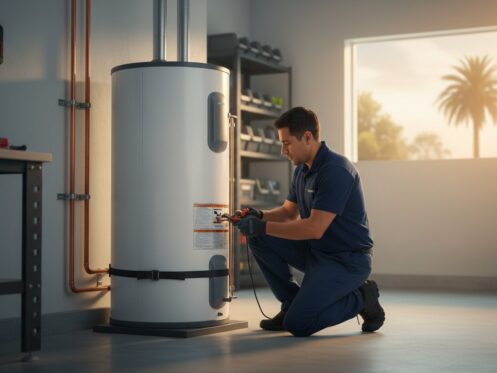
According to the U.S. Department of Energy, water heating accounts for approximately 18% of a home’s total energy consumption, yet an estimated 40% of units in the South Bay are operating well beyond their 10-year design life. You’ve likely noticed your gas bills creeping up or experienced the frustration of a shower that turns cold without warning. Addressing a water heater replacement before a total system failure occurs is the most effective way to avoid emergency repair premiums and ensure your property remains compliant with local safety standards.
It’s common to feel overwhelmed by the shifting landscape of Los Angeles building codes and the technical requirements of California’s Title 24. This guide simplifies the process by breaking down current 2026 labor trends, essential safety permits, and the latest high-efficiency heat pump technology available to Southern California residents. We’ll examine how to secure a reliable hot water system that meets every local safety standard while reducing your monthly utility overhead. This methodical approach ensures your home remains safe, efficient, and ready for any future real estate inspection.
Key Takeaways
- Identify why the 10-12 year threshold is critical for Los Angeles homeowners and how local hard water conditions accelerate the need for a system upgrade.
- Evaluate the technical trade-offs between traditional, tankless, and heat pump systems to select the most efficient model for your property’s specific demands.
- Calculate a realistic budget for water heater replacement in 2026 by accounting for mandatory permit fees and venting requirements often excluded from standard quotes.
- Ensure your installation meets strict Title 24 standards and seismic strapping codes to maintain safety and compliance within Southern California’s earthquake zones.
- Learn how a comprehensive home evaluation prevents the common mistake of oversizing your unit while optimizing your home’s overall ventilation and humidity levels.
Signs You Need Water Heater Replacement in Your Los Angeles Home
Identifying the precise moment for a water heater replacement is a matter of safety and financial planning. Most storage tanks in Southern California reach their mechanical limit between 10 and 12 years. By 2026, many units installed during the mid-2010s will face critical failure due to internal fatigue. While a tank might appear functional on the outside, the glass lining inside eventually develops microscopic cracks. Once water reaches the steel shell, the oxidation process is irreversible. If your unit has passed the 12-year mark, you’re operating on borrowed time.
Performance failures often manifest as a gradual decline in hot water volume. If your morning shower turns cold 10 minutes earlier than it did two years ago, the system is struggling. To understand the mechanics of these units, you can read all about water heating systems and their historical development. Modern units are designed for efficiency, but they lack the heavy-gauge steel of older generations, making the 10-year threshold a firm boundary for most Los Angeles homeowners.
The Role of Sediment and Mineral Buildup
Los Angeles water is notoriously hard, containing high concentrations of calcium and magnesium. These minerals settle at the bottom of the tank, creating a thick, calcified crust. This layer acts as an insulator between the gas burner and the water, forcing the system to run longer to reach the desired temperature. You’ll often hear a distinct “popping” or “knocking” sound. This is the sound of steam bubbles trapped beneath the sediment layer. Attempting to flush a tank that hasn’t been maintained for 10 years is risky. The sediment often blocks small pinhole leaks, and removing it can trigger an immediate flood.
Visible Corrosion and Moisture Issues
Visual inspections should begin at the Temperature and Pressure (T&P) relief valve. If you see white calcium deposits or “weeping” around this valve, the internal pressure is consistently too high. Rust on the tank’s outer shell is a terminal sign, whereas rust on the top fittings might just indicate a loose connection. In South Bay neighborhoods, many water heaters are located in garages where moisture can go unnoticed. Check the emergency drain pan for any standing water. A water heater replacement is mandatory if you find moisture at the base of the tank, as this indicates the internal vessel has breached. Small puddles today can become 50-gallon floods tomorrow.
Comparing Water Heater Types: Traditional, Tankless, and Heat Pump
Traditional gas storage tanks remain the baseline for many Los Angeles homes built before 2010. These units are familiar and offer a lower initial purchase price, but they operate with inherent inefficiencies. A standard 50-gallon tank constantly loses heat through its walls, a process known as standby heat loss. This requires the burner to fire periodically even when no one is home. For homeowners considering a water heater replacement, the choice usually comes down to long-term energy savings versus immediate installation costs.
Space constraints in coastal communities like Hermosa Beach and Manhattan Beach often dictate the technology used. In these neighborhoods, every square foot of real estate is valuable. Traditional tanks occupy roughly 9 to 13 square feet of floor space when factoring in required clearances. Modern alternatives can reclaim this area while providing superior performance and meeting strict regional safety standards.
Tankless Water Heaters: Efficiency vs. Installation Cost
The promise of “endless hot water” makes tankless systems highly desirable for large families or homes with oversized soaking tubs. These units heat water on demand, which eliminates standby energy waste. However, the transition from a tank to a tankless system in older LA properties is rarely a simple swap. Most high-output tankless units require a 3/4-inch gas line to deliver the necessary BTUs. Many older South Bay homes only have 1/2-inch lines, meaning a water heater replacement may involve significant plumbing upgrades to ensure the system operates safely under peak load.
Maintenance is a non-negotiable factor for tankless owners in Southern California. The South Bay’s water contains high mineral content that can lead to scale accumulation within the heat exchanger. To maintain the manufacturer’s warranty and system efficiency, homeowners must perform a flush or descaling procedure every 12 to 18 months. Without this care, the heat exchanger can overheat and fail prematurely.
The Rise of Heat Pump Water Heaters (HPWH)
Heat pump technology is currently the fastest-growing segment in the California market due to its incredible efficiency. Unlike gas units that create heat through combustion, a heat pump moves existing heat from the air into the water. This allows the unit to be 3 to 4 times more efficient than standard electric models. These systems often integrate seamlessly with Mitsubishi and Trane home climate ecosystems; for instance, Vesinimas.LT specializes in implementing these types of air-to-water and geothermal heat pump solutions to maximize home energy savings. Heat pump water heaters are the gold standard for CA electrification.
Adopting this technology helps homeowners stay ahead of California’s Title 24 requirements, which increasingly favor electric-ready infrastructure. Most heat pump models require a dedicated 240-volt, 30-amp circuit. If your current electrical panel is at capacity, you may need a service upgrade before installation. A professional system inspection can identify these infrastructure needs before you purchase equipment, ensuring your new system is compliant with all local building codes.
The Real Cost of Water Heater Replacement in Los Angeles
Homeowners often encounter a significant gap between the price tag on a retail unit and the final invoice for a professional water heater replacement. In 2026, the baseline for a standard 50-gallon gas unit in Los Angeles typically starts between $2,200 and $3,500 for a fully compliant installation. While “big box” retailers might quote a flat labor fee, these estimates frequently exclude essential costs. You can expect to pay an additional $150 to $400 for local building permits and another $200 to $600 for venting modifications required by current safety codes. Understanding these variables ensures your budget remains realistic and your system stays compliant with regional safety mandates.
The financial logic of choosing a high-efficiency model has shifted due to rising utility rates in Southern California. While a heat pump or tankless system requires a higher upfront investment, the return on investment is accelerated by local energy costs. When comparing water heater types, it’s vital to look beyond the purchase price. High-efficiency units can reduce annual water heating bills by 20% to 50%, depending on your household’s specific consumption patterns and the current tier of your utility plan.
Factors That Drive Up Replacement Expenses
Technical complications often arise during the transition from older units to modern, code-compliant systems. If you’re moving a unit from an interior closet to an exterior wall to save space, labor costs increase due to new gas line routing and electrical upgrades. Los Angeles homes must also adhere to South Coast AQMD standards for Ultra-Low NOx emissions, which can make the units themselves more expensive than those sold in other states. Other mandatory safety features include:
- Seismic Strapping: California code requires two heavy-duty straps to secure the tank against earthquake movement.
- Thermal Expansion Tanks: These prevent pressure spikes in “closed” plumbing systems, protecting your pipes from bursting.
- Venting Upgrades: Modern high-efficiency units often require PVC or specialized stainless steel venting that differs from older galvanized pipes.
Rebates and Incentives in Southern California
The 2026 landscape for incentives is robust, specifically for those transitioning to electric heat pump technology. Under the Inflation Reduction Act, federal tax credits can cover 30% of the project cost, capped at $2,000 annually for heat pump water heaters. Locally, SoCalGas and Southern California Edison (SCE) offer tiered rebates that fluctuate based on the unit’s Energy Factor (EF) rating. To secure these funds, you must provide professional documentation, including the AHRI certificate and a copy of the finalized city permit. A professional water heater replacement ensures this paperwork is accurate, preventing the common clerical errors that cause rebate applications to be rejected by utility providers.
Navigating LA Building Codes and Title 24 Requirements
Compliance with California building codes is not a suggestion; it’s a legal mandate that ensures your home remains safe during seismic events and energy efficient under Title 24 standards. A professional water heater replacement must adhere to the 2025 California Plumbing Code and local municipal amendments. These regulations prevent catastrophic water damage and life-threatening gas leaks in high-density areas like the South Bay and Greater Los Angeles.
Seismic Safety and Structural Integrity
In Los Angeles, seismic activity is a constant variable. State law requires all water heaters to be anchored, braced, or strapped to resist horizontal displacement caused by earthquake motion. This involves double-strapping the tank using heavy-duty metallic straps. One strap must be positioned in the upper one-third of the tank and the second in the lower one-third, placed at least 4 inches above the controls. These anchors must be secured into the wall studs with 1/4-inch lag bolts.
For multi-story dwellings or units located above living spaces, a watertight drain pan is mandatory. This pan must be constructed of corrosion-resistant material and include a 3/4-inch drain line that leads to an approved location. A comprehensive HVAC inspection often uncovers failing or improperly installed straps that could lead to tank rupture during a tremor. Ensuring these anchors are verified by a third party provides an objective layer of safety for your household.
Permits and Final Inspections
Securing a permit is a critical step that many unlicensed installers attempt to bypass. Whether you live in the City of Los Angeles, Torrance, or Redondo Beach, a permit ensures that a city inspector validates the installation. Unpermitted work often surfaces during real estate transactions, where it can stall a sale or lead to costly retroactive permit fees and required corrections. Each municipality has nuances; for instance, Torrance may have specific requirements for exterior closet venting that differ from Redondo Beach standards.
- Verify your contractor’s license via the CSLB website before work begins.
- Confirm the permit is “pulled” and posted at the job site.
- Ensure the final inspection is scheduled and signed off by the city.
Safety extends beyond structural stability. Proper venting is the only way to mitigate carbon monoxide risks. Inspectors check the “draft” of the venting system to ensure combustion gases exit the home correctly. They also verify that the temperature and pressure (T&P) relief valve is piped to the exterior using gravity-fed lines. For Title 24 compliance, you must also insulate the first 5 feet of hot and cold water pipes to prevent heat loss. If you are unsure if your current system meets these 2026 standards, schedule a professional assessment to confirm your home’s compliance and safety.
Why an HVAC Inspection is the First Step to Better Hot Water
Mechanical systems don’t operate in isolation. A water heater replacement requires an evaluation of the home’s venting capacity and ambient humidity levels to prevent premature corrosion. In Los Angeles homes, poor attic ventilation often leads to moisture buildup, which can degrade the outer shell of a new tank within five years. A comprehensive HVAC inspection identifies these environmental risks before you invest in new equipment. Our technicians analyze the combustion air requirements to ensure your system doesn’t compete with your furnace for oxygen, a common cause of carbon monoxide backdrafting.
Whole-home evaluations prevent the costly mistake of oversizing. Many contractors install 50-gallon tanks by default, but if you’ve integrated low-flow fixtures or a high-efficiency Mitsubishi heat pump system, your actual peak demand might be significantly lower. Reducing a unit by just one size category can improve energy efficiency by 12% according to 2026 California energy standards. We align your water heating with your Trane or Mitsubishi climate strategy to ensure the electrical load is balanced and the recovery rate meets your family’s specific usage patterns.
Unbiased Reporting vs. High-Pressure Sales
Independent inspections provide the technical facts you need to negotiate with installers. We don’t sell appliances, so our reports focus solely on system health and code compliance. We often identify pre-existing conditions, such as undersized 1/2-inch gas lines or outdated electrical panels, that would otherwise cause a mid-installation price hike. For a complete understanding of how these mechanical components work together, homeowners should review our AC installation guide to achieve total system synergy. This transparency is vital during home sales, where a certified report can prevent a buyer from demanding unnecessary credits for a functional system.
Preparing for Your Replacement
Success depends on asking the right questions before the first wrench turns. Use this checklist when interviewing contractors:
- Does the bid include a new expansion tank to meet current Los Angeles plumbing codes?
- Will the technician perform a gas leak soap test on all new connections?
- Is the venting material rated for the higher exhaust temperatures of modern high-efficiency units?
Once the installation is complete, scheduling a post-installation safety audit ensures the work meets the 2026 standards for seismic bracing and venting clearance. Maintaining this level of detail keeps your home safe and efficient year-round. You can also reference our furnace maintenance checklist to keep your entire mechanical room in peak condition through every season.
Secure Your Property’s Efficiency and Safety for 2026
Navigating the complexities of Title 24 energy requirements and Los Angeles building codes is essential for a successful water heater replacement. You must weigh the long-term efficiency of heat pump technology against the immediate performance of tankless systems to ensure your home remains compliant and cost-effective. Since 2004, we’ve provided homeowners across the South Bay and Los Angeles with the technical data required to manage these high-stakes mechanical decisions. Our team operates as a Mitsubishi Ductless Elite Dealer and Trane Authorized Provider, bringing over twenty years of regional expertise to every site visit.
We prioritize technical precision over sales tactics. By delivering a comprehensive, unbiased report, we help you avoid unnecessary repairs and ensure your equipment meets the specific climate demands of Southern California. This objective approach provides the peace of mind you need during a major home upgrade or real estate transaction. It’s time to verify your system’s health with a professional who has no stake in the repair bill. Schedule your unbiased HVAC and water heater inspection today to protect your investment and guarantee your home’s long-term comfort. Your property deserves the oversight of a dedicated local expert.
Frequently Asked Questions
Do I need a permit to replace my water heater in Los Angeles?
Yes, the Los Angeles Department of Building and Safety (LADBS) requires a permit for every installation to ensure compliance with the California Plumbing Code. This process involves a safety inspection to verify that seismic straps are installed in two locations, specifically at the top and bottom third of the tank. Failing to secure this permit can lead to issues with insurance claims or complications during a home sale.
Is a tankless water heater worth the extra cost in the South Bay?
A tankless unit is often worth the investment for South Bay homeowners because it lasts 20 years, which is double the lifespan of a traditional tank. According to the U.S. Department of Energy, these systems are 34% more efficient in homes using under 41 gallons of water daily. The salt air in coastal areas can be harsh, so choosing a unit with a high grade heat exchanger provides better long term durability.
How long does a typical water heater replacement take?
A standard water heater replacement typically takes 2 to 4 hours to complete when swapping like for like systems. If your project involves upgrading from a tank to a tankless model, the installation can extend to 8 hours due to new venting and gas line requirements. Technicians spend roughly 60 minutes of this time ensuring the site is clear and the old unit is fully drained before the new install begins.
What is Title 24 and how does it affect my water heater?
Title 24 is the California Energy Code that sets the standards for energy efficiency in all residential buildings. The 2022 update requires that any water heater replacement meets specific Energy Factor ratings to reduce statewide electricity and gas consumption. Compliance is mandatory for all permitted work in Los Angeles, ensuring your new system aligns with the state’s 2030 carbon reduction goals and localized environmental standards.
Why is my water heater making a loud knocking or popping sound?
Loud knocking or popping sounds indicate that 2 or 3 inches of sediment have settled at the bottom of your tank. This occurs when minerals like calcium carbonate crystallize and trap water underneath them. When the burner ignites, the trapped water boils and creates steam bubbles that pop through the sediment layer. This buildup reduces heat transfer efficiency by as much as 15% and causes unnecessary stress on the tank metal.
Can I switch from a gas water heater to an electric heat pump model?
You can switch to an electric heat pump, and many Los Angeles homeowners are doing so to comply with the 2026 push for home electrification. This transition usually requires a 30 amp, 240 volt dedicated circuit to power the compressor and backup elements. While the initial setup is more complex than a gas swap, these units are 300% more efficient than standard gas models according to recent Energy Star data.
How much space is required for a new heat pump water heater?
A heat pump water heater needs at least 1,000 cubic feet of air space to function correctly because it extracts heat from the surrounding environment. This typically equates to a room that is 10 feet by 12 feet with a standard ceiling. If you’re installing the unit in a small closet under 100 square feet, you must use louvered doors or add ducting to ensure the system has adequate airflow.
Does a home inspection cover the water heater’s internal condition?
A standard home inspection only covers visible defects like rust or improper venting, but it won’t reveal the internal state of the tank or the anode rod. Our technical assessments go further by checking the 3 primary safety components and evaluating the unit’s remaining service life. We provide a factual report that details if the system meets the current 2026 seismic bracing and thermal expansion tank requirements for Los Angeles properties.