 Serving Ventura and LA County
 Years of Experience
A standard service call is not an inspection, and mistaking the two could cost you a real estate deal or your homeowner’s insurance policy in 2026. You likely know that the high-stakes environment of Los Angeles real estate requires more than just a functional air conditioner; it demands documented proof of safety and efficiency. It’s natural to feel anxious about hidden defects in a heat exchanger or the potential for a non-renewal notice from your insurer. This guide details exactly what to expect from an hvac inspection so you can secure a clear, unbiased report on your system’s health. We will walk through the technical verification of duct integrity, refrigerant charges, and SEER ratings to ensure your home remains compliant and your peace of mind stays intact. By following this methodical process, you’ll understand how a certified professional assesses the remaining lifespan of your equipment based on California building standards. This ensures you aren’t surprised by mechanical failures during a critical escrow period or an annual safety audit.
Key Takeaways
- Differentiate between a basic visual check and a comprehensive forensic evaluation to ensure your system meets strict Los Angeles safety and insurance standards.
- Gain a clear understanding of what to expect from an hvac inspection, from initial mechanical load testing to the identification of hidden defects like cracked heat exchangers.
- Learn the essential preparation steps for your attic and crawlspaces to facilitate a thorough, unbiased assessment of your heating and cooling infrastructure.
- Master the art of interpreting inspection reports to prioritize urgent safety repairs, such as gas leaks or electrical hazards, over routine maintenance suggestions.
Defining the Scope: What is a Professional HVAC Inspection?
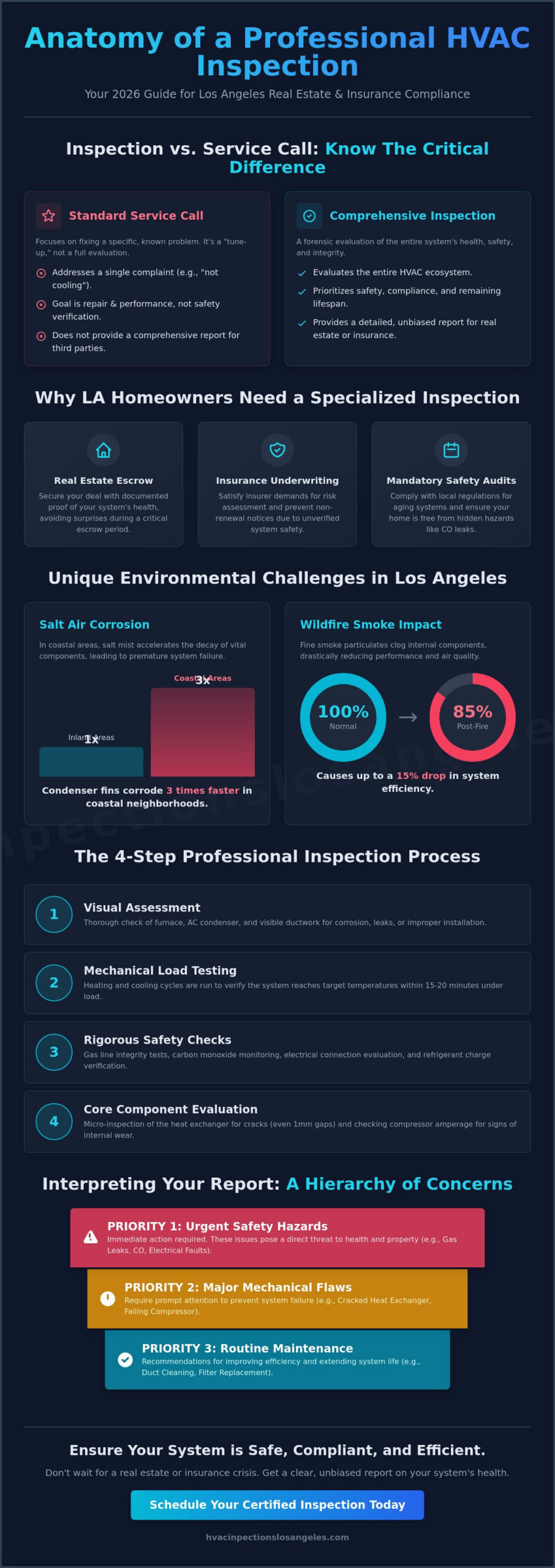
A professional HVAC inspection is a comprehensive, non-invasive forensic evaluation of your home’s climate control system. It’s designed to provide an objective snapshot of a system’s health, safety, and mechanical integrity. Unlike a standard service call where a technician might focus on a specific broken part, an inspection looks at the entire ecosystem. The scope of Heating, ventilation, and air conditioning (HVAC) systems is complex, encompassing electrical components, refrigerant lines, and combustible gas assemblies. In the 2026 Los Angeles market, these evaluations are primarily triggered by three high-stakes scenarios: real estate escrow, insurance underwriting requirements, and mandatory safety audits for aging systems.
When homeowners ask what to expect from an hvac inspection, they should anticipate a detailed report that prioritizes safety and compliance over quick fixes. The goal is to provide unbiased reporting. This is critical in Southern California’s competitive residential market. An independent inspector doesn’t have an incentive to sell you a new furnace or an expensive repair. Instead, they provide the facts you need to negotiate a home purchase or satisfy an insurance provider’s demand for a risk assessment.
Inspection vs. Maintenance: Knowing the Difference
It’s vital to understand that an inspection is not a tune-up. Maintenance focuses on performance and efficiency, often involving the cleaning of coils or the replacement of filters. You shouldn’t expect a cleaning during a formal inspection. The inspector’s job is to evaluate the current state of the hardware, looking for cracked heat exchangers or improper venting that could lead to carbon monoxide leaks. For a deeper look at these protocols, see our Professional HVAC Inspection in Los Angeles: The 2026 Homeowner’s Guide. An inspection determines if the system is safe and how much life it has left, while maintenance simply attempts to extend that life.
Why LA Homeowners Specifically Need Specialized Inspections
Los Angeles presents unique environmental challenges that standard national checklists often miss. In coastal neighborhoods like Manhattan Beach and Redondo Beach, salt air is a constant threat. Salt-laden mist can corrode aluminum condenser fins 3 times faster than in inland environments like the San Fernando Valley. A specialized inspection identifies this “white rust” before it leads to a total system failure.
Furthermore, California’s strict Title 24 energy codes and local safety regulations require specific verification that general contractors might overlook. Recent fire seasons have also changed what to expect from an hvac inspection. Fine particulate matter from smoke can settle deep within ductwork and blower motors, causing a 15% drop in system efficiency and compromising indoor air quality. A professional evaluation in 2026 ensures your system isn’t just running, but is compliant with the latest state environmental and safety standards.
The Step-by-Step Process: What Happens During the Inspection
Understanding what to expect from an hvac inspection is the first step toward ensuring your home’s climate control system remains reliable and safe. The process begins with a thorough visual assessment of the furnace, the AC condenser, and all visible ductwork. Our inspectors look for signs of corrosion, refrigerant leaks, or improper installation that could lead to future failures. Following the visual check, we perform mechanical testing of the heating and cooling cycles under load. We verify that the system reaches target temperatures within 15 to 20 minutes, ensuring the equipment handles the demands of a typical Los Angeles heatwave.
Evaluating the Core Components
The inspector examines the heat exchanger for hairline cracks. Even a 1 millimeter gap can allow carbon monoxide to enter your living space, making this a critical safety failure point. We also evaluate the compressor ac compressor to ensure it isn’t drawing excessive amperage, which often indicates internal wear. Regular professional oversight is as vital as maintaining your air conditioner through filter changes and coil cleaning. Finally, we test the blower motor and fan assembly for bearing noise or vibration issues that could signal an impending breakdown.
Ductwork and Ventilation Analysis
In regions like the South Bay, leaky ductwork can increase energy bills by 30 percent. We inspect visible ducts for gaps, loose tape, and disconnected joints. The inspection includes measuring static pressure to confirm the system isn’t working too hard to move air through the house. For older Los Angeles homes, we verify that combustion gases from the furnace vent safely through the roof, preventing dangerous backdrafting into the attic or living areas.
Thermostat and Control Systems
We verify the calibration of your thermostat to ensure the temperature on the screen matches the actual room environment. This step includes testing emergency shut-off switches and safety sensors that prevent system fires or water damage from clogged condensate lines. This detailed review clarifies what to expect from an hvac inspection regarding the digital brain of your home. As 2026 standards evolve, we also review your system’s compatibility with modern smart home protocols. If you are preparing for a property sale, getting a certified inspection report provides the documentation needed for a smooth, transparent transaction.
HVAC Inspection vs. Home Inspection: The Critical Gap
A standard home inspection provides a broad overview of a property’s condition, but it lacks the technical depth required to evaluate complex mechanical systems. General inspectors typically perform a visual-only check. They verify that the unit turns on and that the air feels cold or warm, but they rarely open the furnace cabinet or inspect the internal components. This surface-level approach often misses critical defects that can lead to system failure or safety hazards shortly after a purchase.
When you consider what to expect from an hvac inspection, the primary difference is the depth of the diagnostic process. General inspectors often miss cracked heat exchangers because these fractures are invisible to the naked eye. In a 2024 analysis of Los Angeles property transfers, specialized technicians identified significant mechanical issues in 38% of systems that had already passed a general home inspection. These issues included undersized ductwork in older Silver Lake bungalows and failing compressor coils in Pacific Palisades estates. Relying on a generalist during a high-stakes escrow can result in unexpected replacement costs exceeding $15,000.
The Specialized Tools of an HVAC Inspector
Professional inspectors use diagnostic technology that generalists don’t carry. We utilize combustion analyzers to measure carbon monoxide levels and detect gas leaks that are otherwise undetectable. Borescope cameras allow us to perform internal heat exchanger visual verification, finding hairline cracks that pose a life-safety risk. Additionally, thermal imaging identifies hidden duct leaks behind drywall or in crawlspaces. These tools provide a factual, data-driven assessment of the system’s health rather than a subjective opinion.
Escrow and Insurance Requirements in Los Angeles
In Los Angeles, the stakes for mechanical accuracy are high. Homeowners in fire-prone zones near the Santa Monica Mountains now face stricter requirements from insurance carriers. These companies often demand detailed documentation proving the HVAC system is clear of debris and functioning within safe electrical parameters. A specialized report provides the necessary verification to maintain coverage.
In competitive markets like Torrance and Hermosa Beach, we focus on the “Real Estate Readiness” standard. This ensures the system complies with current California Title 24 energy codes. Having a comprehensive report allows buyers and sellers to negotiate with confidence. It transforms a vague “working condition” claim into a certified statement of system integrity. This precision is vital for a smooth closing and long-term peace of mind.
How to Prepare Your Home for a Seamless Inspection
Preparation directly impacts the accuracy of your final report and the speed of the service. When you understand what to expect from an hvac inspection, you realize the inspector needs unobstructed access to every component of your system to provide a truly unbiased assessment. Start by clearing a path to the thermostat and ensuring all pets are secured in a separate room. A technician moving through your home with specialized diagnostic tools requires a clear floor plan to prevent accidents and maintain focus on the mechanical evaluation.
- Organize Documentation: Locate all service records from the last 24 to 36 months and any active warranty documents. This allows the inspector to verify if previous repairs met manufacturer specifications and if the system remains under coverage.
- Clear the Condenser: Remove dry brush, leaves, or storage items from around the outdoor unit. A 24-inch perimeter of clear space is the standard requirement for proper airflow and safe access to the electrical service panel.
- Unlock Access Points: Ensure all side gates, utility closet doors, and basement entries are unlocked before the scheduled arrival. If your system requires a ladder for roof access, confirm that the designated area is free of obstructions.
Access Matters: Attics and Crawlspaces
Older Los Angeles residences, particularly those built between 1920 and 1955, often feature narrow attic hatches or cramped crawlspaces. You must clear out any holiday decorations or storage bins blocking these entries. The inspector’s job involves more than just checking the furnace; they must evaluate the entire duct run to identify thermal loss, disconnected joints, or rodent damage. If the inspector can’t reach the plenum or the secondary drain pan, the report will be incomplete. For a deeper look at what we examine during these checks, review The Essential Furnace Maintenance Checklist for Los Angeles Homeowners.
Coastal Specifics: Preparing Beachfront Properties
Properties in Hermosa Beach and Manhattan Beach face unique environmental stressors. Salt-air corrosion can degrade aluminum fins and steel mounting brackets in as little as 24 months. Before the inspector arrives, use a low-pressure garden hose to gently rinse salt-crust buildup from the exterior cabinet. Look for visible rust on the line sets or mounting hardware, as these are critical safety points in high-wind coastal zones. Ensuring the air quality hermosa beach residents expect requires a clean, unobstructed intake system. Checking your filter status before the appointment helps the inspector determine if internal debris is a result of coastal particulate or mechanical failure. Knowing what to expect from an hvac inspection in these zones means being ready for a strict evaluation of metal integrity.
Interpreting Your Results: Safety, Repairs, and Replacement
The inspection report translates technical data into an actionable roadmap for your home’s climate health. When you understand what to expect from an hvac inspection, the final document becomes your most valuable asset during a real estate transaction or an annual maintenance check. We categorize every finding into three distinct levels to help you prioritize your budget and safety.
- Red Flag Items: These require immediate attention. If we detect a gas leak, a cracked heat exchanger leaking carbon monoxide, or scorched electrical wiring, the system is deemed unsafe. In these cases, we provide the specific mechanical evidence needed for emergency repairs.
- Functional Deficiencies: These are components nearing failure. This includes a capacitor with a 15% drop in microfarad readings or a blower motor drawing excessive amperage. These issues don’t require an immediate shutdown but will lead to a breakdown during a heatwave.
- Maintenance Suggestions: These points focus on optimization, such as cleaning evaporator coils or replacing filters to improve airflow and indoor air quality.
For homeowners with premium Trane or Mitsubishi systems, we provide a remaining useful life estimate based on current wear and tear. While a well-maintained Mitsubishi mini-split often lasts 20 years, a system with high salt-air exposure in coastal neighborhoods might see a shorter lifespan. This data helps you determine if it’s logical to invest in a $700 repair or transition toward a new ac installation before the next peak season.
The Unbiased Report: No Hidden Sales Agendas
Our role is that of a neutral third party. We don’t sell equipment; our technicians have no incentive to recommend a replacement unless the data demands it. We evaluate your system’s efficiency against modern 2026 SEER2 standards. If your current unit operates at a 10 SEER rating, the energy savings from a high-efficiency upgrade often offset the cost within 8 to 12 years. We deliver our findings through a digital portal featuring high-resolution photos and thermal imaging. This transparency ensures you see exactly what the inspector sees without any sales pressure.
Next Steps for Los Angeles Homeowners
Once you have the report, you can provide it to a licensed contractor for an accurate repair bid. If you’re in the middle of a home sale in neighborhoods like Silver Lake or Pasadena, this report is a critical disclosure document for your escrow officer or insurance agent. It provides proof of system integrity or a factual basis for repair credits. Knowing what to expect from an hvac inspection allows you to move forward with total confidence in your property’s mechanical status. Schedule your professional HVAC inspection today to secure your home’s safety and long-term efficiency.
Secure Your Property with Expert HVAC Verification
Navigating the technical requirements of a California real estate transaction requires more than a casual walkthrough. Understanding what to expect from an hvac inspection allows you to move forward with data-backed confidence. Our process identifies systemic risks like compromised duct integrity or failing components that standard home inspections often overlook. Since 2004, we’ve served the South Bay as a trusted partner for homeowners and agents who require unbiased, technical reporting. As a Mitsubishi Ductless Elite Dealer, we bring specialized expertise to every assessment; this ensures your system meets the rigorous demands of modern insurance and escrow compliance. You’ll receive a transparent roadmap for your system’s health, focusing on safety and long-term cost savings rather than high-pressure sales tactics.
Don’t leave your mechanical systems to chance during a property transfer. Rely on a team that prioritizes technical precision and local building standards. Book Your Meticulous HVAC Inspection in Los Angeles Today and gain the peace of mind that comes from a truly professional evaluation. We’re ready to help you protect your investment.
Frequently Asked Questions
How long does a professional HVAC inspection usually take?
A standard inspection for a single-family home in Los Angeles typically takes between 60 and 90 minutes. Larger estates or multi-unit properties in neighborhoods like Bel Air may require up to 3 hours for a full assessment. The technician spends this time examining the condenser, evaporator coils, and the integrity of the ductwork system.
What is the average cost of an HVAC inspection in Los Angeles?
According to 2024 industry data from HomeAdvisor, homeowners in the Los Angeles metro area pay between $250 and $450 for a professional assessment. This price range accounts for the specialized labor needed to verify compliance with California Title 24 energy standards. Costs fluctuate based on the number of zones in the home and the accessibility of attic or crawlspace components.
Will the inspector turn off my power or gas during the process?
Yes, the inspector will briefly cycle the power and gas off to test safety shut-off valves and electrical connections. These interruptions usually last less than 15 minutes per component. It’s a critical step to verify that the system responds correctly to emergency triggers and to prevent electrical hazards during the physical mechanical examination.
Can an HVAC inspection help lower my monthly energy bills?
A comprehensive assessment can reduce monthly cooling costs by 15% to 20% by identifying airflow restrictions or refrigerant leaks. Knowing what to expect from an hvac inspection helps you understand that technicians look for SEER rating discrepancies. Fixing a disconnected duct or cleaning a fouled coil ensures the system doesn’t work overtime during a 100-degree Santa Ana wind event.
Do I need to be present during the entire inspection process?
You don’t need to be present for the entire duration, but we recommend you arrive for the final 20 minutes of the appointment. This allows the expert to walk you through the digital report and point out specific components like the heat exchanger or condensate line. If you’re a real estate agent, providing remote access via a lockbox is a common 2026 practice.
What happens if the inspector finds a major safety issue?
If a life-safety threat like a cracked heat exchanger or a carbon monoxide leak is detected, the inspector will immediately disable the unit to prevent harm. This protocol follows California safety codes to protect occupants from fire or poisoning. You’ll receive a formal notice and a detailed explanation of the required repairs to bring the system back into a safe, compliant state.
Is an HVAC inspection required by law in California for home sales?
California law doesn’t explicitly mandate a standalone HVAC inspection for home sales, but the California Residential Code requires functional heating in all habitable rooms. Most buyers in the Los Angeles market include a professional assessment as a contingency in the purchase agreement. It provides an unbiased verification of the system’s remaining lifespan, which is vital for high-value property transactions.
How often should I have my HVAC system inspected if I’m not selling my home?
You should schedule a professional assessment at least once per year to maintain mechanical reliability and safety. Understanding what to expect from an hvac inspection annually is key to preventing the 40% of system failures caused by simple dirt and neglect. Regular checks ensure your unit handles the 3,000 annual cooling hours typical for Southern California’s intense climate.