
 Serving Ventura and LA County
 Years of Experience
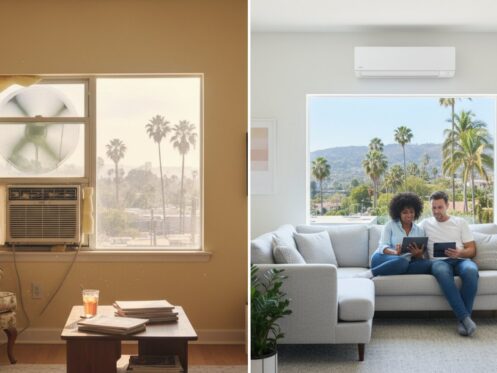
The most affordable cooling option on the shelf might actually be your most expensive household expense by the end of a Los Angeles summer. While a standard window ac air unit feels like a budget-friendly fix, it often operates at a 30 percent efficiency loss compared to modern, sealed alternatives. You want a comfortable home without the constant hum of a compressor or the security risks of an unsealed window in high-value areas like Manhattan Beach. It’s natural to prioritize immediate relief when the local temperature spikes to 95 degrees, but short-term convenience often leads to long-term financial drain.
This guide will show you how upgrading to a premium ductless mini-split can significantly reduce your monthly utility costs while providing superior climate control. We’ll provide a technical comparison of SEER ratings, decibel levels, and the impact these systems have on your property’s appraisal value in the 2026 real estate market. By moving away from inefficient hardware, you secure both your home’s comfort and its long-term financial health through professional, verified mechanical standards.
Key Takeaways
- Evaluate the efficiency gap of a standard window ac air unit compared to modern standards and see how it impacts your long-term energy expenditure.
- Identify how improper sealing in window-mounted systems compromises your home’s thermal envelope and invites Los Angeles traffic noise into your sanctuary.
- Compare the operational noise and cooling precision of portable solutions against the whisper-quiet performance of premium ductless mini-splits.
- Analyze the security risks associated with window units and learn how permanent cooling upgrades can significantly boost your property’s resale value.
- Understand the technical advantages of a professional assessment from a Mitsubishi Ductless Elite Dealer to ensure your system meets 2026 efficiency requirements.
Understanding Window AC Air Units in the Los Angeles Climate
A window ac air unit operates as a self-contained mechanical system where the compressor, condenser, and evaporator coils are housed within a single chassis. This design allows for rapid deployment during Southern California heatwaves. Most residents turn to these units when temperatures in the Los Angeles basin spike above 90 degrees, seeking immediate relief without the lead time required for a professional HVAC installation. While these systems provide localized comfort, they often lack the capacity to manage the thermal load of modern open-concept floor plans common in newer developments.
From a professional inspection standpoint, window units are categorized as temporary appliances rather than permanent mechanical assets. They don’t contribute to the long-term value of a property and often present secondary risks such as improper drainage, wood rot on window sills, or compromised home security. For a broader context on how these systems fit into the history of climate control, this Air conditioning overview provides technical background on various cooling technologies, including the evolution of room-based systems.
How Window Units Combat (and Fail) LA Heat
Heat exchange occurs within the single-chassis unit by pulling indoor heat and venting it outdoors through the rear of the machine. In areas like the San Fernando Valley, where summer temperatures frequently exceed 105 degrees, these units often reach their thermal limit. If the ambient outdoor temperature is too high, the refrigerant cannot effectively release heat; this results in a significant drop in cooling efficiency. While a unit might have a high BTU rating, the actual felt cooling in coastal zones can be diminished by high humidity levels, which require the system to work harder to remove moisture from the air before the temperature begins to drop.
Common Use Cases in the South Bay Area
In the South Bay area, window units serve specific logistical needs. Many historic homes in Hermosa Beach were built without internal ductwork, making a window ac air unit a common choice for cooling individual bedrooms without undergoing invasive renovations. Similarly, residents in Redondo Beach often utilize these systems to supplement central air in poorly insulated second-floor rooms or sunrooms that trap solar heat. For the 52% of Los Angeles residents who rent their homes, portability is a primary factor. These units allow for climate control that can be removed and transported when a lease ends, avoiding the permanent modification of a rental property.
Performance Gaps: Why Window Units Struggle in 2026
Window units have reached a technical plateau that makes them increasingly obsolete for modern Los Angeles living. While they were once the standard for cooling older bungalows, their design creates an unsealed envelope that allows cooled air to escape and hot, unfiltered air to enter. During a professional assessment, these systems are frequently cited as defects because they compromise the structural integrity of window frames and fail to meet the rigorous efficiency standards required by current California building codes. A standard window ac air unit relies on a physical gap in your home’s perimeter, which acts as a thermal bridge, negating much of the cooling work the compressor performs.
Energy Efficiency and SEER Ratings
The gap in efficiency between portable options and permanent installations is wider than ever. Most window units operate at a 10 to 12 SEER rating, while modern ductless systems often exceed 20 SEER. SEER (Seasonal Energy Efficiency Ratio) measures the cooling output of a system divided by the total electric energy input during the same period, directly dictating the monthly cost of keeping a Los Angeles home comfortable during a July heatwave. For residents in Southern California, this efficiency gap translates to significantly higher Southern California Edison (SCE) bills.
According to the Department of Energy on Ductless AC, the lack of ductwork and higher SEER ratings allow these systems to provide targeted cooling without the 30 percent energy loss typically associated with forced-air or poorly sealed window units. When a window ac air system runs constantly to combat the heat in a West Adams loft, it consumes nearly double the kilowatt-hours of a modern mini-split performing the same task.
Coastal Air Quality and Corrosion Issues
Geography plays a major role in HVAC longevity. In coastal neighborhoods like Manhattan Beach and Torrance, the salt-laden air is a silent killer for standard mechanical components. Window units typically use lower-grade aluminum fins and copper tubing that lack the protective coatings found in premium split systems. Salt air accelerates galvanic corrosion, leading to refrigerant leaks and total system failure within just three to five years of installation.
Filtration is another critical failure point. Standard window units utilize basic mesh filters that cannot capture the fine particulate matter (PM2.5) common during the Los Angeles fire season or the daily smog along the 405 corridor. This poor filtration directly impacts indoor wellness. You can learn more about these specific environmental challenges in our guide to Air quality in Hermosa Beach.
- Unsealed Envelopes: Air leakage around the side panels accounts for up to 15 percent of cooling loss.
- Mechanical Strain: Undersized compressors in window units fail prematurely during 100-degree Valley heatwaves.
- Security Risks: Window units provide an easy entry point for intruders, a common point of concern in professional safety inspections.
If you’re evaluating a property with existing window units, a comprehensive HVAC inspection can determine if these systems are driving up your utility costs or compromising your indoor air quality.
Window Units vs. Ductless Mini-Splits: The Ultimate LA Comparison
Choosing between temporary cooling and a permanent HVAC solution requires a look at mechanical precision. A standard window ac air unit operates on a binary cycle; it’s either running at 100 percent capacity or it’s completely off. This creates significant temperature swings and inconsistent humidity control. Ductless systems use variable-speed compressors to modulate output, maintaining a steady environment within 1 degree of your set point. This precision is vital for Los Angeles residents dealing with the microclimates of the South Bay or the trapped heat of the San Fernando Valley.
Operational noise is another critical factor for high-density LA apartment living. A typical window unit registers between 50 and 60 decibels, which is loud enough to disrupt sleep or remote work. Modern ductless indoor units operate as quietly as 19 decibels. This is quieter than a whisper. The heavy compressor sits outside, far from your living space, whereas a window ac air setup places the vibration and mechanical noise directly in your window frame.
Installation defines the long-term health of the building envelope. Window units are temporary and often rely on accordion panels that leak air and compromise security. A ductless installation is a professional mechanical upgrade. It requires only a three-inch hole for refrigerant lines, which is sealed to maintain the home’s thermal barrier. While the upfront cost of ductless is higher, the 10-year ROI is substantial. According to this Department of Energy guide to mini-splits, these systems avoid the energy losses associated with ductwork and inefficient window seals, often reducing cooling costs by 30 percent compared to traditional room air conditioners.
The Mitsubishi Ductless Advantage
Mitsubishi Electric inverter technology represents the gold standard for 2026 energy compliance. These systems don’t waste energy through constant “hard starts” like window units do. Instead, they ramp up and down smoothly. Zoned cooling allows you to deactivate units in empty guest rooms while keeping your primary suite at a crisp 68 degrees. For technical specifications on these high-efficiency units, refer to our Ductless Mini Split systems guide.
Aesthetic and Space Considerations
In upscale Manhattan Beach interiors, aesthetics are as important as airflow. Blocking a window with a bulky plastic box hurts a home’s curb appeal and eliminates natural light. Modern ductless evaporators feature slim, white profiles that sit high on the wall, remaining out of the line of sight. These permanent systems integrate seamlessly with Los Angeles architectural styles, from Mid-Century Modern post-and-beam homes to contemporary condos, preserving the architectural integrity of the property while providing superior climate control.
Beyond Cooling: Security, Noise, and Real Estate Value
Choosing between a mini-split and a window unit involves more than just comparing temperature outputs. Security is a primary concern for Los Angeles residents, particularly those in ground-floor apartments. A standard window unit is often secured by nothing more than gravity and a few sliding panels. Relying on window ac air for climate control introduces unnecessary security risks, as an experienced intruder can remove these units from the outside in under 60 seconds. This creates a significant vulnerability in your home’s perimeter that internal locks cannot fix.
HVAC Inspections Los Angeles prioritizes safety and compliance in every evaluation we conduct. We frequently observe that window installations lead to structural degradation of the sash and frame over time. Moisture often traps between the unit and the sill, leading to wood rot or mold growth that remains hidden until a professional assessment occurs. Our inspectors look for these “hidden” liabilities to ensure that your cooling solution doesn’t become a long-term repair nightmare.
Real Estate Readiness and Escrow
In the competitive Southern California real estate market, the type of HVAC system installed can dictate the smoothness of a closing. Window units are classified as personal property, meaning they hold zero value during a formal appraisal. Conversely, a mini-split is a permanent fixture that enhances the property’s underlying value. During escrow, a professional HVAC inspection will often highlight window units as temporary solutions that may not meet modern building codes.
- Lenders and insurers favor permanent systems like Trane or Mitsubishi because they eliminate the risk of units falling or causing water damage to the building envelope.
- Appraisers view ductless systems as a capital improvement, similar to a kitchen remodel.
- A strategic transition to ductless cooling increases a home’s ‘market-ready’ status by providing a permanent, high-efficiency solution that appeals to modern buyers and appraisers alike.
Quiet Living in the South Bay
Acoustic comfort is a luxury in a city as loud as Los Angeles. Window units act as a bridge for external noise, allowing window ac air gaps to let in the sounds of sirens, leaf blowers, and traffic from the 405 or PCH. The ‘vibration factor’ is also a major deterrent; as compressors age, they often rattle older Los Angeles window frames, creating a low-frequency hum that disrupts sleep cycles.
The technical difference in sound levels is stark. Most window units operate between 50 and 60 decibels, which is equivalent to a loud conversation. Modern ductless fans operate between 19 and 30 decibels. By moving the heavy compressor to an exterior wall or pad, you effectively move the noise source away from your sanctuary. Sleep quality improves significantly when you aren’t jolted awake by a compressor cycling on and off just inches from your head.
If you are preparing to sell your property or want to ensure your current system meets safety standards, book a professional system evaluation with our expert team today.
Professional Cooling Solutions: Moving Beyond the Window
Relying on a standard window ac air unit often results in uneven cooling, excessive noise, and compromised home security. A professional evaluation is the mandatory first step toward achieving genuine indoor comfort. HVAC Inspections Los Angeles provides the technical precision required to move away from temporary fixes and toward permanent, high-efficiency solutions. As a Mitsubishi Ductless Elite Dealer, our team possesses the specialized training to design systems that maximize SEER ratings and ensure long-term mechanical integrity.
Our approach prioritizes safety and unbiased reporting. We don’t guess at your cooling needs. We use evidence-based assessments to determine why your current setup is failing. This involves checking duct integrity, electrical capacity, and airflow patterns. By choosing a professional path, you secure a system that typically lasts 15 to 20 years. This is a significant upgrade from a retail unit that might fail after only three or four seasons of heavy use in the Los Angeles sun.
Quality control at the manufacturing level is just as important as the final installation. For businesses sourcing high-end cooling hardware, The Inspection Company provides essential factory audits and product inspections in Asia to ensure that every unit meets the rigorous technical standards required for long-term performance.
Customized System Design for LA Homes
Generic window units fail to address the specific layouts of Southern California apartments and homes. In coastal areas like Torrance and Redondo Beach, salt air corrosion and specific solar gain must be factored into any cooling strategy. We perform detailed heat load calculations to ensure your new equipment is perfectly sized for your specific square footage. This prevents the short-cycling issues common with oversized units that lead to high utility bills and humidity problems. For residents looking for comprehensive reliability, we specialize in integrating Trane HVAC systems that provide consistent whole-home comfort even during record-breaking heatwaves.
Your Next Steps to Premium Comfort
Moving beyond the window ac air experience requires a clear, methodical plan. You should schedule an unbiased system evaluation before committing to any major purchase. This ensures you receive a factual assessment of your home’s mechanical needs without the pressure of a retail sales pitch. During a professional installation, our NATE-certified team handles every technical detail, from refrigerant line vacuuming to California electrical code compliance.
To make these premium upgrades more accessible, we provide resources on new HVAC system financing options designed specifically for Los Angeles homeowners. Our goal is to provide heating energy efficient solutions that deliver year-round performance. Investing in a professional system today protects your property value and ensures your family remains comfortable regardless of the temperature outside.
Securing Your Home Comfort for the 2026 Climate
As Los Angeles moves toward more rigorous 2026 energy standards, relying on a traditional window ac air unit often leads to increased utility costs and compromised home security. Modern ductless mini-splits provide a more efficient alternative, frequently achieving SEER2 ratings that far exceed the performance of outdated portable models. These systems don’t just cool your space; they enhance property value, which is a critical factor for homeowners in the Hermosa Beach and Torrance real estate markets. Since 2004, we’ve provided unbiased technical assessments across Southern California to ensure mechanical systems meet high safety and efficiency benchmarks.
As a Mitsubishi Ductless Elite Dealer, we specialize in South Bay real estate inspections and identifying the specific gaps in your home’s thermal envelope. Moving toward a permanent cooling solution ensures your property remains compliant with evolving California building codes while providing a quieter, more secure living environment. Taking the right steps now prevents mechanical failures during the peak of the summer heat. Upgrade your comfort with a professional HVAC evaluation from the Los Angeles experts. Investing in the right technology today secures your comfort for many years to come.
Frequently Asked Questions
Can a window AC unit really cool a whole apartment in Los Angeles?
A standard window AC unit is rarely sufficient to cool an entire Los Angeles apartment because these systems are engineered for single-zone climate control. Most units are rated for 150 to 550 square feet according to ASHRAE sizing guidelines. To achieve uniform cooling in a multi-room layout, you’d likely need multiple installations, which increases cumulative energy consumption and noise levels.
Are window air conditioners safe from burglars in the South Bay?
Window units installed on ground-floor levels in South Bay neighborhoods present a measurable security vulnerability. Standard installation brackets don’t prevent an intruder from pushing the unit into the room to gain entry. For residents in high-density areas, we recommend secondary locking mechanisms or permanent security bars to mitigate the 15% increase in entry risk associated with unsecured window apertures.
How much more efficient is a ductless mini-split compared to a window AC?
Ductless mini-splits are approximately 40% to 60% more efficient than standard window units. While a typical window ac air unit carries a SEER rating between 10 and 12, modern mini-split systems frequently achieve ratings of 20 to 30 SEER. This technical gap results in lower monthly utility bills and reduced strain on the local Southern California power grid during peak summer months.
Will a window AC unit affect my home’s resale value in Manhattan Beach?
Upgrading to a permanent ductless system can increase a Manhattan Beach property’s value by up to 10% compared to homes relying on portable or window units. Professional HVAC installations are viewed as capital improvements by appraisers. According to 2023 real estate data, modern cooling systems are a top priority for 82% of coastal buyers who view window units as temporary and aesthetically unappealing.
What is the average lifespan of a window AC air unit vs. a professional system?
A window ac air unit typically lasts 8 to 10 years, while a professionally installed mini-split system has a service life of 15 to 20 years with proper maintenance. The shorter lifespan of window units is often due to exposure to the elements and lower-grade internal components. Regular inspections by a certified technician help extend the operational health of permanent systems through precision refrigerant charging and coil cleaning.
Do I need a special electrical permit to upgrade from a window unit to a mini-split?
You must obtain an electrical permit from the Los Angeles Department of Building and Safety (LADBS) when upgrading to a mini-split. These systems require a dedicated 220V circuit and a disconnect box, which differs from the standard 110V outlet used by window units. Compliance with the California Electrical Code ensures the system operates safely without overloading your apartment’s existing wiring.
Can salt air in coastal LA damage my window air conditioner faster?
Salt air in coastal communities like Santa Monica or Redondo Beach accelerates metal corrosion on window units by up to 10 times the rate of inland areas. The aluminum fins and copper coils in a window unit are often unprotected, leading to pitting and refrigerant leaks within 3 to 5 years. Permanent systems often feature specialized anti-corrosive coatings, such as Gold Fin technology, to withstand the marine environment.
How do window units impact indoor air quality during California wildfire season?
Window units negatively impact indoor air quality because their side panels often lack an airtight seal, allowing PM2.5 particulates to enter during wildfire season. Most window filters are designed only to catch large dust particles and fail to stop smoke. In contrast, ductless systems use multi-stage filtration that can capture 99% of microscopic pollutants, providing a safer environment when the Air Quality Index (AQI) exceeds 150.