
 Serving Ventura and LA County
 Years of Experience

If your air conditioner is running but the house still feels warm, one of the fastest clues is the temperature difference between the air going into the system and the air coming back out. Homeowners often ask, “How cold should air from AC vents be?” The useful answer is not a single vent temperature. A 55°F reading can be perfectly normal in one home and misleading in another because indoor temperature, humidity, airflow, system type, measurement location, and run time all affect the result.
The more reliable diagnostic is HVAC Delta T, also called the temperature split. Delta T compares return-air temperature with supply-air temperature after the system has been operating long enough to stabilize. In many conventional cooling systems, a healthy split often lands somewhere in the mid-teens to low 20s Fahrenheit, but there is no universal magic number that proves a system is healthy. A professional evaluation also considers airflow, coil condition, refrigerant performance, duct losses, outdoor conditions, and whether the system is actually delivering comfort to the rooms that need it.
This guide explains how to measure AC vent temperature correctly, what low and high temperature splits can mean, why one cold vent does not prove the whole system is working properly, and when a Los Angeles homeowner should move from a quick thermometer check to a professional HVAC inspection in Los Angeles.
Key Takeaways
- Learn why the temperature of one AC vent is less useful than the difference between return air and supply air.
- Understand why a typical cooling Delta T often falls in the mid-teens to low 20s but must be interpreted with humidity, airflow, and system conditions in mind.
- See how a low temperature split can point toward weak heat removal, excess airflow, refrigerant issues, dirty outdoor coils, or compressor problems.
- Recognize how an unusually high split may signal restricted airflow, a dirty filter, blower trouble, duct restrictions, or a freezing evaporator coil.
- Find out why cold vent air can still coexist with hot bedrooms, uneven floors, high energy use, and a system that runs too long.
What HVAC Delta T Actually Means
HVAC Delta T is the temperature difference between the air entering the cooling system through the return side and the air leaving the conditioned side through the supply system. If return air is 76°F and properly measured supply air is 58°F, the temperature split is 18°F. The calculation is simple: return temperature minus supply temperature equals Delta T.
The concept matters because central air conditioning is a heat-transfer process. The system pulls warmer indoor air back through return ducts, moves that air across the cold evaporator coil, and sends cooled air back through supply ducts and registers. The U.S. Department of Energy explains this supply-and-return circulation process in its central air conditioning overview. A Delta T reading is one way to observe how much sensible temperature change is occurring as air passes through the system.
Supply Air vs. Return Air
Return air is the indoor air being pulled back toward the air handler. Supply air is the conditioned air leaving the system and traveling toward the rooms. Measuring only the supply register tells you how cold that one location is at that moment. Measuring both sides gives the reading context.
This distinction matters in Los Angeles homes because return locations vary widely. Some properties have a central hallway return, others have multiple dedicated returns, and remodeled homes may have duct changes that affect pressure and airflow. The U.S. Department of Energy’s Building Science Education program notes that dedicated returns help maintain pressure balance between rooms. Homeowners can review that noncommercial resource on HVAC ducted returns.
Why Delta T Is a Diagnostic Clue, Not a Final Diagnosis
A temperature split is useful because it can show whether the system is removing sensible heat from the air. But the same reading can have different causes. A high Delta T can look impressive while airflow is actually too low. A low Delta T can come from a refrigerant problem, but it can also come from very high airflow, poor heat rejection outdoors, measurement error, or a system that has not stabilized.
That is why an evidence-based air flow inspection evaluates Delta T alongside static pressure, register airflow, filter pressure drop, blower performance, coil condition, duct restrictions, and room-to-room variance.
How Cold Should Air From AC Vents Be?
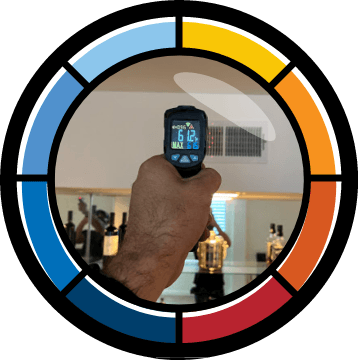
For a typical central air conditioner, homeowners often see supply-air readings somewhere in the 50s when indoor return air is in the 70s and the system has been running steadily. But the exact vent temperature is not the target by itself. If the home is warmer, the return air is warmer. If indoor humidity is high, more cooling capacity may be going toward moisture removal. If airflow is low, the vent temperature may become unusually cold even while total cooling delivery is poor.
A practical screening approach is to compare return and supply temperatures after the system has stabilized. Many conventional systems often show a split in the mid-teens to low 20s Fahrenheit under ordinary cooling conditions. Manufacturer charging and commissioning procedures use condition-specific temperature-drop data rather than one universal number, which is another reason a single “perfect vent temperature” can be misleading.
Why 55°F Air Is Not Automatically Good—or Bad
Suppose one homeowner measures 55°F at a nearby supply register with 75°F return air. That 20°F split may look reasonable. Another homeowner also measures 55°F, but the return air is 68°F. That is only a 13°F split. A third homeowner sees 48°F supply air and assumes the system is working exceptionally well, but the evaporator coil is beginning to freeze because airflow is restricted.
The temperature number needs context. A professional AC inspection in Los Angeles looks at how the system reaches that temperature, how much air is moving, and whether the home is actually being conditioned evenly.
Variable-Speed and Multi-Stage Systems Can Behave Differently
Modern inverter, variable-speed, and multi-stage systems do not always operate like older single-stage air conditioners. They may run longer at lower capacity, adjust blower speed, and produce different supply temperatures as the load changes. A homeowner checking one vent at one moment can easily mistake normal modulation for a performance problem.
The same is true for ductless systems, where each indoor unit serves a specific zone and does not share a central return-and-supply duct path. Homeowners with zoned or ductless equipment should avoid applying a central-system Delta T rule without considering the manufacturer’s operating sequence and the condition of the individual zone.
How to Measure AC Vent Temperature Correctly
A homeowner can perform a basic screening test with a reliable digital thermometer, but the measurement method matters. The goal is to compare representative return air with representative supply air—not the hottest return in the house and the coldest vent you can find.
Step 1: Let the System Stabilize
Set the thermostat to cooling and allow the system to run continuously long enough to establish steady operation. Avoid measuring during the first minute after startup. The coil, refrigerant circuit, blower, and duct system need time to reach a stable condition.
Step 2: Measure Return Air Near the System
Measure the temperature of air entering the return side in a location that represents the air actually reaching the equipment. A hallway return grille can be useful for a rough homeowner check, but a technician may measure closer to the equipment to reduce the effect of heat gain or leakage in the return duct.
Step 3: Measure Supply Air Near the Air Handler When Possible
For a more accurate equipment-level Delta T, supply temperature should be measured in the supply plenum or a representative nearby supply location, not at the farthest register in the home. Long attic ducts can pick up heat before the air reaches a bedroom, especially during hot Los Angeles afternoons.
Step 4: Compare the Readings
Subtract the supply temperature from the return temperature. If the return is 77°F and the supply is 59°F, the Delta T is 18°F. Record the time, thermostat setting, outdoor conditions, and whether the system had been running continuously. These details make repeated measurements more useful.
Common Homeowner Measurement Errors
- Measuring the return temperature in one room and the supply temperature in a distant room with very different heat exposure.
- Checking the system immediately after startup before temperatures stabilize.
- Using an infrared surface thermometer on the grille instead of measuring the moving air stream.
- Comparing readings taken hours apart under different indoor and outdoor conditions.
- Ignoring a dirty filter, blocked return, closed damper, or visibly frozen refrigerant line.
- Assuming the coldest vent represents the performance of the entire duct system.
If the quick check suggests a problem, the next step should be measurement rather than guesswork. A detailed HVAC inspection can compare temperature split with airflow, electrical performance, coil condition, controls, and other operating data.
What a Low AC Temperature Split Can Mean
A low Delta T means the air is leaving the system only a little cooler than it entered. That can happen when the system is not removing enough heat, when airflow is unusually high for the available cooling capacity, or when the measurement does not represent the air entering and leaving the equipment.
Refrigerant Problems
Low refrigerant charge can reduce the evaporator coil’s ability to absorb heat, but low charge should never be diagnosed from vent temperature alone. Refrigerant problems require proper testing. If a leak is suspected, a professional refrigerant leak detection and EPA-certified recharge service can help determine whether refrigerant loss is actually part of the problem before more refrigerant is added.
Dirty or Heat-Loaded Outdoor Coils
The outdoor condenser must reject the heat removed from the home. If the coil is heavily coated with dirt, debris, or coastal buildup, the system may struggle to move heat outdoors efficiently. That can reduce cooling performance and increase runtime. When coil condition is part of the problem, professional condenser and evaporator coil cleaning may be appropriate after the cause is confirmed.
Compressor or Capacity Problems
A compressor that is not moving refrigerant properly can produce weak cooling even while the indoor fan continues to run. Capacity loss can also occur when a staged or variable system is not reaching the expected operating level. Electrical and refrigeration measurements are needed to distinguish these problems from a simple thermostat or airflow issue.
Too Much Airflow for the Operating Capacity
Higher airflow can reduce the temperature drop across the evaporator because more air is moving across the coil in the same period. That does not automatically mean the system is failing. A technician considers blower settings, equipment capacity, humidity conditions, and manufacturer targets before deciding whether airflow is actually excessive.
What a High AC Temperature Split Can Mean
An unusually high Delta T is often misunderstood as proof of powerful cooling. Sometimes the air is very cold because too little air is moving across the evaporator coil. The result can be poor total cooling delivery, long run times, and a higher risk of coil freezing.
Dirty Filters and Restricted Returns
A heavily loaded filter can reduce airflow through the system. ENERGY STAR advises homeowners to inspect filters regularly because a dirty filter can slow airflow, increase energy use, and contribute to equipment problems. Its noncommercial heating and cooling maintenance checklist is a useful reference for routine care.
Dirty Evaporator Coils
Dust and debris on the indoor coil can restrict airflow and reduce heat transfer at the same time. Depending on severity, the supply air may become very cold while the home receives less total airflow. That combination can create the confusing situation where the vent feels cold but the house does not cool well.
Blower and Duct Restrictions
A weak blower motor, incorrect speed setting, crushed flex duct, closed damper, undersized return, or obstructed grille can reduce air movement. If the restriction occurs downstream, some rooms may receive very little air even while the main supply temperature looks normal.
When duct performance is suspected, a professional ducting inspection can help identify visible restrictions, damaged connections, leakage, and distribution problems that a temperature reading alone cannot reveal.
Why a Room Can Stay Hot Even When the Vent Air Is Cold
One of the most common homeowner frustrations is a bedroom that stays hot even though the air coming from the vent feels cold. This usually means the problem is not just supply-air temperature. Comfort depends on how much cooled air reaches the room, how much heat the room gains, and whether air can return to the HVAC system.
The Vent Can Be Cold but the Airflow Can Be Too Low
A thermometer might show 55°F at the register, but if only a small amount of air is moving, the room may not receive enough total cooling capacity. A distant branch duct, crushed flex line, balancing issue, or restrictive grille can reduce delivered airflow.
Ducts Can Gain Heat Before Air Reaches the Room
Supply air can leave the air handler at a healthy temperature and warm up while traveling through hot attic space. Damaged insulation, long duct runs, and leakage can make room-level vent readings different from equipment-level readings. This is why a far register should not be the only place used to judge the air conditioner.
The Room May Have a Higher Cooling Load
Large west-facing windows, high ceilings, additions, insulation gaps, and strong afternoon sun can create more heat gain than the room’s airflow can offset. If certain spaces have always struggled, a professional HVAC load calculation can help determine whether room-by-room demand is part of the problem.
Closed Doors Can Create Return-Air Problems
Bedrooms with supply vents but no adequate return path can become pressurized when doors are closed. That pressure can reduce delivered airflow and make the room harder to condition. Temperature split alone cannot identify this issue; room pressure and airflow measurements are more useful.
When Delta T Points to Airflow, Coils, or Refrigerant
The most useful way to interpret Delta T is as part of a pattern. The temperature split narrows the investigation, while other measurements determine the cause.
Pattern 1: Low Delta T + Weak Cooling Everywhere
Possible causes include reduced refrigeration capacity, poor outdoor heat rejection, compressor problems, measurement error, or a system operating at a lower stage. A technician may check refrigerant pressures and temperatures, compressor operation, coil condition, and actual airflow before deciding what the reading means.
Pattern 2: High Delta T + Weak Airflow
This pattern often raises concern about airflow restriction. Filters, returns, the blower, evaporator coil, dampers, and duct restrictions should be evaluated. The system may be making very cold air while failing to move enough of it.
Pattern 3: Normal Equipment Delta T + Hot Rooms
This usually shifts attention toward distribution and building load. Duct leakage, balancing, long runs, room pressure, solar gain, and sizing all become more important. An air flow inspection can help identify whether cooling is being lost between the equipment and occupied rooms.
Pattern 4: Delta T Changes Dramatically During the Same Cycle
A changing split can occur as a variable-capacity system modulates, but it can also reflect freezing, blower changes, staging issues, or unstable operation. The system type and control sequence must be considered before calling the behavior abnormal.
Professional AC Performance Testing in Los Angeles
Los Angeles homes do not all experience the same cooling conditions. Coastal properties may deal with marine air, humidity, and corrosion. Inland neighborhoods may see higher afternoon heat and heavier dust loading. Older homes can have decades of duct alterations, while remodeled properties may have changed room loads without corresponding HVAC redesign.
A professional AC performance evaluation should connect the temperature split to the rest of the system. That can include return and supply readings, total external static pressure, blower performance, filter pressure drop, room-to-room airflow, coil condition, refrigerant diagnostics, thermostat operation, and visible duct concerns.
For homeowners in specific service areas, professional AC service in Santa Monica or AC service in Inglewood can address local cooling performance concerns with the same diagnostic-first approach.
What a Professional Should Verify Before Blaming Refrigerant
- Whether the system has run long enough to stabilize.
- Whether return and supply temperatures were measured in representative locations.
- Whether airflow is within the equipment’s expected operating range.
- Whether the filter, blower, evaporator coil, and duct system are restricting air.
- Whether the condenser can reject heat properly.
- Whether the compressor and controls are operating as intended.
- Whether refrigerant testing actually supports a leak or charge problem.
Skipping these steps can lead to the wrong repair. A temperature split is valuable because it helps ask better questions, not because it replaces the rest of the diagnostic process.
Use Delta T as a Clue, Not a Verdict
So, how cold should air from AC vents be? Cold enough to create a meaningful temperature drop across the system, but not judged by one isolated number. A central air conditioner that is working properly often produces a mid-teens to low-20s temperature split under ordinary conditions, yet humidity, airflow, equipment staging, measurement location, and system design can all change what is normal.
The most important lesson is that cold vent air does not automatically equal good cooling. A system can have very cold supply air and still suffer from low airflow, duct problems, hot rooms, or an evaporator coil beginning to freeze. It can also show a lower-than-expected split because of refrigerant, condenser, compressor, capacity, or measurement issues.
When the numbers do not match the comfort in your home, a professional evaluation can connect temperature split with airflow and equipment performance. Contact HVAC Inspections Los Angeles to schedule an inspection and get a clearer answer about what your system is actually doing.
Frequently Asked Questions
What should the temperature difference be between return and supply air?
Many conventional central air systems often show a cooling temperature split somewhere in the mid-teens to low 20s Fahrenheit after the system has stabilized. That is a screening range, not a universal rule. Indoor humidity, airflow, system capacity, equipment staging, measurement location, and manufacturer data all affect the expected result.
Is 55°F air coming from my AC vents normal?
It can be. If the return air is in the mid-70s, a supply reading around 55°F may represent a reasonable temperature split. But the reading should be compared with return temperature and airflow. A very cold vent with weak airflow can indicate a restriction rather than excellent performance.
Can I measure AC Delta T with an infrared thermometer?
An infrared thermometer measures surface temperature, not the temperature of the moving air stream. A digital probe or air thermometer is usually more appropriate for a homeowner screening check. Professional testing may use probes placed in representative return and supply locations closer to the equipment.
Why is my Delta T low even though the AC is running?
A low temperature split can be associated with insufficient cooling capacity, refrigerant problems, poor condenser heat rejection, compressor issues, unusually high airflow, staging behavior, or measurement error. The reading should be combined with airflow and refrigeration diagnostics before a repair is recommended.
Can a dirty air filter change Delta T?
Yes. A heavily restricted filter can reduce airflow across the evaporator coil. Lower airflow can make supply air colder and increase the temperature split while reducing total cooling delivery. Severe restrictions can contribute to coil freezing and equipment stress.
Why is one bedroom hot if the vent air is cold?
The room may not be receiving enough airflow, the duct may be leaking or gaining heat, the room may have a higher cooling load, or there may be no adequate return-air path when the door is closed. A cold vent temperature by itself does not measure total cooling delivered to the room.
Does a low Delta T always mean low refrigerant?
No. Low refrigerant is only one possible cause. A low split can also come from high airflow, dirty outdoor coils, compressor problems, staging issues, or measurement conditions. Refrigerant should be tested properly before charge is added.
Can an oversized AC have a normal Delta T and still be uncomfortable?
Yes. An oversized system may produce cold air and satisfy the thermostat quickly while failing to run long enough for even comfort or proper moisture removal. A temperature split cannot determine whether the equipment is correctly sized for the home. A load calculation and system-performance review provide more useful information.
Should I check Delta T at the farthest vent?
A far register can be useful for evaluating room delivery, but it is not the best place to judge the equipment-level temperature split. Long ducts can gain heat, leak air, or lose pressure. For a more accurate equipment check, return and supply temperatures should be measured in representative locations closer to the air handler.
When should I call for a professional HVAC inspection?
Schedule a professional inspection when the home is not cooling evenly, the system runs unusually long, airflow is weak, the temperature split is consistently abnormal, the coil freezes, water appears around indoor equipment, or you suspect a refrigerant or duct problem. A full evaluation can determine whether the issue is mechanical, airflow-related, refrigeration-related, or tied to system sizing and distribution.
Schedule a professional AC performance evaluation with HVAC Inspections Los Angeles