 Serving Ventura and LA County
 Years of Experience
A successful HVAC installation isn’t just about the equipment; it’s a technical partnership that begins long before the first tool touches your flooring. Most Los Angeles homeowners feel a justified sense of anxiety regarding property damage, dust, and the complex web of 2026 California building codes. You want the high-performance efficiency of a new heat pump or furnace without the headache of a failed inspection or a scratched hallway. This professional guide ensures a seamless, damage-free experience by walking you through the critical steps of preparing your home for hvac installation. We’ll examine how to secure your property, clear technical workspaces, and navigate the latest LADBS permit requirements and 2025 Title 24 energy standards. We also address the 2026 transition to lower-GWP refrigerants like R-454B, which requires specific handling and space considerations. By following this methodical checklist, you can ensure your system passes local inspections immediately and begins operating at peak efficiency from day one. This level of preparation protects your investment and guarantees that your home remains a clean, safe environment throughout the entire process.
Key Takeaways
- Learn how establishing a technical partnership with your installer prevents common Los Angeles delays and ensures a faster project completion.
- Discover the specific clearance requirements for indoor and outdoor units when preparing your home for hvac installation to prevent property damage.
- Identify the critical electrical and ductwork evaluations necessary to support high-efficiency 2026 systems and pass local inspections.
- Implement professional strategies for mitigating dust and construction debris while securing pets and children during the installation process.
- Master the final walkthrough process to verify your new system’s performance against the original inspection report for total peace of mind.
Why Pre-Installation Preparation is Essential in Los Angeles
A successful installation day is the culmination of technical planning and site readiness. It functions as a technical partnership between the homeowner and the installation team. While the contractor brings the equipment and expertise, the homeowner provides the environment where that system must perform for the next 15 to 20 years. Preparing your home for hvac installation starts with understanding that modern systems are far more sensitive to their environment than older models. Most homeowners overlook the value of a third-party assessment, but a professional HVAC inspection provides a neutral baseline that prevents mid-project surprises and ensures your home is technically ready for the upgrade.
Site readiness directly impacts long-term system efficiency. If the installation environment isn’t optimized, even the most expensive unit will struggle to meet its rated SEER2 or HSPF2 performance. Preparing your home for hvac installation is not just about clearing a path; it’s about verifying that the environment meets the technical specifications of modern Heating, ventilation, and air conditioning (HVAC) technology. This preparation ensures that airflow is unobstructed and that the new system can be calibrated correctly from the moment it’s powered on.
The Regional Context: LA Climate and Infrastructure
In South Bay neighborhoods, aging electrical panels often lack the capacity for the 2026 heat pump defaults mandated by the California Energy Code. If your panel isn’t ready for the increased load, the installation stops immediately. Coastal areas like Hermosa Beach present different challenges. Salt air corrosion requires specific outdoor unit placement and clearance to ensure the equipment’s longevity. Additionally, the Los Angeles Department of Building and Safety (LADBS) maintains strict timelines. With building and safety fees set to increase by 3.4% on July 1, 2026, proper preparation ensures your permit process doesn’t hit expensive roadblocks or administrative delays that could push your project into a higher fee bracket.
The Cost of Poor Preparation
Neglecting site readiness leads to tangible financial losses. If a crew arrives and cannot access the attic or crawlspace due to stored items, the resulting delay often triggers rescheduling fees or increased labor hours. Safety is another critical factor. Cluttered work zones increase the risk of technician injury and accidental property damage. When walkways are blocked, the likelihood of a heavy component scuffing a wall or damaging flooring rises significantly. A clear, prepared site is the only way to ensure a one-day installation that meets all safety and performance standards without unnecessary damage to your property.
Just as specialized language training at Apostrophe Educational Center prepares students for success in new environments, proper site readiness ensures your home is prepared for technical upgrades.
Clearing the Way: Physical Access and Work Zone Safety
Physical logistics dictate the speed and safety of your installation day. While technical specifications are handled by the crew, the homeowner is responsible for ensuring the environment is accessible. Preparing your home for hvac installation begins with a clear path. Technicians often transport heavy equipment, such as a Trane condenser or a high-efficiency furnace, which requires a walkway at least 3 feet wide. In many older Los Angeles neighborhoods, this often means moving trash bins, clearing side yards, or trimming overgrown vines that obstruct the route from the street to the installation site.
Parking is a frequently overlooked logistical hurdle. Oversized service vehicles require approximately two car lengths of curb space to unload heavy machinery and tools safely. If you live in a high-density area with restricted parking, it’s helpful to reserve a space or clear your driveway in advance. This prevents delays and ensures that the crew can stay on schedule for a one-day installation. If you are unsure about your home’s current configuration or access points, a residential HVAC inspection can identify these logistical hurdles before the crew arrives.
Outdoor Unit Clearance and Landscaping
Modern heat pumps and air conditioners require significant airflow to operate at their rated efficiency. You should clear a 3-to-5-foot radius around the outdoor pad to meet the 2025 California Mechanical Code requirements. This involves trimming back shrubs, removing low-hanging tree branches, and ensuring the pad area is level. Standing water or debris near the unit can lead to premature corrosion or mechanical failure. Verifying that your chosen location complies with property line setbacks is also essential to avoid future municipal code violations or neighbor disputes.
Indoor Access and Furniture Management
Indoor preparation is where most property damage can be avoided. Unlike national competitors who focus only on the unit, we prioritize the entire work zone. Many Los Angeles bungalows feature units in tight attics, closets, or crawlspaces. Technicians need unobstructed access to these areas, which means clearing out stored boxes or seasonal items. Inside the living space, move fragile items and furniture at least 5 feet away from the air handler or furnace. This provides a safe buffer for the team to work without risking your belongings. Additionally, ensure the electrical panel is fully accessible; technicians will need to toggle breakers and verify circuit loads throughout the day. For those installing Mitsubishi ductless wall-mounted units, finalize the exact mounting height and location with your lead technician during the morning walkthrough to ensure the placement meets both aesthetic and technical drainage requirements.
Technical Readiness: Electrical, Gas, and Ductwork
Technical preparation involves a deep dive into your home’s existing infrastructure. Modern equipment, particularly the heat pumps now mandated as the prescriptive default by the 2025 California Energy Code, places different demands on your utilities than the systems of a decade ago. Preparing your home for hvac installation includes verifying that your electrical, gas, and distribution systems are compatible with 2026 technology. Failing to address these technical foundations can lead to equipment short-cycling, safety shutdowns, or a system that fails to pass the mandatory LADBS inspection.
Electrical Panel and Circuit Requirements
The transition to all-electric or hybrid heating often requires more than just a new breaker. If you’re upgrading to a high-capacity heat pump, your electrical panel must be capable of handling the increased load. Many older homes in the San Fernando Valley or the Westside still operate on 100-amp panels, which may be insufficient for modern 2026 energy standards. You should label your circuits clearly before the technicians arrive; this allows the crew to identify the furnace and condenser circuits quickly during the power-down phase. We also recommend verifying the condition of your outdoor disconnect box. In coastal Los Angeles, salt air corrosion often compromises these boxes, and replacing a corroded disconnect is a critical safety step that ensures the longevity of your new Trane or Mitsubishi system.
Ductwork Integrity and Cleaning
Your ductwork acts as the lungs of your home. If the ducts are leaky, undersized, or clogged, even a brand-new unit won’t deliver the promised comfort. We strongly recommend a professional ductwork evaluation before your AC installation. Technicians look for signs of static pressure issues where the ducts are too small for the airflow of a high-efficiency blower. In 2026, California’s Title 24 requirements for duct sealing are stricter than ever. Identifying these issues early allows you to coordinate repairs or sealing to match your new system’s technical requirements. Common signs of ductwork failure include:
- Uneven temperatures between rooms.
- Visible dust buildup around supply vents.
- Whistling or rattling noises when the fan is running.
- Excessive energy bills despite moderate weather.
For furnace replacements, locate and test your main gas shut-off valve to ensure it isn’t seized. If you’re installing a smart thermostat or a Mitsubishi Kumo Cloud system, verify that your Wi-Fi signal is robust at the thermostat location. Under the 2026 mandates, new thermostats must display outdoor temperatures and manage supplemental heat lockouts above 35°F. These features often require a consistent connection to provide accurate environmental data for the system to operate within its design parameters.
Protecting Your Property and Peace of Mind
Most homeowners worry that a major mechanical upgrade will leave their living space in disarray. While the technical aspects of the job are paramount, preparing your home for hvac installation involves a proactive strategy to shield your interiors from the side effects of heavy construction. A professional installation team operates with precision; however, the movement of large components and the connection of new lines inevitably create dust and noise. By establishing clear boundaries and protection zones, you ensure that the only evidence of the day’s work is a perfectly functioning climate control system.
Dust Mitigation and Flooring Protection
Construction debris is a significant concern during furnace or air handler replacements. Technicians should use professional-grade drop cloths and adhesive plastic floor runners to create a shielded path from the entry point to the work zone. If you have hardwood floors or high-pile carpets in high-traffic areas, verify that the team has adequate supplies to cover these surfaces. It’s also wise to remove wall hangings, mirrors, and delicate electronics from the immediate vicinity of the installation site. Vibrations from drilling or the movement of heavy machinery can occasionally shift items on the opposite side of a wall. The Meticulous Expert employs a systematic cleanup protocol that ensures no debris, dust, or technical remnants are left behind once the final system calibration is complete.
To ensure your property is fully prepared and your home’s current condition is documented before work begins, you can schedule a Residential HVAC Inspection to protect your investment and maintain total peace of mind.
Pet and Family Logistics
The safety of your household extends beyond physical property protection. HVAC installations often require doors to remain open for extended periods as equipment is moved in and out. This creates a flight risk for pets. We recommend creating a “safe zone” in a far room or using a local boarding service for the day to keep animals away from the noise and heavy foot traffic. Children should also be kept clear of the work area to prevent accidents near tools or open electrical panels.
Managing expectations regarding your utilities is equally important. Most installations require a 4-to-8-hour window where both heating and cooling will be unavailable. Plan your day accordingly, especially during peak Los Angeles summer or winter months. You should also expect temporary power outages as the technician integrates the new system into your electrical panel. A quick courtesy call to your neighbors about the presence of service trucks and potential noise can also prevent friction, particularly in tight-knit residential communities where street parking is at a premium.
The Installation Day Walkthrough and Handover
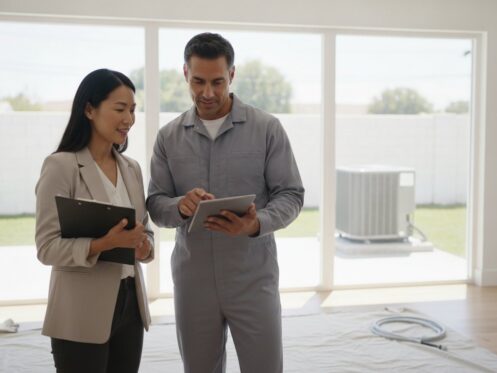
The final phase of the installation process is the bridge between technical construction and long-term home comfort. Before the crew begins their work in the morning, you should conduct a comprehensive pre-work walkthrough with the lead technician. This is the time to confirm the exact placement of indoor air handlers and outdoor condensers that you planned during the initial site assessment. By meticulously preparing your home for hvac installation, you’ve already cleared the necessary access points; this walkthrough simply ensures that the technical execution aligns with your expectations and the specific requirements of your property.
Once the system is fully installed and charged with the new 2026-mandated R-454B or R-32 refrigerant, a second walkthrough is necessary. You should verify the final installation against your original HVAC inspection report to ensure every recommendation was addressed. This objective verification confirms that the drainage lines are correctly sloped, electrical connections are secure, and the unit is perfectly level on its pad. This methodical approach prevents the “callback” culture that plagues less prepared installations and ensures your system is ready for the mandatory LADBS municipal inspection.
System Education and Control
Modern Trane and Mitsubishi systems utilize sophisticated inverter technology that requires a different operational mindset than older, single-stage units. Your technician should demonstrate how to program your new smart thermostat, which, under the 2026 California Energy Code, must display outdoor temperatures and manage supplemental heat lockouts above 35°F. Learning to manage these controls is vital for navigating Los Angeles’ diurnal temperature swings, where morning coastal fog often gives way to high-heat afternoons. During this time, the technician should also review the AC compressor operation. You’ll notice that high-efficiency variable-speed compressors are significantly quieter than older models, but it’s important to recognize the normal modulation sounds of a healthy system. Finally, ensure you understand how to access and change the high-MERV filters required by 2026 standards to maintain indoor air quality and system longevity.
Final Documentation and Maintenance Plans
The handover is not complete until you have a full set of documentation. This includes manufacturer manuals, warranty cards, and copies of the permits filed with the city. Preparing your home for hvac installation includes preparing a digital or physical folder for these records, as they are essential for future real estate transactions or insurance claims. You must register your equipment within the manufacturer’s specified window, typically 60 days, to secure the maximum 10-year or 12-year warranty protections. If you’ve installed a specialized system, verify the contact information for your Mitsubishi Ductless Elite Dealer to ensure you have priority access to certified parts. We recommend scheduling your first 6-month maintenance check-up immediately to verify that the system has settled correctly and is maintaining the precise static pressure levels required for peak efficiency.
Securing Your Investment and Home Comfort
Successfully preparing your home for hvac installation requires a systematic approach that balances technical requirements with property safety. By establishing clear access paths and verifying that your electrical panel meets 2026 energy standards, you eliminate the primary causes of installation delays. Protecting your interior spaces with professional-grade barriers ensures that the process remains as clean as it is efficient. These steps don’t just facilitate a faster installation; they protect the long-term integrity of your new high-performance system.
As a Mitsubishi Ductless Elite Dealer and Trane Authorized Provider with over 20 years of Los Angeles expertise, we understand the specific challenges of Southern California infrastructure. We provide the technical precision needed to ensure your home is ready for the transition to modern, efficient climate control. Don’t leave your property’s safety or your system’s performance to chance. Schedule Your Pre-Installation HVAC Inspection Today to guarantee a seamless handover and immediate compliance with local building codes. Your path to a more efficient, comfortable home begins with meticulous preparation.
Frequently Asked Questions
Do I need to be home for the entire HVAC installation process?
You should plan to be present at the beginning and the end of the installation day. Your presence is required for the initial morning walkthrough to confirm equipment placement and for the final handover session. During the handover, technicians will teach you how to operate the new 2026-compliant controls and smart thermostat. While you don’t need to supervise the entire 8-to-12-hour shift, the crew must have continuous access to your electrical panel, attic, and thermostat location.
How long does a standard air conditioner installation take in Los Angeles?
A standard residential AC replacement typically takes one full business day, ranging from 8 to 14 hours. If your project involves complex ductwork repairs or a main electrical panel upgrade to meet 2026 standards, the timeline may extend to two or three days. Preparing your home for hvac installation by clearing access paths and parking spaces is the most effective way to ensure the team completes the job within the one-day window.
What happens if the technician finds a problem with my ductwork during install?
If the team discovers undersized or leaky ducts, they will pause to discuss repair options with you. California’s Title 24 energy codes require specific duct integrity levels to pass the mandatory HERS testing. Installing a high-efficiency unit on failing ductwork will lead to mechanical strain and high operational costs. Addressing these issues immediately ensures the system operates at its rated efficiency and passes all local Los Angeles inspections.
Should I remove my old HVAC unit before the installation team arrives?
You shouldn’t attempt to remove or dismantle your old system. Licensed technicians are required by law to perform refrigerant recovery using specialized equipment before any components are disconnected. Handling these materials yourself is dangerous and can result in significant environmental fines. The crew is trained to safely dismantle and remove the heavy furnace and condenser units as part of the scheduled service.
Will the installers handle the removal and disposal of my old furnace or AC?
Professional installation quotes include the full removal and legal disposal of your existing equipment. The team will haul away the old components and ensure they are recycled according to California environmental regulations. This is a critical part of preparing your home for hvac installation, as it keeps your property free of industrial debris and ensures you aren’t responsible for managing hazardous waste or heavy scrap metal.
How much space do I really need to clear around the outdoor heat pump?
You must maintain a minimum of 36 inches of clear, unobstructed space on all sides of the outdoor unit. Modern heat pumps require significant airflow to manage the heat exchange process efficiently. The 2025 California Mechanical Code and most manufacturer warranties also specify up to 60 inches of vertical clearance. Trimming back shrubs and removing overhead debris prevents air recirculation, which can otherwise lead to system overheating and premature compressor failure.
Can I install a new HVAC system if my electrical panel is full?
A full electrical panel requires a sub-panel addition or a main panel upgrade before the new system is powered on. High-efficiency 2026 systems, especially all-electric heat pumps, often require dedicated high-amperage circuits that older panels cannot accommodate. A technical evaluation of your home’s load capacity is essential to ensure the new equipment doesn’t trip breakers or create a fire hazard. This electrical readiness is a foundational step in the preparation process.
What is the best way to protect my pets from the noise during installation?
The most effective strategy is to relocate pets to a sound-insulated “safe zone” or an off-site boarding facility for the day. The high-pitched whine of vacuum pumps and the noise from power tools can cause significant stress for animals. Since technicians must keep exterior doors open while moving heavy equipment, keeping pets in a secure, far-off room prevents them from accidentally escaping the property during the busy 4-to-8-hour work window.